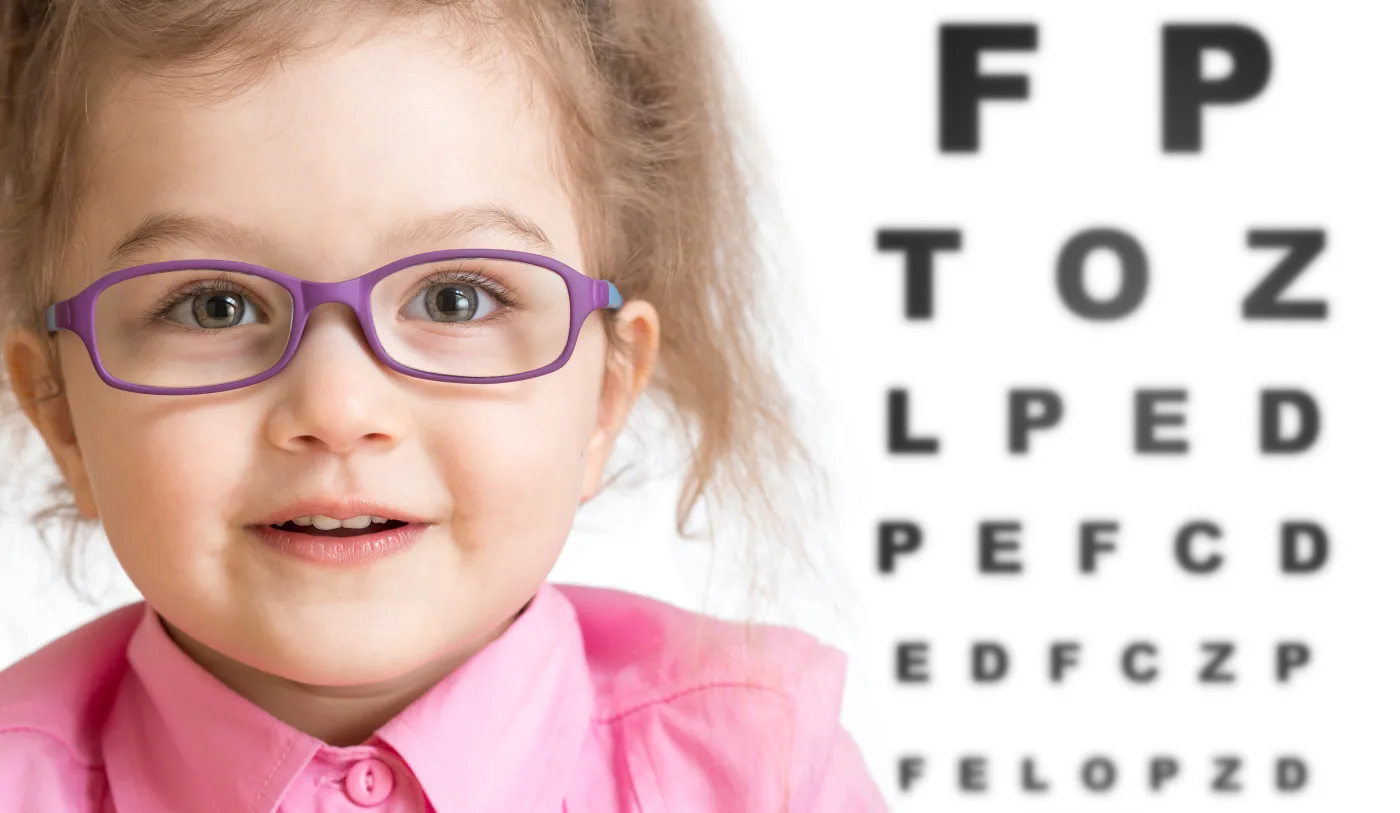
This is one of the most common questions parents ask after their child gets glasses.
Does my child really need to wear them all day?
The honest answer is that it depends on why the glasses were prescribed.
- Some children need glasses full-time because the glasses are helping them see clearly, keeping both eyes working together, supporting visual development, or treating a condition like amblyopia or an eye turn.
- Other children may only need glasses for specific tasks, like seeing the board, reading, using screens, or doing schoolwork.
The important thing is not to guess.
The wearing schedule should match the reason your child needs glasses.
If the doctor says full-time wear, there is usually a reason. If the doctor says the glasses are only for certain activities, that is different.
Why Children Need Glasses
Children may need glasses for several different reasons.
- Some need glasses because things far away are blurry.
- Some need glasses because near work is uncomfortable.
- Some need glasses because one eye has a stronger prescription than the other.
- Some need glasses to support normal visual development.
- Some need glasses to help an eye turn.
- Some need glasses to protect the better-seeing eye.
This is why two children can both have glasses but have completely different instructions.
One child may need glasses for distance only.
Another may need glasses all day.
Another may need glasses mostly for reading.
Another may need glasses as part of amblyopia treatment.
The prescription number alone does not always tell the full story. The reason for the prescription matters.
What Full-Time Wear Means
When an eye doctor says a child should wear glasses full-time, that usually means the glasses should be worn during most waking hours.
That includes:
- School
- Reading
- Homework
- Screens
- Playing indoors
- Walking around
- Watching TV
- Going outside
- Most daily activities
There may be exceptions for bathing, swimming, sleeping, rough play, or certain sports where sport protective eyewear is needed instead.
Full-time does not mean the glasses can never come off.
It means they should be part of the child’s normal daily routine.
Why Full-Time Wear May Be Important
Full-time glasses wear may be recommended when the glasses are doing more than making things sharper.
They may be supporting how the visual system develops.
This is especially important in younger children because the brain is still learning how to use both eyes.
If one eye is blurry, if the prescription is high, if the eyes are not aligned, or if one eye is at risk for amblyopia, inconsistent glasses wear can make treatment less effective.
For some children, wearing glasses is not optional if the goal is healthy visual development.
Glasses for Nearsightedness
Myopia means nearsightedness.
A child with myopia usually sees better up close than far away. The board, TV, signs, sports fields, and faces across the room may look blurry.
Some children with mild myopia may only need glasses for distance tasks.
That may include:
- School
- Seeing the board
- Movies
- Sports
- Watching TV
- Driving for older teens
But many school-age children do better wearing their distance glasses throughout the school day because they are constantly shifting between the board, desk, books, screens, classmates, and the room around them.
Even if the glasses are mainly for distance, school is full of distance demands.
If your child is nearsighted and keeps taking glasses off, ask the doctor when they truly need to wear them.
Glasses for Farsightedness
Hyperopia means farsightedness.
This one can be confusing for parents because some farsighted children can still see clearly.
Children have strong focusing systems. A farsighted child may be able to force the image to become clear, especially for short periods.
But that effort can cause symptoms.
A farsighted child may have:
-
Headaches
-
Eye strain
-
Blurry vision after reading
-
Trouble with homework
-
Eye rubbing
-
Avoiding near work
-
Trouble focusing
-
An eye turn in some cases
-
Some farsighted children do not need glasses.
-
Some need glasses only for near work.
-
Some need glasses full-time, especially if the prescription is higher, symptoms are present, the eyes cross, or the glasses are helping the eyes stay aligned.
This is why you should not compare your child’s prescription to another child’s prescription.
The reason matters.
Glasses for Astigmatism
Astigmatism can make vision blurry, shadowed, stretched, or distorted.
It can affect distance, near, or both.
Some children with astigmatism need glasses full-time because the blur is present throughout the day.
Others may need them mainly for school, reading, or visually demanding tasks.
If a child has significant astigmatism and does not wear glasses, they may experience:
- Squinting
- Headaches
- Eye strain
- Blurry vision
- Trouble reading small print
- Trouble seeing the board
- Fatigue during schoolwork
For younger children, uncorrected astigmatism can sometimes affect visual development, especially if it is strong or unequal between the eyes.
If the doctor recommends full-time wear for astigmatism, ask whether the goal is clarity, comfort, development, or all of those.
Glasses When One Eye Is Stronger Than the Other
Sometimes one eye has a much stronger prescription than the other.
This is called anisometropia.
Parents may not notice it because the child may function well using the stronger eye.
The problem is that the blurrier eye may not develop vision as well as it should.
This can lead to amblyopia, often called lazy eye.
In these cases, glasses may need to be worn full-time to give the weaker eye a clear image as often as possible.
If the child only wears the glasses sometimes, the weaker eye may not get enough consistent clear input.
That is why full-time wear can be so important when the two eyes are very different.
Glasses for Amblyopia
Amblyopia means vision did not develop normally in one or both eyes during childhood.
It is often called lazy eye.
Glasses are commonly an important first step in amblyopia care, especially when the amblyopia is related to a prescription problem.
- Some children improve a lot with glasses alone.
- Others need glasses plus patching, atropine drops, or additional treatment.
If your child has amblyopia, glasses are often not just for seeing better in the moment. They are part of the treatment plan.
That usually means full-time wear unless the doctor gives different instructions.
If glasses are part of amblyopia treatment and your child does not wear them consistently, progress may be slower or less complete.
Glasses for an Eye Turn
Some children have an eye that turns in, out, up, or down.
An eye turn is called strabismus.
In some children, especially those with accommodative esotropia, glasses can help straighten the eyes by reducing the focusing effort that contributes to the eye turn.
When glasses are prescribed to help an eye turn, full-time wear is often important.
The glasses may help keep the eyes aligned while the child is wearing them.
If the glasses come off, the eye turn may return.
Parents sometimes say:
“His eyes look straight with the glasses, so does he still need them?”
Yes, that often means the glasses are doing their job.
Glasses for Reading or Near Work
Some children are prescribed glasses mainly for reading, homework, screens, or close work.
These glasses may not need to be worn all day.
They may be used for:
- Reading
- Writing
- Homework
- Computer work
- Tablet use
- Close detail tasks
- Schoolwork at the desk
This is different from full-time glasses.
If your child has task-specific glasses, the challenge is making sure they are actually used for the right tasks.
A child may not remember to put them on for reading unless the routine is clear.
Parents and teachers may need to help at first.
Glasses for School Only
Some children are told to wear glasses at school.
This may mean they need them for seeing the board, reading, copying, or sustained visual tasks.
But school is not one single visual distance.
Children look across the room, down at the desk, at a tablet, at a book, at the teacher, at classmates, and back to the board.
For many children, school-only glasses end up being worn most of the school day.
If your child says they only need them sometimes, ask the doctor for specific instructions.
- Should they wear them all day at school?
- Only for distance?
- Only for reading?
- For screens?
- For homework too?
The clearer the instruction, the easier it is for the child to follow.
Glasses for Screens
Some children are prescribed glasses because screens trigger symptoms.
That does not always mean the glasses are for blue light.
The glasses may be helping with:
- Focusing effort
- Astigmatism
- Farsightedness
- Eye strain
- Near visual comfort
- Computer distance
- Headaches during screen use
If the glasses are for screens, they may not need to be worn all day unless the doctor says so.
But they should be worn consistently during the tasks they were prescribed for.
If your child only wears screen glasses once in a while, it may be hard to know whether they are helping.
What If My Child Says They Can See Without the Glasses?
This is common.
A child may say they can see fine without glasses for several reasons.
- They may truly see well enough to function.
- They may not know what clear vision should look like.
- They may be using one eye more than the other.
- They may be able to force focus for short periods.
- They may not like wearing glasses.
- They may not want to look different.
- They may only notice the benefit in certain situations.
Parents should not use “my child says they see fine” as the only guide.
Children are not always reliable reporters of their vision.
The exam findings matter.
What If My Child Only Wears Them When Reminded?
This usually means the routine needs work.
First, make sure the glasses are comfortable.
Check for:
- Sliding
- Pinching
- Crooked fit
- Heavy frame
- Scratched lenses
- Loose temples
- Nose marks
- Pressure behind the ears
- Lens smudges
- A prescription that feels strange
If the glasses are uncomfortable, a child will avoid them.
If the glasses fit well and the prescription is correct, then focus on routine.
- Put them on at the same time every morning.
- Keep them in the same place.
- Tell the teacher if they are needed at school.
- Use simple language about why they matter.
What If the Glasses Make Things Look Weird?
Some children need time to adjust to a new prescription.
They may say the floor looks funny, things look too big or too small, or the glasses feel strange.
This can happen with new prescriptions, astigmatism correction, higher prescriptions, or a big change from old glasses.
Most children adapt with consistent wear.
But if the glasses seem very uncomfortable, cause headaches, make vision worse, or your child cannot tolerate them after a reasonable adjustment period, call the eye doctor.
Do not let the glasses sit unused for months.
The doctor or optical team can check the prescription, lens measurements, and frame fit.
Can Wearing Glasses Make My Child’s Eyes Worse?
No.
Wearing properly prescribed glasses does not make a child’s eyes weaker.
This is a very common fear.
Glasses help the eyes see clearly. They do not make the eyes lazy.
Sometimes parents feel like the child becomes dependent on glasses because once they start wearing them, they notice blur more when the glasses are off.
That does not mean the glasses made vision worse.
It usually means the child now understands what clear vision feels like.
Can Not Wearing Glasses Make Things Worse?
Sometimes, yes.
It depends on why the glasses were prescribed.
If the glasses are for mild distance blur in an older child, not wearing them may mainly cause blurry vision and squinting.
But if the glasses are for amblyopia, significant unequal prescription, an eye turn, high farsightedness, or visual development, not wearing them can interfere with treatment goals.
If your doctor prescribed full-time wear, ask what could happen if the glasses are worn inconsistently.
The answer will depend on your child’s specific condition.
How Many Hours a Day Is Full-Time?
Full-time generally means most waking hours.
For a child, that might mean putting glasses on after waking and wearing them through the day.
They may come off for:
- Sleeping
- Bathing
- Swimming
- Some rough play
- Certain sports
- Situations where protective sport eyewear is needed instead
If the doctor gives a more specific number of hours, follow that instruction.
If you are not sure, ask.
Full-time should not be left vague.
Should Glasses Be Worn During Sports?
It depends on the sport and the glasses.
Regular glasses are not the same as protective sports eyewear.
If your child needs glasses to see during sports, ask about prescription sport goggles or protective eyewear.
This is especially important for sports with balls, sticks, elbows, fingers, or fast movement.
Sports may include:
- Basketball
- Baseball
- Softball
- Soccer
- Racquet sports
- Lacrosse
- Hockey
- Martial arts
- Volleyball
- Football
If your child wears glasses full-time, they may need a safer sports option.
Should My Child Wear Glasses Outside?
Usually yes, if the glasses are prescribed for full-time wear or distance vision.
Outdoor activities require clear vision too.
Your child may need to see playground equipment, steps, balls, curbs, bikes, signs, cars, and people around them.
If your child is light sensitive, prescription sunglasses may help.
If your child plays sports, regular glasses may not be the safest option, so ask about protective eyewear.
What About Swimming?
Most regular glasses should not be worn in the pool.
They can fall off, bend, or get damaged.
Contact lenses should also be handled carefully around water because water exposure can increase the risk of serious eye infection.
If your child needs vision correction for swimming, ask about prescription swim goggles.
This can be especially helpful for children with stronger prescriptions.
What If My Child Loses or Breaks Glasses Often?
This is normal, but it needs a plan.
If glasses are important for school, safety, amblyopia treatment, or full-time wear, a backup pair is strongly worth considering.
A backup pair does not need to be fancy.
It just needs to be current and wearable.
Also make sure the main pair fits well, has durable lenses, and comes with a warranty when possible.
Kids break glasses. Planning for that prevents panic.
How to Help Your Child Wear Glasses Consistently
Start with comfort.
Then build the routine.
Helpful steps include:
- Make sure the frame fits well
- Keep lenses clean
- Use a strap if needed for young children
- Put glasses on at the same time each morning
- Store glasses in the same place
- Tell the teacher when glasses should be worn
- Use simple explanations
- Praise consistent wear
- Avoid turning glasses into a fight
- Follow up if your child keeps refusing
For younger children, the routine matters more than long explanations.
For older children, explain why the glasses were prescribed.
Children cooperate better when they understand the reason.
What If My Child Is Embarrassed?
This is real.
Some children do not want to look different.
Letting your child help choose frames can make a big difference.
Parents can narrow the choices to frames that fit properly, then let the child choose from those.
You can also talk about glasses in a normal, positive way.
Avoid saying things like:
“You have bad eyes.”
Instead, say:
“These help your eyes see clearly.”
“These help your eyes work better for school.”
“These are part of taking care of your body.”
The words matter.
What If the Teacher Says My Child Is Not Wearing Them?
Ask why.
Your child may not be wearing glasses at school because:
- They are embarrassed
- The glasses slide
- The glasses hurt
- They cannot see well through them
- They do not understand when to wear them
- They are afraid of breaking them
- They forget
- They left them at home
- The prescription feels strange
- They are being teased
Do not assume the child is just refusing.
Find the reason.
Then fix the reason.
What If the Doctor Says “as Needed”?
“As needed” can be confusing.
Ask what that means.
Does it mean:
- For distance only?
- For school only?
- For reading only?
- For screens only?
- For headaches?
- For sports?
- For homework?
- For driving when older?
- Whenever vision feels blurry?
The clearer the instruction, the better.
Children do not usually manage vague instructions well.
Parents and teachers need specifics.
What Questions Should Parents Ask?
At the exam, ask:
- Does my child need to wear these full-time?
- If not full-time, when exactly should they wear them?
- Are the glasses for distance, near, or both?
- Are they helping with eye alignment?
- Are they part of amblyopia treatment?
- Are they for comfort or development?
- What happens if my child does not wear them?
- How long should adjustment take?
- Should the teacher know?
- Does my child need a backup pair?
- Are sports glasses needed?
- When should we follow up?
These questions help you leave with a clear plan.
When Should You Call After Getting Glasses?
Call the eye doctor or optical team if:
- Your child refuses to wear the glasses
- The glasses slide constantly
- The glasses hurt
- Your child says vision is worse
- Headaches continue
- One eye still turns with glasses on
- Your child looks over the lenses
- The frame is crooked
- The lenses are scratched
- Your child is still squinting
- The teacher reports ongoing trouble seeing
- Your child cannot adjust after consistent wear
Do not wait until the next yearly exam if the glasses are not working.
A small adjustment may solve the problem.
Glasses Wear at Pediatric & Family Vision
At Pediatric & Family Vision, we help families understand not only whether a child needs glasses, but why the glasses were prescribed and how they should be worn.
- Some children need glasses all day.
- Some need them for school.
- Some need them for reading or screens.
- Some need them as part of amblyopia care, eye alignment treatment, myopia management, or visual development.
We explain the purpose clearly so parents know how important consistent wear is.
If your child refuses glasses, keeps breaking them, looks over the lenses, complains they feel strange, or only wears them when reminded, we can help figure out whether the issue is prescription, fit, comfort, routine, or understanding.
Glasses only help when they are worn the way they were prescribed.
If you are not sure whether your child really needs to wear glasses all day, ask. The answer should be specific to your child, not a general rule.