Contact Lens Fittings in Boca Raton for Kids, Teens, and Adults.
Contacts that actually feel like nothing. From a first-time fitting to specialty lenses for hard-to-fit eyes, we'll find the lens that works for your prescription, your eyes, and your life.
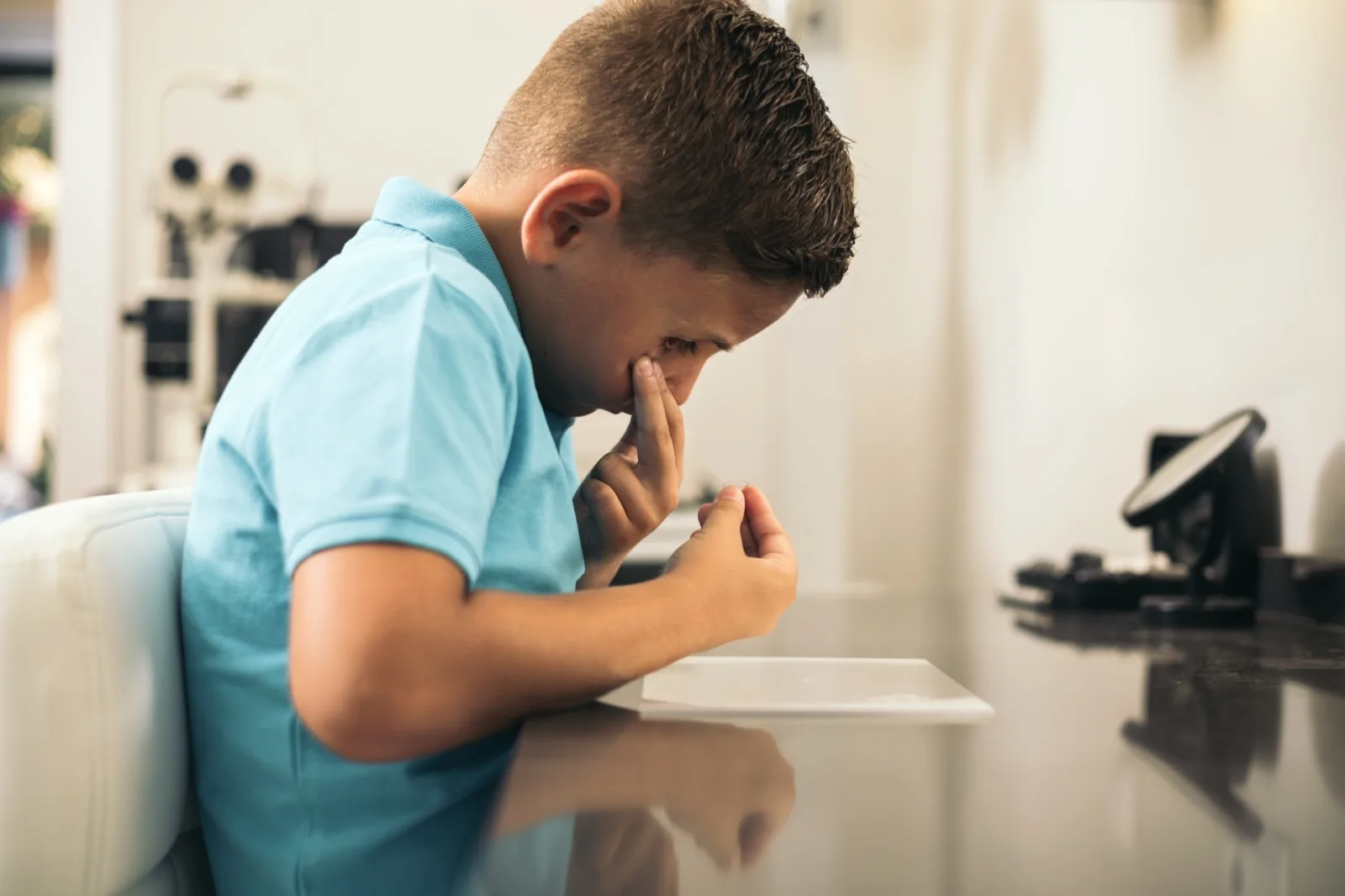
A Real Fitting, Not Just a Prescription Handoff
A contact lens fitting at our office includes a comprehensive evaluation of your eye health, corneal measurements, trial lenses to confirm fit and comfort, and a one-on-one training session for new wearers. We don't hand you a box and say "good luck." We make sure you leave knowing exactly how to put lenses in and out, how to care for them, and how to recognize anything that doesn't feel right, including when not to wear them. Why a separate contact lens exam?
A contact lens sits right on the front of your eye, so the fit matters. Soft lenses are flexible and let oxygen pass through to the cornea.[1] Scleral lenses, a specialty option for irregular corneas, stretch over the cornea and rest on the white of the eye.[2]
Many Ways to Wear Contacts. We'll Help You Find Yours
Daily Disposables
Fresh lenses every day. The healthiest, most convenient, and lowest-maintenance option, especially for kids, teens, and part-time wearers.
Monthly & Bi-Weekly
A great balance of convenience and value. We help you build a routine that keeps your eyes comfortable and healthy.
Multifocal Contacts
Designed for adults who need help with both distance and reading. A great alternative or addition to progressive glasses.
Astigmatism (Toric)
Modern toric lenses are stable, comfortable, and available in nearly every modality, including dailies.
Specialty & Hard-to-Fit
For irregular corneas, keratoconus, post-LASIK, or anyone who has been told they "can't wear contacts." We love these fittings.
Myopia-Control Contacts
For kids and teens, MiSight 1 day is FDA-approved to slow the progression of nearsightedness, and ortho-K is another option. Ask us which fits your child.
Especially Welcoming for Kids and Teens
Many young patients are great candidates for contact lenses (see when kids can start wearing contacts), and studies show kids who wear contacts often feel more confident and participate more in sports and activities. We schedule extra time for first-time fittings so there's no pressure, plenty of practice, and a comfortable learning experience. Wondering daily vs. monthly contacts for kids? We'll talk through both.
Parents often ask me whether contacts are safe at this age. A review of the research found that complication rates in children wearing soft lenses are no higher than in adults, and may be lower in children 8 to 11.[4] What matters most is the routine, which is why first-time wearers get a separate insertion, removal, and care training visit with us.
For nearsighted kids specifically, certain contact lens designs can slow the progression of myopia. Ask about myopia management at your child's exam, and see our guide for eye care for teens.
Contacts, Pools, and the Beach
Living in Boca Raton means pools, the ocean, and summer camps on the water, and that is where most contact lens trouble starts. The FDA advises keeping contact lenses away from all water, including tap, lake, and ocean water, and taking them out before swimming, because pool water, hot tubs, lakes, and the ocean can carry bacteria that cause eye infections. Tap water has been linked to Acanthamoeba keratitis, a hard-to-treat corneal infection.[5]
My simple rules for every wearer, kids and adults alike:
- Never sleep, swim, or shower in lenses unless I've prescribed a lens made for that.
- Never rinse or store lenses in water. Use fresh solution every time, or choose daily disposables.
- Replace lenses and cases on schedule.
- A red, painful, or light-sensitive eye means lenses out and a call to us the same day. See urgent eye care.
For swim team and beach days, ask about prescription swim goggles. More in our guide to sleeping, swimming, and showering in contacts and contacts for sports.
How Paying for a Fitting Works
Many vision plans include a contact lens fitting benefit. We verify your specific plan before your visit.
The fitting is added to a comprehensive exam and is needed every year, not just the first time: it checks that your corneas are staying healthy in contact lenses and renews your contact lens prescription. It includes the fitting, trial lenses, and one follow-up visit, and first-time wearers also have an insertion and removal training visit. Contact lens supply orders are separate. If contacts feel uncomfortable, see what causes contact lens discomfort or whether dry eye may be a factor.
Using insurance? Many vision plans include a contact lens fitting benefit and a materials allowance. We'll verify your plan and tell you what's covered. Without insurance? Call us and we'll arrange a self-pay visit through our sister practice, Vision & Learning Center.
Contact Lens Questions
How long does a contact lens fitting take?
The corneal health assessment and lens fitting adds about 20 minutes to a comprehensive eye exam, which takes about 40 minutes on its own. First-time wearers also have a separate insertion and removal training visit, and I schedule extra time for first fittings so kids and teens never feel rushed. The fitting includes trial lenses and one follow-up visit.
What age can my child start wearing contacts?
There is no single right age. Many children can start around age 8 or older if they are mature, motivated, and able to follow hygiene rules, like never sleeping or swimming in their lenses. Readiness matters more than the birthday. Daily disposables are often the easiest place to start because there is nothing to clean or store. See when kids can start wearing contacts.
Why do I need a contact lens exam every year if my prescription has not changed?
Contacts sit directly on the eye, so I need to check more than the lens power. The yearly corneal health assessment confirms your corneas are staying healthy, checks the fit and your wearing habits, and renews your contact lens prescription. A glasses prescription alone is not enough to order contacts. Here is why a separate contact lens exam is needed.
Are contact lenses safe for kids?
For a child who follows the rules, yes. A review of the research on soft contact lenses in children found complication rates no higher than in adults, and possibly lower in children 8 to 11. The rules are what keep it that way: no sleeping, swimming, or showering in lenses, and replacing them on schedule. Daily disposables make that easiest.
Can my child swim in contacts at the pool or the beach?
No. The FDA advises keeping contact lenses away from all water, including pool, lake, and ocean water, and removing them before swimming because of the risk of eye infection. For swim practice or a beach day, prescription goggles are the safer choice. See sleeping, swimming, and showering in contacts.
Does insurance cover a contact lens fitting?
Many vision plans include a contact lens fitting benefit and a materials allowance, and we verify your plan before the visit. The fitting is added to a comprehensive exam, and first-time wearers also have an insertion and removal training visit. Without insurance? Call us and we'll arrange a self-pay visit through our sister practice, Vision & Learning Center.
Where This Information Comes From
- U.S. Food and Drug Administration: Types of Contact Lenses: soft lenses let oxygen through to the cornea; daily disposables are worn once and discarded
- American Academy of Ophthalmology: Contact Lens Types: scleral lenses stretch over the cornea and rest on the white of the eye
- American Optometric Association: Types of Contact Lenses: planned replacement every two weeks, monthly, or quarterly
- Bullimore MA. The Safety of Soft Contact Lenses in Children. Optometry and Vision Science, 2017: complication rates in children are no higher than in adults, and may be lower at ages 8 to 11
- U.S. Food and Drug Administration: Contact Lens Risks: keep lenses away from all water, and remove them before swimming
Serving Boca Raton and Nearby Cities
We see patients for contact lens fittings at our office at 1000 NW 9th Ct, Ste 203A, Boca Raton, FL 33486. Families also come to us from Delray Beach, Highland Beach, Boynton Beach, Deerfield Beach, Parkland, Coral Springs, and Pompano Beach. Directions from your city →
Ready to Try Contacts?
Book a fitting and we'll find what works for your eyes and your lifestyle.