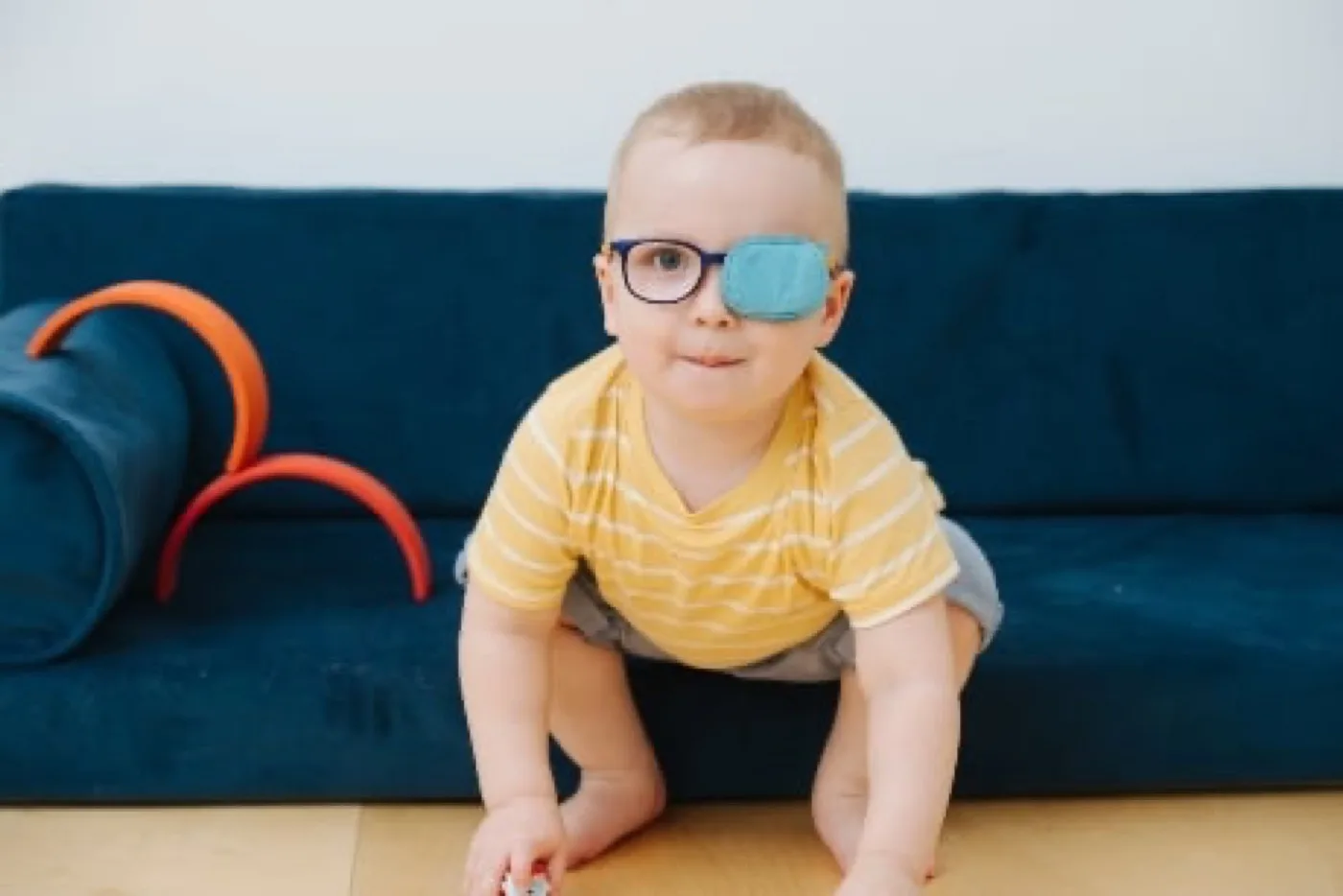
Lazy eye is one of those terms many parents have heard, but not everyone knows what it actually means.
Some parents think lazy eye means one eye turns in or out.
Some think it means the child needs glasses.
Some think the eye itself is weak.
The medical term for lazy eye is amblyopia. Amblyopia happens when vision does not develop normally in one or both eyes during childhood. The eye may look healthy, but the brain is not using the information from that eye as clearly as it should.
This is important because amblyopia is not only about how the eye looks.
- A child can have amblyopia even if the eyes look straight.
- A child can have amblyopia and not complain.
- A child can have amblyopia even if they seem to function normally at home and school.
That is why early eye exams matter.
What Is Amblyopia?
Amblyopia is reduced vision in one eye, or sometimes both eyes, that happens because the brain and eye did not develop a clear visual connection during childhood.
The brain learns to rely more on the stronger eye and pays less attention to the weaker eye.
Over time, the weaker eye does not develop vision as well as it should.
This can affect:
- Clear vision
- Depth perception
- Eye teaming
- Visual development
- Confidence with certain visual tasks
- Safety if the stronger eye is ever injured later in life
Amblyopia is not something a child can simply outgrow without being checked.
It needs to be diagnosed properly so the right plan can be made.
Is Lazy Eye the Same as an Eye Turn?
Not always.
This is one of the biggest misunderstandings.
An eye turn is called strabismus. That means one eye turns in, out, up, or down.
Amblyopia means the brain is not using vision from one eye as well as it should.
The two can happen together, but they are not the same thing.
- A child can have an eye turn without amblyopia.
- A child can have amblyopia without an obvious eye turn.
This is why parents should not wait until they see an eye crossing or drifting before scheduling an eye exam. Some children with amblyopia look completely normal from the outside.
What Causes Amblyopia?
Amblyopia usually happens because one eye is not giving the brain a clear or usable image during early childhood.
Common causes include:
- A large prescription difference between the two eyes
- A high prescription in both eyes
- An eye turn (strabismus)
- A cataract or other blockage that prevents clear vision
- A droopy eyelid that blocks vision
- Other eye health conditions that interfere with normal visual development
Sometimes one eye is much more farsighted, nearsighted, or astigmatic than the other. The child may not notice because the stronger eye helps them function.
But the brain may start ignoring the blurrier eye.
That is why a child can seem to see well overall and still have amblyopia in one eye.
What Are the Signs of Amblyopia?
Amblyopia can be hard for parents to spot.
Some children show obvious signs. Others show none.
Possible signs include:
- One eye turning in or out
- Squinting
- Closing or covering one eye
- Tilting the head
- Poor depth perception
- Bumping into things more often
- Trouble catching or throwing
- Sitting close to screens
- Holding books very close
- One eye seeming to do most of the work
- A failed vision screening
- Complaints of blurry vision
- Avoidance of visually demanding tasks
Some children do not complain at all.
If one eye sees clearly, the child may not realize the other eye is not seeing as well.
This is why amblyopia is often found during an eye exam or vision screening, not because the child reports a problem.
Can My Child Pass a Screening and Still Have Amblyopia?
Sometimes, yes.
Vision screenings are helpful, but they are not the same as a comprehensive eye exam.
Some screenings are very good at identifying possible amblyopia risk factors. Others may be more limited. The result can depend on your child’s age, cooperation, the screening method, and what exactly was tested.
A child who passes a screening but has signs like eye turning, squinting, closing one eye, poor depth perception, or a strong family history should still have a full eye exam.
A screening is a starting point.
A comprehensive eye exam gives the full picture.
Why Early Treatment Matters
Childhood is a critical time for visual development.
The earlier amblyopia is found, the more opportunity there is to help the brain use the weaker eye more effectively.
That does not mean older children cannot improve. Some older children can still benefit from treatment. But in general, amblyopia is easier to treat when it is found early.
Waiting can make treatment harder.
It can also allow the brain to keep favoring the stronger eye.
This is why parents should not ignore a failed vision screening, an eye turn, a strong prescription difference, or concerns from a pediatrician, teacher, or eye doctor.
Does Amblyopia Always Need Glasses?
Not always, but glasses are often an important first step.
If amblyopia is caused by an uncorrected prescription, glasses may be prescribed to give the weaker eye a clearer image.
Sometimes glasses alone improve vision significantly.
Sometimes glasses are needed first, and then additional treatment is added if the weaker eye still does not improve enough.
The key is that glasses are not only about helping the child see the board. In amblyopia, glasses may be part of helping the brain receive a clearer signal from the weaker eye.
What Treatments Are Used for Amblyopia?
Treatment depends on the cause and severity.
Common treatment options may include:
- Glasses
- Patching the stronger eye
- Atropine drops to blur the stronger eye
- Treating an eye turn if present
- Treating a cataract or other eye health issue if present
- Additional binocular vision care when eye teaming or depth perception is affected
The goal is to encourage the brain to use the weaker eye more.
For some children, treatment is simple. For others, it takes time, follow-up visits, and adjustments along the way.
Amblyopia treatment is not one size fits all.
Why Patching Is Sometimes Used
Patching is used to cover the stronger eye so the brain has to pay attention to the weaker eye.
Parents sometimes feel nervous about patching because it can be hard for children. A child may not like the patch. They may feel frustrated because the weaker eye does not see as well. They may resist because the task feels difficult.
That does not mean patching is unnecessary. It means parents need clear guidance and a realistic plan.
If patching is recommended, the doctor should explain:
- How many hours per day
- What activities to do while patching
- How long treatment may take
- What changes to watch for
- When to follow up
- What to do if your child refuses
The plan should be specific enough that parents know what to do at home.
What About Atropine Drops?
Atropine drops may be used in some cases to blur the stronger eye. This encourages the child to use the weaker eye more.
Some families prefer drops because a child resists patching. Others may do better with patching. Some treatment plans use one approach first and another later.
The right choice depends on the child, the type of amblyopia, the prescription, the doctor’s findings, and how the child responds to treatment.
Parents should not start drops or patching without direction from an eye doctor.
Is Surgery Used for Lazy Eye?
Surgery does not directly fix amblyopia.
This is another important point.
If amblyopia is caused by a cataract, droopy eyelid, or certain structural issues, surgery may be needed to remove the blockage to vision.
If a child has a significant eye turn, eye muscle surgery may be considered to improve eye alignment.
But even when surgery is needed, amblyopia treatment may still be needed afterward. The brain still has to learn to use the weaker eye.
So surgery may treat a cause of amblyopia, but it does not automatically teach the brain to use the eye normally.
Can Vision Therapy Help Amblyopia?
Sometimes, depending on the child and the goals.
Traditional amblyopia treatment often focuses on improving visual acuity in the weaker eye. That may include glasses, patching, or atropine drops.
But many children with amblyopia also have reduced depth perception, eye teaming issues, or trouble using the two eyes together. In those cases, additional binocular vision therapy may be part of the care plan. (For more on eye teaming, see our piece on convergence insufficiency.)
This does not mean every child with amblyopia needs vision therapy.
It means the doctor should look at more than the eye chart.
Amblyopia is not only about making one eye read smaller letters. The goal is also to understand how the two eyes are working together and how the child is functioning in real life.
What Happens If Amblyopia Is Not Treated?
If amblyopia is not treated, the weaker eye may continue to have reduced vision.
This can affect depth perception and may limit certain activities. It can also create a long-term concern if the stronger eye is ever injured or develops disease later in life.
Many children adapt well day to day because the stronger eye helps them function. That can make amblyopia seem less urgent than it is.
But just because a child is functioning does not mean both eyes are developing normally.
Treatment is about protecting visual development while the brain still has the best ability to change.
Can Older Children Be Treated?
Yes, some older children can still benefit from treatment.
For many years, families were often told there was a strict age cutoff. We now know that some older children and teens may still improve, especially when treatment is chosen carefully and followed consistently.
That said, earlier is still better.
If you suspect amblyopia, do not wait because you think your child is too young.
And do not assume it is too late because your child is older.
The best step is to schedule an exam and find out what is possible.
How Is Amblyopia Diagnosed?
Amblyopia is diagnosed during an eye exam.
The doctor may check:
- Vision in each eye separately
- Glasses prescription
- Eye alignment
- Eye movement
- Depth perception
- Eye health
- Whether one eye is being favored
- Whether there is a risk factor for amblyopia
For younger children, the doctor can use age-appropriate testing. (Here is what to expect at a pediatric eye exam.) Your child does not have to read letters perfectly to be evaluated.
The exam helps determine whether the vision difference is due to a prescription, an eye turn, an eye health issue, or another cause.
What Parents Can Do at Home
If your child is diagnosed with amblyopia, consistency matters.
Parents can help by:
- Keeping follow-up appointments
- Making sure glasses are worn as prescribed
- Following patching or drop instructions carefully
- Creating a routine for treatment
- Choosing engaging near activities during patching if recommended
- Encouraging without shaming
- Telling the doctor if the plan is not working at home
- Watching for changes in eye alignment, behavior, or symptoms
Treatment can be frustrating for families. That is normal.
The important thing is to communicate with your doctor so the plan can be adjusted when needed.
When Should Your Child Be Checked?
Schedule an eye exam if:
- Your child failed a vision screening
- One eye turns in or out
- Your child closes or covers one eye
- Your child tilts their head often
- Your child has poor depth perception
- Your child has a strong prescription
- There is a family history of amblyopia or eye turns
- Your child was born premature
- Your child has a droopy eyelid
- You notice a white or unusual reflex in photos
- Your child has never had a comprehensive eye exam
You should not wait for your child to complain.
Many children with amblyopia do not know anything is wrong.
Amblyopia Care at Pediatric & Family Vision
At Pediatric & Family Vision, we evaluate children for routine eye care, glasses, eye turns, amblyopia, and visual development concerns.
If your child has lazy eye, or if you were told your child may have amblyopia, we will look at the full picture. That includes visual acuity, prescription, eye health, eye alignment, depth perception, and how the eyes are working together.
If glasses are needed, we will explain why. If patching, drops, or additional treatment is recommended, we will help you understand the goal and what to expect. If your child needs more specialized care, we will guide you clearly.
Amblyopia can be confusing for parents because it is not always visible from the outside.
A comprehensive eye exam helps you know what is happening and what steps to take next.