By the time your child becomes a teenager, eye care starts to look a little different.
You are no longer only asking whether your child can see the board or needs glasses for school. Now there may be phones, laptops, sports, contacts, driving, headaches, screen fatigue, changing prescriptions, and more independence.
Teens also do not always tell parents when something feels off.
They may not mention that the board is blurry, that their contacts are uncomfortable, that reading on a screen gives them headaches, or that they are squinting when driving at night. Some teens simply adjust. They sit closer, zoom in, avoid reading, wear old glasses, or keep using contacts that do not feel right.
That is why regular eye exams still matter after age 12.
Teen eye care is not just about seeing clearly. It is about making sure your child’s eyes are healthy, comfortable, protected, and ready for school, sports, screens, and daily life.
Why Teen Eye Care Matters
The teen years are busy. Schoolwork gets more demanding. Screen use often increases. Sports may become more competitive. Some teens want contact lenses. Some start driving. Some spend hours reading, studying, gaming, or using a computer.
All of this places more demand on the visual system.
A teen may need help with:
- Blurry distance vision
- Changing glasses prescriptions
- Myopia progression
- Contact lens wear
- Headaches
- Eye strain
- Dry or irritated eyes
- Sports eye protection
- Vision for driving
- Reading and screen comfort
A yearly comprehensive eye exam gives the doctor a chance to check whether your teen’s eyes are healthy, whether their prescription has changed, and whether their vision is working comfortably for the things they do every day.
Prescriptions Can Change During the Teen Years
Many children who become nearsighted continue to have prescription changes during the school-age and teen years.
Parents may notice that the glasses that worked last year no longer seem strong enough. Your teen may squint, move closer to the board, complain that street signs are blurry, or struggle to see clearly at night.
Sometimes teens do not say anything because the change happens gradually.
This matters because stronger nearsightedness is not only about needing thicker glasses. Higher myopia can increase the risk of certain eye health problems later in life. That does not mean every nearsighted child will have serious problems, but it does mean we should pay attention when a child’s prescription keeps increasing.
If your teen’s nearsightedness is changing quickly, the doctor may talk with you about myopia management options.
Myopia Management May Become Part of the Conversation
Myopia means nearsightedness. A nearsighted person can usually see better up close than far away.
For teens, myopia can affect school, sports, driving, and daily confidence. It can also continue to progress as the eyes grow.
Traditional glasses and contacts help your teen see clearly, but they do not always slow the progression of myopia. Myopia management is different. It is focused on trying to slow how quickly nearsightedness worsens over time.
Options may include specialty contact lenses (such as MiSight 1 day), overnight reshaping lenses (orthokeratology), low-dose atropine eye drops, or other treatment plans depending on the child, prescription, eye health, and family goals.
Not every teen needs myopia management. But if your child’s prescription is getting stronger each year, it is worth asking about.
Contact Lenses Become More Realistic for Many Teens
Many teens start asking about contact lenses.
Some want contacts for sports. Some want them for appearance. Some want freedom from glasses. Some have active schedules where glasses feel inconvenient.
Contact lenses can be a great option for many teens, but they also come with responsibility.
A teen needs to be able to:
- Wash hands before handling lenses
- Insert and remove lenses safely
- Follow the wearing schedule
- Avoid sleeping in lenses unless specifically approved
- Replace lenses as directed
- Avoid swimming or showering in contacts
- Tell a parent or doctor if the eye is red, painful, light sensitive, or blurry
Contact lenses are medical devices. They should fit properly and be monitored by an eye doctor.
A contact lens exam is not the same as a regular glasses exam. The doctor needs to check the health of the eyes, measure the fit of the lenses, review comfort and vision, and make sure your teen knows how to use them safely.
Sports Eye Safety Becomes More Important
Teen athletes need clear vision, but they also need eye protection.
Contact lenses can help with sports vision, but contacts do not protect the eyes from injury. Regular glasses are also not the same as sports protective eyewear.
For sports where balls, elbows, sticks, fingers, or fast movement are involved, protective eyewear may be important. This is especially true for basketball, baseball, softball, racquet sports, lacrosse, hockey, soccer, and other activities where eye injuries can happen.
Sports glasses should be designed for impact protection. The lens material and frame design matter.
If your teen plays sports, the eye exam is a good time to ask:
- Does my teen see clearly enough for this sport?
- Are contacts a good option?
- Does my teen need sports goggles?
- Are their regular glasses safe for play?
- Is one eye weaker or more vulnerable?
- Is protective eyewear recommended?
Eye injuries can happen quickly. Prevention is much easier than treatment.
Screen Use Can Affect Comfort
Most teens use screens every day.
Phones, tablets, laptops, gaming systems, school computers, and online assignments can all increase visual demand. Screen use does not affect every teen the same way, but some teens develop eye strain, headaches, blurry vision, dryness, burning, or trouble refocusing after long periods of near work.
This can happen because people tend to blink less when using screens. It can also happen when the eyes are working hard to focus up close for long periods.
Common screen-related symptoms include:
- Tired eyes
- Dryness
- Burning
- Headaches
- Blurry vision
- Trouble shifting focus from near to far
- Light sensitivity
- Neck or shoulder strain
- Trouble finishing homework comfortably
An eye exam can help determine whether your teen needs glasses, an updated prescription, contact lens changes, dry eye treatment, better visual habits, or additional testing.
Blue Light Glasses Are Not Always the Answer
Many parents ask about blue light glasses for teens.
Some teens feel more comfortable wearing them, especially during long computer work. But blue light glasses are not a complete solution for headaches, eye strain, poor sleep, dry eye, or blurry vision.
If your teen has symptoms with screens, it is better to start with an eye exam.
The problem may be an outdated prescription, uncorrected astigmatism, dry eye, focusing strain, eye teaming issues, or simply long periods without breaks.
Blue light glasses may help some people feel more comfortable, but they should not replace finding the actual cause of symptoms.
Driving Changes the Importance of Clear Distance Vision
Once teens start learning to drive, vision becomes even more important.
Driving requires clear distance vision, peripheral awareness, depth perception, quick visual attention, and the ability to see in different lighting conditions.
A teen who is slightly blurry in class may become much more aware of it while driving, especially at night or in rain.
Before a teen starts driving, it is smart to make sure their glasses or contact lens prescription is current.
Parents should pay attention if their teen says:
- Signs are blurry
- Headlights bother them
- Night driving feels hard
- They squint while driving
- They avoid driving in certain conditions
- They feel more comfortable wearing glasses only sometimes
If glasses are prescribed for distance, your teen should understand when they need to wear them. For some teens, that includes driving every time.
Headaches in Teens Should Not Be Ignored
Teen headaches are common, but they should not be brushed off.
Headaches can come from many causes, including stress, hydration, sleep, hormones, illness, posture, concussion, and medical conditions. Vision can also contribute for some teens.
An eye exam is especially important if headaches happen:
- After school
- During homework
- After screen use
- While reading
- With blurry vision
- With double vision
- With eye pain
- After a concussion
- When wearing an old prescription
- When switching between screens and distance
If headaches are severe, sudden, worsening, or associated with other concerning symptoms, parents should contact the pediatrician or seek urgent medical care.
But if the pattern seems tied to visual tasks, an eye exam is an important step.
Teens May Hide Vision Problems
Some teens do not want to admit they cannot see.
They may not want glasses. They may be embarrassed. They may not want to stand out in class. They may not want to tell you their contacts are uncomfortable because they are afraid you will make them stop wearing them.
This is why parents should look for patterns.
Watch for:
- Squinting
- Sitting closer to screens
- Avoiding glasses
- Wearing contacts too long
- Red eyes after school
- Headaches
- Poor night vision
- Trouble seeing sports balls
- Complaints about glare
- Declining school performance
- Reading fatigue
- Using eye drops often
The goal is not to criticize your teen. The goal is to help them see comfortably and take responsibility for their own eye care.
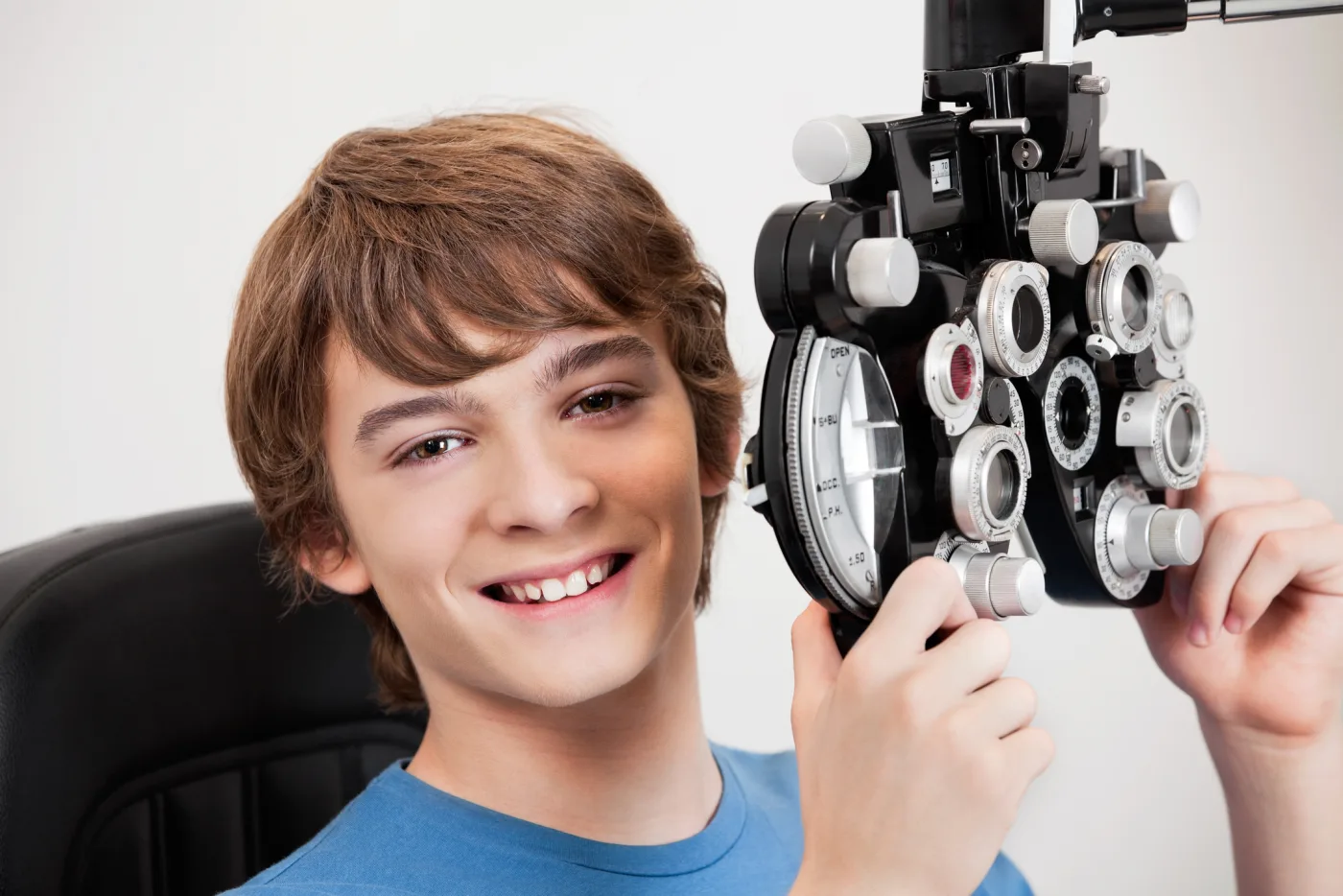
What Happens During a Teen Eye Exam?
A teen eye exam is usually more detailed than a simple screening.
The doctor may check:
- Distance vision
- Near vision
- Glasses prescription
- Eye health
- Eye pressure when appropriate
- Eye alignment
- Eye focusing
- Eye movement
- Depth perception
- Contact lens fit if needed
- Symptoms with screens or reading
- Myopia progression risk
- Sports or driving vision needs
The exam is also a good time for your teen to ask questions. (Here is what to expect at a comprehensive eye exam.)
They may want to know whether they can wear contacts, whether their prescription changed, whether they need glasses for driving, or why their eyes feel tired.
Teenagers often do better when they understand the reason behind the recommendation.
When Should a Teen Have an Eye Exam?
A teen should have a comprehensive eye exam if they have symptoms, failed a screening, wear glasses or contacts, play sports, have headaches, have a history of concussion, or have a changing prescription.
Many teens benefit from yearly eye exams, especially if they wear glasses or contacts, have myopia, use screens heavily, or are having symptoms.
If your teen wears contact lenses, regular follow-up is important because the doctor needs to monitor eye health, lens fit, prescription accuracy, and safe lens wear.
Teen Eye Care at Pediatric & Family Vision
At Pediatric & Family Vision, we see teens for routine eye exams, glasses, contact lenses, medical eye concerns, headaches, screen-related eye strain, and myopia management.
We also understand that teens need to be part of the conversation. The exam is not only about telling parents what is happening. It is also about helping your teen understand their eyes and take ownership of their care.
If your teen’s prescription is changing, if they are asking for contacts, if they are having headaches, or if school and screen work feel harder than they should, a comprehensive eye exam is a good place to start.
Teen eye care is about more than seeing the board.
It is about helping your child see clearly, feel comfortable, protect their eyes, and keep up with the demands of school, sports, screens, and daily life.