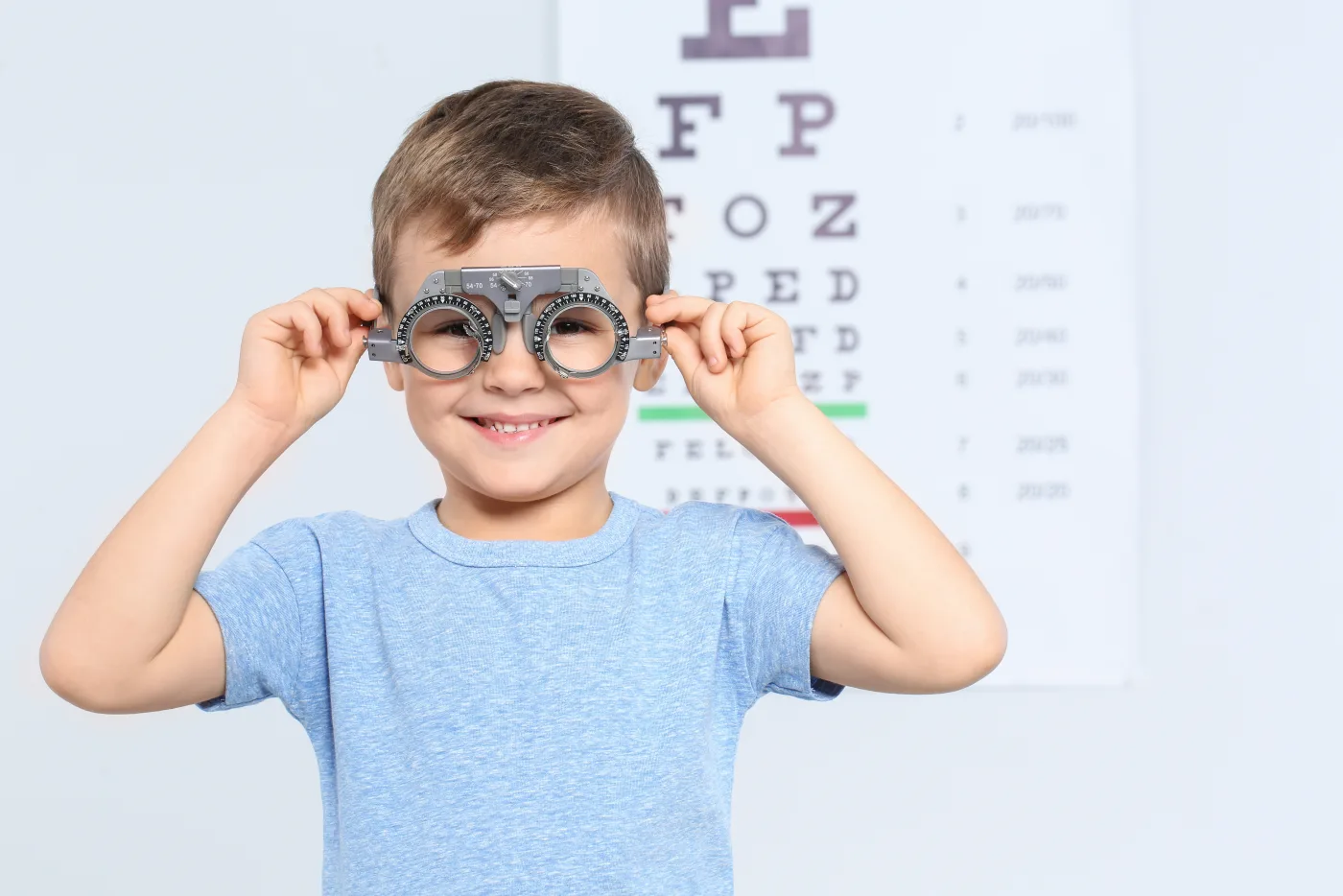
Getting glasses for your child can feel like a big step.
You finally have an answer. Your child needs glasses. You pick out frames. You hope this will help them see better, feel more comfortable, or support their visual development.
Then they refuse to wear them.
- They take them off in the car.
- They hide them in their backpack.
- They say the glasses feel weird.
- They say they can see fine without them.
- They wear them for five minutes, then the glasses disappear.
This can be frustrating, especially when the doctor said the glasses are important.
But before assuming your child is being difficult, it is important to ask why they are refusing.
Children usually refuse glasses for a reason.
- Sometimes the glasses hurt.
- Sometimes they slide.
- Sometimes the prescription feels strange.
- Sometimes the child is embarrassed.
- Sometimes they do not understand why the glasses matter.
- Sometimes the glasses are doing something important, but your child does not feel the benefit right away.
The goal is to find the reason and fix what can be fixed.
First, Make Sure the Glasses Fit
Fit is the first thing to check.
If glasses do not fit well, it can be very hard to get a child to wear them.
Kids may not explain this clearly. They may not say, “The temples are too tight,” or “The bridge is slipping.”
They may simply take the glasses off.
Look for these signs:
- The glasses slide down the nose
- Your child keeps pushing them up
- The glasses sit crooked
- The frames touch the cheeks
- There are red marks on the nose
- The temples pinch behind the ears
- The glasses look too wide
- The glasses look too small
- Your child looks over the top of the lenses
- Your child complains they hurt
If any of these are happening, have the glasses adjusted.
A small adjustment can make a big difference.
Do Not Assume Refusal Is Behavior
It is easy to get frustrated when a child refuses glasses.
But refusal is often communication.
A child may be telling you:
- These hurt
- These feel heavy
- These make things look strange
- These slide
- I do not like how I look
- I do not understand why I need them
- Kids are commenting on them
- I feel different
- I see better without them for some tasks
- I do not know when I am supposed to wear them
The first job is not to force harder.
The first job is to figure out what is getting in the way.
Check the Prescription and Lenses
If your child says the glasses make things blurry, strange, dizzy, too big, too small, or uncomfortable, call the eye doctor or optical team.
Sometimes children need time to adapt to a new prescription.
But sometimes there is another issue.
Possible problems include:
- The prescription needs to be rechecked
- The glasses were made incorrectly
- The lenses are switched
- The optical center is not lined up properly
- The frame sits too low
- The child is looking over the lenses
- The lenses are scratched
- The prescription is correct but difficult to adjust to
- The child needs a different wearing schedule
- The frame fit is affecting how the lenses work
Do not let the glasses sit unused for months.
If your child refuses them, bring the glasses back and have them checked.
Ask Why the Glasses Were Prescribed
Parents need to understand the reason for the glasses.
A child may need glasses for:
- Seeing the board
- Seeing clearly up close
- Reducing eye strain
- Supporting visual development
- Helping one eye develop better vision
- Helping with an eye turn
- Helping the eyes work more comfortably
- Protecting the better-seeing eye
- Myopia progression care
- School comfort
The reason matters because the urgency of wearing them can be different.
A child who needs glasses for occasional distance blur may have a different wearing schedule than a child whose glasses are part of amblyopia treatment or eye alignment care.
Ask the doctor:
“Are these full-time glasses?”
“Are these for school only?”
“Are these for reading or screens?”
“Are these important for visual development?”
“What happens if my child does not wear them?”
You should leave with a clear answer.
Full-Time Glasses Need a Routine
If your child needs glasses full-time, make them part of the daily routine.
Do not wait until your child is already frustrated.
Put them on at the same time every morning.
For example:
- Wake up
- Get dressed
- Put on glasses
- Brush teeth
- Eat breakfast
- Start the day
You can say:
“Glasses are part of getting ready.”
Not as a punishment.
Not as a negotiation.
Just as part of the routine.
Younger children do better when glasses are treated like shoes, clothes, or brushing teeth.
Be Specific If Glasses Are Not Full-Time
Some children only need glasses for certain tasks.
That can be harder because the child has to remember when to use them.
If the doctor says the glasses are for school, reading, screens, or distance, ask for very specific instructions.
Examples:
- Wear them all day at school
- Wear them for reading and homework
- Wear them for seeing the board
- Wear them for screens and near work
- Wear them for sports only if they are sport glasses
- Wear them for driving if your teen is old enough
- Wear them whenever distance is blurry
Children do not usually manage vague instructions well.
“As needed” can be confusing.
Specific instructions help everyone.
Tell the Teacher
If your child needs glasses at school, tell the teacher.
The teacher can help notice whether your child is wearing them, looking over them, leaving them in the backpack, or taking them off during certain tasks.
You do not need a long explanation.
You can say:
“My child was prescribed glasses and should wear them during school. Please let me know if you notice they are taking them off, squinting, or having trouble seeing.”
If the glasses are only for certain tasks, be specific.
For example:
“They should wear them for reading and close work.”
Or:
“They should wear them when looking at the board.”
School support can make a big difference.
Let Your Child Help Choose the Frames
Children are more likely to wear glasses when they feel involved.
That does not mean they should choose any frame they want.
Parents and the optical team can narrow the choices first.
Pick frames that fit well, match the prescription, and are durable enough for your child.
Then let your child choose from those options.
This gives your child ownership without sacrificing function.
A child who likes their glasses is more likely to wear them.
Make Sure the Frames Match Real Life
A frame that looks cute but does not survive daily life is not a good choice.
Kids need glasses that fit their actual routine.
Think about:
- School
- Recess
- Sports
- Headphones
- Car seats
- Backpacks
- Reading
- Screens
- Playground time
- Younger siblings
- Sensory preferences
- How rough your child is with belongings
Some children need flexible frames.
Some need straps.
Some need cable temples.
Some need a backup pair.
Some need prescription sport goggles instead of regular glasses for sports.
The right glasses should match the child, not just the prescription.
Start with Short, Calm Practice When Appropriate
If your child is very young or sensory sensitive, they may need time to adjust.
Depending on why the glasses were prescribed, the doctor may still want full-time wear. But you can work toward that with a calm plan if the child is resisting strongly.
For example:
- Put glasses on during a favorite show
- Use them during a preferred activity
- Practice while reading together
- Start during calm times, not during a meltdown
- Praise the effort
- Slowly increase wearing time
- Keep the glasses nearby and consistent
Ask the doctor how flexible the schedule can be.
- For some children, gradual wear is fine.
- For others, especially when glasses are part of amblyopia or eye alignment treatment, consistent wear may be more urgent.
Use Positive Language
The way adults talk about glasses matters.
Try not to say:
“You have bad eyes.”
“You cannot see.”
“You have to wear these or else.”
“You look funny without them.”
Instead, say:
“These help your eyes see clearly.”
“These help your eyes work better.”
“These help your brain get a clear picture.”
“These are part of taking care of your body.”
“These help you at school.”
Keep it calm and matter-of-fact.
Glasses should not feel like a punishment.
Do Not Turn Glasses into a Daily Fight
This is hard, especially when the glasses are medically important.
But daily power struggles can make children resist more.
Try to keep the tone steady.
You can say:
“It is time for glasses.”
Then help put them on.
If your child takes them off, calmly put them back on.
If the refusal continues, look for the reason.
- Are they uncomfortable?
- Are they being teased?
- Do they feel dizzy?
- Are they confused about when to wear them?
- Is the frame sliding?
- Is the prescription hard to adjust to?
The answer will guide the solution.
Praise Consistency, Not Perfection
Children need encouragement.
Praise the behavior you want to see.
You can say:
“You kept your glasses on during homework. That was great.”
“You remembered your glasses for school.”
“You told me they were sliding. That helps us fix them.”
“You wore them longer today.”
Avoid making every slip feel like failure.
The goal is progress.
For Toddlers, Keep It Simple
Toddlers do not need long explanations.
They need consistency, comfort, and repetition.
Helpful strategies include:
- Put glasses on right after waking
- Use a strap if needed
- Keep the frame adjusted
- Redirect gently when they remove them
- Use praise
- Let them see family members wearing glasses
- Keep hands busy with an activity
- Make glasses part of the routine
- Avoid big emotional reactions when they pull them off
- Follow up if they refuse constantly
Toddlers may pull glasses off many times before they accept them.
That does not mean the plan is failing.
It means they are learning.
For School-Age Children, Explain the Why
Older children usually need to understand the reason.
You can explain:
“Your glasses help you see the board.”
“Your glasses help your eyes not work so hard.”
“Your glasses help both eyes get a clear picture.”
“Your glasses help with headaches during homework.”
“Your glasses are part of treating your lazy eye.”
“Your glasses help keep your eyes straighter.”
The explanation should match the actual reason the glasses were prescribed.
If your child understands the purpose, they may be more willing to cooperate.
For Teens, Make Them Part of the Decision
Teenagers may resist glasses for different reasons.
- They may feel embarrassed.
- They may not like the style.
- They may prefer contacts.
- They may not believe the prescription matters.
- They may only wear glasses when driving or in class.
- They may overuse contacts because they do not want to wear glasses.
With teens, involve them in the conversation.
Ask:
- What bothers you about the glasses?
- Do they feel uncomfortable?
- Do you like the way they look?
- Are you having trouble seeing with them?
- Are you wearing contacts too long?
- Would contact lenses be a better option?
- Do you need a different frame?
- Do you understand when you need to wear them?
Teens need ownership.
They also need clear safety rules, especially for driving and contact lens wear.
What If Your Child Is Embarrassed?
Embarrassment is common.
A child may worry they look different.
They may worry classmates will comment.
They may not want to be the only one wearing glasses.
Helpful steps include:
- Let them choose frames they like
- Point out people they admire who wear glasses
- Keep the tone positive
- Avoid making glasses a big dramatic issue
- Talk to the teacher if teasing happens
- Consider a backup pair in a different style if needed
- Ask about contact lenses when age appropriate
- Make sure the glasses fit well and look intentional
The social piece is real.
It should not be dismissed.
What If Your Child Says They Can See Fine?
Children often say this.
- Sometimes they truly can see well enough for some tasks.
- Sometimes they do not know what clear vision should look like.
- Sometimes one eye is doing most of the work.
- Sometimes the glasses are for development, not just immediate clarity.
- Sometimes the prescription is for near work and the child only notices the benefit during reading or homework.
Instead of arguing, ask the doctor to explain the purpose in parent-friendly language.
Then explain it to your child simply.
For example:
“You may feel like you can see, but one eye needs more help. The glasses help both eyes get a clear picture.”
Or:
“These are not just for the board. They help your eyes relax when you read.”
What If the Glasses Feel Too Strong?
Some prescriptions feel strange at first.
This can happen with astigmatism correction, higher prescriptions, first-time glasses, or changes from an old prescription.
A short adjustment period may be normal.
But if your child is dizzy, nauseated, having headaches, refusing constantly, or saying the floor looks strange after consistent wear, call the office.
The doctor or optical team may need to check:
- Prescription
- Lens measurements
- Frame fit
- Lens placement
- Whether the glasses were made correctly
- Whether adaptation is expected
- Whether the wearing schedule should be adjusted
Do not force through weeks of major discomfort without calling.
What If Your Child Only Refuses One Pair?
That tells you something.
If your child wears an old pair but refuses the new one, check:
- Is the new prescription much different?
- Are the new frames heavier?
- Are the lenses bigger?
- Do the glasses slide more?
- Is the frame touching the cheeks?
- Is the style disliked?
- Are the lenses scratched?
- Were the glasses made correctly?
- Is the child looking through the right part of the lenses?
Bring both pairs to the office.
Comparing them can help find the problem.
What If Your Child Wears Glasses at Home but Not School?
This may be social.
They may be embarrassed, teased, or worried about being different.
It may also be practical.
The glasses may fog, slide during recess, interfere with headphones, or feel uncomfortable during PE.
Ask gently.
You can say:
“I noticed your glasses stay in your backpack at school. What is happening?”
Try not to start with blame.
Once you know the reason, you can fix it.
What If Your Child Wears Glasses at School but Not Home?
This may happen when the child thinks glasses are only for the board.
Ask the doctor whether home wear is needed.
If glasses are prescribed for full-time wear, then home matters too.
If they are for school tasks only, then the child may not need them for every home activity, but may still need them for homework, reading, or screens.
Clarity matters.
Make a Glasses Home Base
Glasses get lost when they do not have a place.
Create one place for glasses when they are not being worn.
This may be:
- A case by the bed
- A tray near the backpack
- A drawer near homework supplies
- A case in the school bag
- A second case at school
- A labeled spot in the bathroom or bedroom
Teach your child:
“On your face or in the case.”
That simple rule prevents a lot of broken glasses.
Teach Two-Hand Removal
Many children stretch frames because they pull glasses off with one hand.
Teach them to use two hands.
This keeps the frame from bending out of shape.
You may have to remind them many times.
That is normal.
Glasses care is a learned skill.
Keep Lenses Clean
Dirty lenses can make glasses annoying.
Children may not notice smudges, but they may take glasses off because vision feels blurry.
Clean the lenses every day.
Teach your child not to use shirts, paper towels, or rough materials if those scratch the lenses.
Use a proper cleaning cloth and lens cleaner when recommended.
If lenses are badly scratched, your child may not be seeing clearly even with the correct prescription.
Consider a Backup Pair
A backup pair is often worth it for children.
This is especially true if glasses are needed full-time, for school, for amblyopia treatment, for safety, or for strong prescriptions.
Kids lose glasses.
Frames break.
Lenses scratch.
A backup pair prevents panic and keeps the treatment plan on track.
The backup pair does not have to be the most expensive pair.
It just needs to be wearable and current.
Do Not Use Regular Glasses for Sports Protection
If your child plays sports, ask whether regular glasses are safe enough.
For many sports, regular glasses are not the same as protective eyewear.
Sports goggles or prescription protective eyewear may be needed for higher-risk activities.
This matters for sports with balls, elbows, sticks, fingers, or fast movement.
Examples include:
- Basketball
- Baseball
- Softball
- Soccer
- Racquet sports
- Lacrosse
- Hockey
- Martial arts
- Volleyball
- Football
If your child avoids glasses because they are hard to wear during sports, the solution may be sport eyewear, not skipping correction.
What If Sensory Issues Are Part of the Problem?
Some children dislike the feeling of glasses on their face.
This can happen with sensory sensitivities, autism, anxiety, or simply a child who is very sensitive to touch.
Signs may include:
- Pulling glasses off immediately
- Disliking pressure behind the ears
- Disliking the nose bridge
- Refusing hats, headphones, or masks too
- Getting upset when glasses touch the face
- Tolerating glasses only for short periods
- Wanting very specific frame materials
For these children, fit and frame choice matter even more.
Soft, lightweight, flexible frames may help. Straps may help some children but bother others. Gradual exposure may help when medically appropriate.
Ask the doctor how urgent full-time wear is and whether occupational therapy strategies may support tolerance if sensory challenges are significant.
What If Your Child Has Amblyopia?
If glasses are prescribed for amblyopia, also called lazy eye, consistent wear is very important.
Amblyopia happens when vision does not develop normally in one or both eyes during childhood.
Glasses may be the first step in giving the weaker eye a clear image.
Some children improve with glasses alone. Others need patching, atropine drops, or additional treatment.
If a child with amblyopia refuses glasses, call the eye doctor.
Do not wait months.
The treatment plan depends on consistent visual input.
What If Your Child Has an Eye Turn?
If glasses are prescribed to help an eye turn, consistent wear may also be very important.
Some eye turns improve when glasses are worn because the glasses reduce focusing effort and help the eyes align.
Parents sometimes say:
“Her eyes look straight with the glasses. Does she still need them?”
Often, yes.
That may mean the glasses are working.
If the eye turn returns when glasses are off, that is useful information for the doctor.
What If Your Child Is Nearsighted?
If your child is nearsighted, they may resist glasses because near tasks still look clear without them.
They may say:
“I can read fine.”
That may be true.
But they may still need glasses for distance, school, sports, seeing the board, watching TV, or safety.
If the prescription is changing, they may also need monitoring for myopia progression.
Ask the doctor when the glasses should be worn and whether myopia management should be discussed.
What If Your Child Is Farsighted?
Farsighted children may resist glasses because they can sometimes force their eyes to see clearly.
But forcing focus can cause headaches, eye strain, fatigue, or eye turns in some children.
A farsighted child may not feel an immediate dramatic improvement with glasses, especially if they have been compensating for a long time.
The benefit may be less strain, better comfort, and healthier visual function.
This is why the doctor’s explanation matters.
What If Your Child Has Astigmatism?
Astigmatism correction can feel strange at first.
The world may look tilted, stretched, clearer but different, or slightly off.
Most children adapt with consistent wear.
If the child takes glasses on and off all day, adaptation may take longer.
If symptoms are severe or do not improve, have the glasses checked.
When Should You Call the Eye Doctor?
Call if:
- Your child refuses glasses completely
- The glasses hurt
- The glasses slide constantly
- Your child says vision is worse with glasses
- Your child gets headaches with glasses
- Your child feels dizzy or nauseated
- One eye still turns with glasses on
- Your child looks over the lenses
- The frame is crooked
- Lenses are scratched
- Glasses were recently made and seem wrong
- Your child has amblyopia and will not wear them
- Your child has an eye turn and will not wear them
- Your child is being teased
- You do not understand the wearing schedule
Do not wait until the next annual exam if the glasses are not being worn.
The sooner the issue is addressed, the easier it is to fix.
What Parents Should Ask at the Follow-Up
Ask:
- Is the prescription correct?
- Were the glasses made correctly?
- Is the frame fit causing problems?
- Does my child need full-time wear?
- Can we build up wearing time or does it need to be immediate?
- Are the glasses part of amblyopia treatment?
- Are the glasses helping an eye turn?
- Could contacts be an option when age appropriate?
- Does my child need sport eyewear?
- Should we get a backup pair?
- What should I tell the teacher?
- When should we recheck?
A clear plan helps reduce stress at home.
Glasses Support at Pediatric & Family Vision
At Pediatric & Family Vision, we help families figure out why a child is refusing glasses.
We check whether the prescription makes sense, whether the glasses were made correctly, whether the frame fits, whether the lenses are scratched, and whether the wearing schedule is clear.
We also explain why the glasses were prescribed.
- Some children need glasses to see the board.
- Some need them for reading or screens.
- Some need them for amblyopia, eye alignment, myopia, visual development, or comfort.
Those situations are not all the same.
If your child refuses glasses, do not assume you have failed and do not assume your child is just being difficult.
There is usually a reason.
Once we find the reason, we can make a better plan.