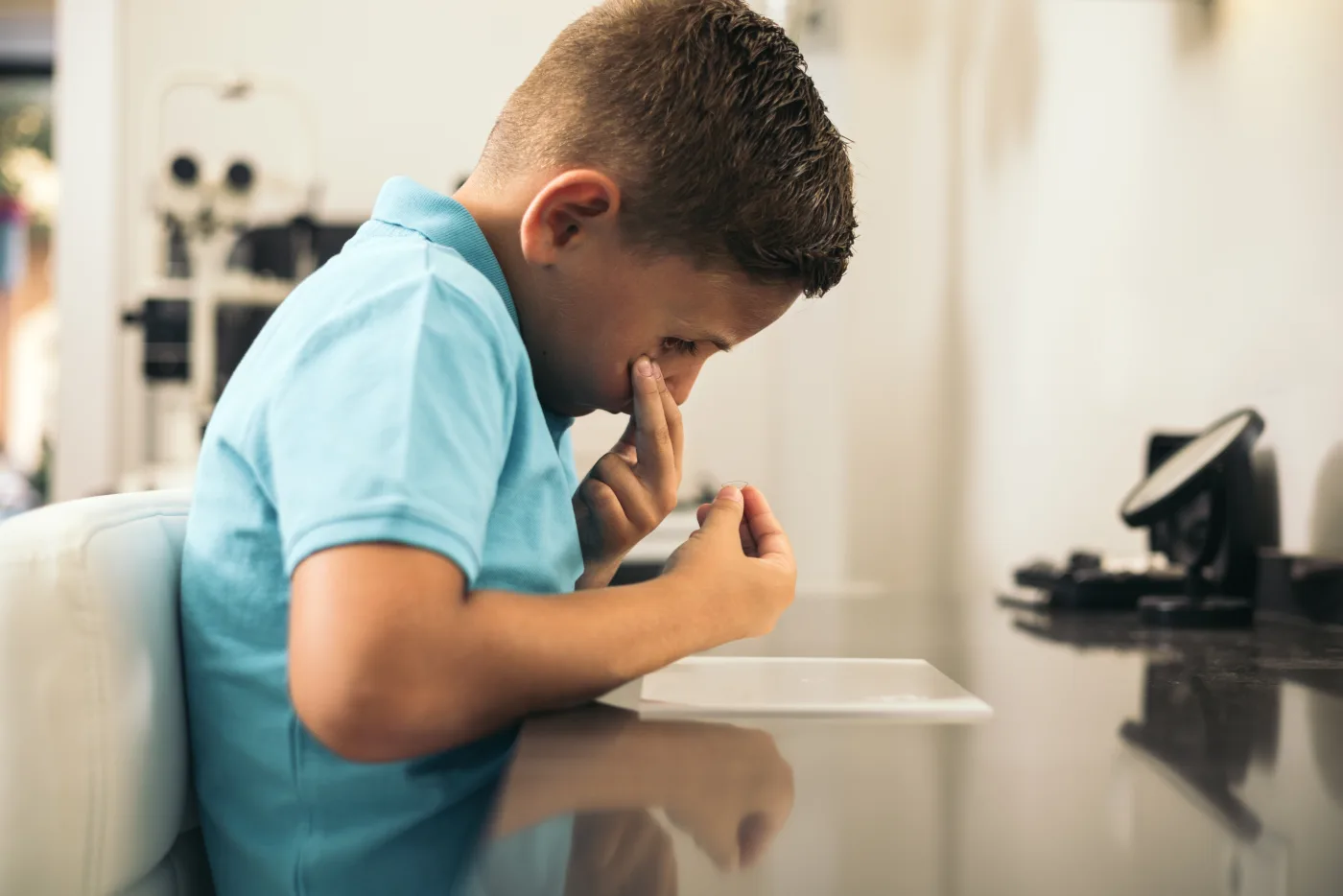
At some point, many children ask about contact lenses.
- Sometimes it starts with sports.
- Sometimes it is because glasses keep sliding down.
- Sometimes the child feels self-conscious.
- Sometimes they just want the freedom of not wearing glasses all day.
Parents usually have the same first question.
Is my child old enough for contacts?
The honest answer is that there is no perfect age for every child.
Some children are ready around age 8 or 9. Some are not ready until the teen years. Some adults are still not great contact lens wearers because they do not follow the rules.
Contact lens readiness is less about age and more about maturity, hygiene, motivation, eye health, prescription, and whether the child can follow directions consistently.
Contacts can be a great option for many kids.
They can also cause problems if they are worn incorrectly.
That is why the decision should be made with an eye doctor, not guessed at home.
Contact Lenses Are Medical Devices
Contact lenses may feel simple because they are small and common.
But they are medical devices.
They sit directly on the eye. That means they need to be prescribed, fitted, and monitored by an eye doctor.
Your child should never wear contact lenses that were bought without a prescription, borrowed from someone else, ordered without a proper fitting, or used only for costume or cosmetic reasons without an eye exam.
This includes colored contacts.
Even decorative contacts need a prescription and proper fitting.
A lens that does not fit correctly can scratch the eye, cause infection, reduce oxygen to the cornea, or create a serious eye problem.
How Old Should a Child Be for Contacts?
There is no single age that works for every child.
Many eye care professionals consider contacts for children around age 8 and older when the child is mature enough and the eyes are healthy.
But age alone does not decide.
- A responsible 9-year-old may do very well.
- A careless 14-year-old may not be ready.
The better question is:
“Can my child safely handle the responsibility?”
That includes washing hands, inserting and removing lenses, following the wearing schedule, avoiding water, replacing lenses properly, and telling an adult if something feels wrong.
Signs Your Child May Be Ready
Your child may be ready for contact lenses if they:
- Ask for contacts for a clear reason
- Keep glasses in good condition
- Follow hygiene routines without constant reminders
- Wash hands reliably
- Can follow multi-step instructions
- Is willing to practice insertion and removal
- Understands that contacts are not toys
- Can tell an adult if the eye hurts or feels wrong
- Is responsible with school and sports gear
- Is motivated enough to learn
Motivation matters.
A child who wants contacts is usually more willing to learn the routine.
A child who is being pushed into contacts by a parent may resist the process.
Signs Your Child May Not Be Ready Yet
Your child may need more time before contacts if they:
- Avoid basic hygiene
- Frequently loses glasses
- Rubs their eyes often
- Has frequent eye allergies
- Has dry or irritated eyes
- Gets nervous touching the eye
- Refuses to follow directions
- Wants contacts only for a costume
- Sleeps in glasses or forgets routines often
- Cannot tell an adult when something is wrong
- Shares personal items with friends
- Does not understand the risk of infection
Not being ready now does not mean never.
It just means glasses may be the safer choice until the child is more mature or the eye surface is healthier.
Why Kids May Want Contact Lenses
Children and teens may want contacts for many valid reasons.
Common reasons include:
- Sports
- Dance
- Gymnastics
- Cheer
- Martial arts
- Swimming-related vision needs
- Glasses slipping during play
- Appearance
- Confidence
- Strong prescriptions
- Glasses fogging
- Better side vision
- Myopia management options
- Comfort with helmets or headphones
These are reasonable concerns.
Contacts can help many children feel more comfortable and confident.
The key is making sure the child is a safe candidate.
Contacts for Sports
Sports are one of the most common reasons parents ask about contact lenses.
Contacts can be helpful because they do not slide down, fog, or block side vision the way glasses sometimes can.
They may be useful for:
- Soccer
- Basketball
- Baseball
- Softball
- Dance
- Gymnastics
- Tennis
- Martial arts
- Cheer
- Track
- Football
- Volleyball
But contacts do not protect the eyes from injury.
This is important.
If your child plays a sport with balls, sticks, elbows, fingers, or fast movement, they may still need protective sports eyewear.
- Contacts help vision.
- Sport goggles protect the eyes.
They are not the same thing.
Contacts and Swimming
Contact lenses and water are a bad mix.
Children should not swim, shower, or use hot tubs while wearing contacts unless the eye doctor has given very specific guidance for a special situation.
Water can expose contact lenses to germs that may cause serious eye infections.
This includes pool water, ocean water, lake water, tap water, and shower water.
If your child needs vision correction for swimming, ask about prescription swim goggles.
Do not use contacts as the easy swimming solution without discussing safety first.
Daily Disposable Contacts
Daily disposable contacts are often a good option for children when the prescription and eye health fit.
The child wears a fresh pair each day and throws them away after use.
- There is no cleaning solution.
- There is no overnight storage.
- There is no case to clean.
This can reduce some of the routine mistakes that happen with reusable lenses.
Daily lenses are not risk-free, but they can make the care routine simpler.
They may be a good fit for children who are new to contacts or families who want less cleaning responsibility.
Reusable Contacts
Reusable contacts may be replaced every two weeks, monthly, or on another schedule depending on the lens.
These lenses require cleaning, disinfecting, and proper storage.
- The child must use the correct solution and never use water.
- They must not top off old solution.
- They must clean and replace the lens case as directed.
Reusable lenses can work well for some children, but they require more responsibility.
If your child struggles with routines, daily disposable lenses may be safer and easier if they are an option.
ortho-K Is Different
Ortho-K stands for orthokeratology.
These are specially designed rigid lenses worn overnight while sleeping. They gently reshape the front surface of the eye so the child may see clearly during the day without glasses or daytime contacts.
Ortho-K may also be used as part of myopia management for some children.
This option requires very careful hygiene and follow-up because the lenses are worn overnight.
It is not the same as regular daytime contact lens wear.
If your child is interested in ortho-K, they need a full evaluation to determine whether they are a candidate.
Contacts for Myopia Management
Some contact lenses are used for myopia management.
Myopia means nearsightedness. A child with myopia sees better up close than far away.
Traditional glasses and contacts help a child see clearly. Myopia management aims to slow how quickly the nearsightedness progresses.
Some children may be candidates for specialty soft contact lenses, such as MiSight, or ortho-K lenses.
Not every child with myopia needs contact lens-based treatment.
But if your child’s prescription keeps getting stronger, ask the eye doctor whether myopia management should be discussed.
Contacts Do Not Replace Glasses
Every contact lens wearer still needs backup glasses.
This is not optional.
Your child needs backup glasses because contacts should not be worn during eye redness, pain, light sensitivity, discharge, infection, irritation, or certain illnesses.
Your child also needs glasses for times when contacts are lost, torn, uncomfortable, or not available.
A teen who does not have backup glasses may keep wearing contacts when they should stop.
That can increase the risk of eye problems.
Contacts are an option.
They are not a replacement for having a current pair of glasses.
What Makes Contacts Unsafe?
Contacts become risky when children or teens do not follow the rules.
Unsafe habits include:
- Sleeping in contacts without doctor approval
- Swimming in contacts
- Showering in contacts
- Using water on lenses
- Reusing old solution
- Topping off solution in the case
- Wearing lenses longer than prescribed
- Wearing lenses when eyes are red or painful
- Sharing contacts
- Wearing costume lenses without a prescription
- Skipping follow-up visits
- Not washing hands before handling lenses
- Wearing a torn lens
- Using expired lenses or solution
These habits can lead to infection, scratches, inflammation, pain, and vision-threatening complications.
The rules matter.
The Most Important Safety Rule
If the eye is red, painful, light sensitive, or blurry, contacts come out.
Your child should know this rule clearly.
Parents should know it too.
A contact lens wearer with a red, painful, light sensitive, or blurry eye should stop wearing the lens and call the eye doctor.
- Do not wait.
- Do not switch to another contact lens.
- Do not use old antibiotic drops.
- Do not keep wearing contacts to get through school or sports.
The eye needs to be checked.
Contact Lens Training Matters
A child should not leave the office with contacts until they can insert and remove them safely.
During contact lens training, your child will learn:
- How to wash hands
- How to handle lenses
- How to tell if a lens is inside out
- How to insert the lens
- How to remove the lens
- How long to wear lenses at first
- What symptoms are not normal
- How to clean lenses if reusable
- How to store lenses if reusable
- When to throw lenses away
- When to stop wearing contacts
- When to call the office
Some children learn quickly.
Some need more than one training visit.
That is normal.
The goal is safety, not speed.
What If My Child Is Scared to Touch Their Eye?
That is very common.
- Some children are nervous at first and still learn successfully.
- Others are not ready.
The training process should be calm and patient.
A child who is crying, panicking, or unable to safely insert and remove lenses may need more time before starting contacts.
Contacts should not become a daily battle.
If the child is highly motivated, practice and reassurance may help.
If the child is not motivated, it may be better to wait.
What If My Child Has Allergies?
Eye allergies can make contact lens wear harder.
Allergies can cause itching, redness, watering, swelling, mucus, and eye rubbing.
Rubbing the eyes while wearing contacts can irritate the cornea or move the lens out of place.
If your child has significant allergies, the eye doctor may want to treat the allergy first or choose a lens type that works better for allergic eyes.
Daily disposable lenses may be helpful for some allergy patients because a fresh lens is used each day.
But the right plan depends on the exam.
What If My Child Has Dry Eye?
Dry eye can also make contacts uncomfortable.
Children may not say their eyes are dry.
They may say:
“My eyes hurt.”
“My contacts feel scratchy.”
“My vision gets blurry.”
“I want to take them out.”
Dryness can be worse with screens, air conditioning, allergies, or long wearing time.
If your child has dry eye symptoms, the doctor may recommend treating the tear film before or during contact lens wear.
A child who is uncomfortable in contacts should not be told to just push through it.
What If My Child Plays Outside in South Florida Heat?
Heat, sweat, sun, allergies, pool exposure, and outdoor sports can all affect contact lens comfort.
Your child may need:
- Sunglasses over contacts
- Artificial tears approved for contact lenses
- Daily disposable lenses
- Sport goggles when needed
- A clear plan for pool days
- Backup glasses
- Strong hygiene habits
- Follow-up if eyes get red or irritated
Contacts can work well in an active South Florida lifestyle, but the child needs to know the rules.
Water exposure is the biggest issue around pools, beaches, showers, and water parks.
Can Contacts Help My Child’s Confidence?
Yes, sometimes.
Some children feel more confident without glasses.
That matters.
Confidence is a valid reason to discuss contacts, especially if the child is responsible and motivated.
But contacts should not be started only because a child feels pressured by peers.
If bullying or teasing is part of the issue, that should be addressed too.
Children should not feel ashamed of glasses.
Contacts can be a choice, not a rescue.
Are Contacts Better Than Glasses?
Not always.
Contacts and glasses have different benefits.
- Glasses are easy, safe, and provide a break from contacts.
- Contacts can help with sports, side vision, appearance, and certain prescriptions.
Some children do best with both.
- They may wear contacts for school and sports, then glasses at home.
- They may wear glasses most days and contacts for activities.
- They may use contacts as part of myopia management.
The best option depends on the child.
What Are the Risks of Contacts?
Most children who are properly fit and follow the rules do well with contacts.
But risks can include:
- Eye infection
- Corneal scratch
- Redness
- Dryness
- Allergic irritation
- Contact lens intolerance
- Inflammation
- Blurry vision
- Lens overwear
- Rare but serious corneal infection
The risk increases when lenses are worn incorrectly.
That is why hygiene, water avoidance, wearing schedule, and follow-up visits are so important.
Can My Child Wear Contacts Every Day?
Maybe.
- Some children wear contacts daily.
- Some wear them only for sports, dance, or special activities.
- Some start part-time while they build confidence.
The wearing schedule depends on the lens type, eye health, prescription, and how well the child tolerates lenses.
The doctor may start with shorter wear times and gradually increase.
Your child should not decide on their own to wear lenses longer than prescribed.
Can My Child Sleep in Contacts?
Usually no.
Most children should not sleep in contacts unless the lenses are specifically designed and prescribed for overnight wear, such as ortho-K or certain approved extended wear lenses.
Sleeping in contacts can increase the risk of infection.
If your child accidentally sleeps in contacts, do not panic, but do not ignore symptoms.
If the eye is red, painful, light sensitive, or blurry, call the eye doctor.
Can My Child Use Eye Drops with Contacts?
Only certain drops are safe with contact lenses.
Do not assume any eye drop can be used over contacts.
Some drops can damage lenses or irritate the eyes.
Ask the eye doctor which drops are safe for your child’s lenses.
If your child needs allergy drops, dry eye drops, or redness drops, ask exactly when to use them and whether contacts should be removed first.
Avoid using redness reliever drops regularly unless the eye doctor recommends them.
What About Colored or Costume Contacts?
Colored contacts are not toys.
Costume contacts, Halloween contacts, cosplay contacts, and fashion contacts still require a prescription and proper fitting.
Do not buy them from beauty stores, costume shops, online sellers, flea markets, or friends without an eye exam and prescription.
A contact lens that changes the color of the eye still touches the cornea.
It can still cause scratches, infection, ulcers, and vision loss if it is not fit and used correctly.
If your teen wants colored contacts, schedule a proper contact lens exam.
What Happens During a Contact Lens Exam?
A contact lens exam is different from a regular glasses exam.
The doctor may check:
- Glasses prescription
- Eye health
- Tear film
- Corneal shape
- Contact lens fit
- Lens movement
- Vision with the lens
- Comfort
- Wearing schedule
- Lens care routine
- Whether the child can handle lenses safely
A contact lens prescription includes more than the glasses prescription.
It includes lens brand, power, base curve, diameter, and replacement schedule.
You cannot safely order contacts from a glasses prescription alone.
Why Contact Lens Follow-Up Matters
The first lens that feels okay may not be the final answer.
The doctor needs to check how the lens fits and how the eye responds.
Follow-up visits help monitor:
- Corneal health
- Redness
- Dryness
- Allergies
- Lens fit
- Wearing time
- Vision
- Comfort
- Hygiene habits
- Replacement schedule
- Whether a different lens is needed
Children and teens may underreport symptoms because they do not want to lose contact lens privileges.
Follow-up visits help catch problems early.
What Parents Should Watch For
Call the eye doctor if your child has:
- Red eyes
- Eye pain
- Light sensitivity
- Blurry vision
- Discharge
- Excess tearing
- A white spot on the eye
- Trouble opening the eye
- Contact lens discomfort
- A torn lens
- Symptoms after sleeping in contacts
- Symptoms after water exposure
- Symptoms that do not improve after removing lenses
When in doubt, take the contacts out and call.
How Parents Can Help Contacts Go Well
Parents should stay involved, especially at first.
Help by:
- Watching the first few insertions and removals
- Checking that hands are washed
- Keeping backup glasses available
- Making sure lenses are replaced on schedule
- Keeping solution stocked if reusable lenses are used
- Making sure contacts are not worn in water
- Asking about redness, pain, or blur
- Scheduling follow-up visits
- Reinforcing the safety rules
- Not allowing contact lens shortcuts
Even responsible children need oversight.
Contacts are a shared responsibility at first.
Should My Child Start with Daily Contacts?
Many children do well with daily disposable lenses when they are an option.
The advantages may include:
- Fresh lens each day
- No cleaning solution
- No storage case
- Less buildup on the lens
- Easier routine
- Convenient for part-time wear
- Helpful for sports days
- Often helpful for allergy-prone eyes
Daily lenses may cost more than some reusable lenses, but they can reduce some care mistakes.
The right lens depends on the prescription, eye health, cost, and goals.
What If Contacts Do Not Work?
Contacts are not the only option.
If your child cannot tolerate contacts, that is okay.
They may need:
- Better fitting glasses
- Sport goggles
- Prescription sunglasses
- A different contact lens material
- Daily disposable lenses
- Allergy treatment
- Dry eye care
- More training
- A break and retry later
- Myopia management glasses or atropine if the goal is myopia control
Not every child has to wear contacts.
The best vision correction is the one that is safe, comfortable, and used correctly.
Questions to Ask Before Starting Contacts
Ask the eye doctor:
- Is my child a good candidate?
- Is their prescription available in contacts?
- Are daily disposables an option?
- Are contacts for vision correction, sports, or myopia management?
- How often can my child wear them?
- What are the safety rules?
- What should my child do if an eye turns red?
- Can they wear contacts for sports?
- Do they still need glasses?
- Can they swim in contacts?
- What follow-up visits are needed?
- What will the total cost include?
- What happens if they cannot insert or remove them?
- Are colored contacts safe with a prescription?
These questions help parents understand the full responsibility before starting.
Contact Lenses at Pediatric & Family Vision
At Pediatric & Family Vision, we help families decide whether contact lenses are a good fit for a child or teen.
We look at more than age.
We consider your child’s prescription, eye health, maturity, motivation, sports, screen habits, allergies, dryness, myopia risk, and ability to follow safety rules.
- Some children are ready earlier than parents expect.
- Some need more time.
- Some are good candidates for daily disposable contacts.
- Some may be better suited for glasses, sport goggles, ortho-K, or other myopia management options.
We also make sure every contact lens wearer has backup glasses and knows when to stop wearing contacts.
Contacts can be a great option for the right child.
The goal is not just clear vision.
The goal is safe, comfortable, responsible contact lens wear.