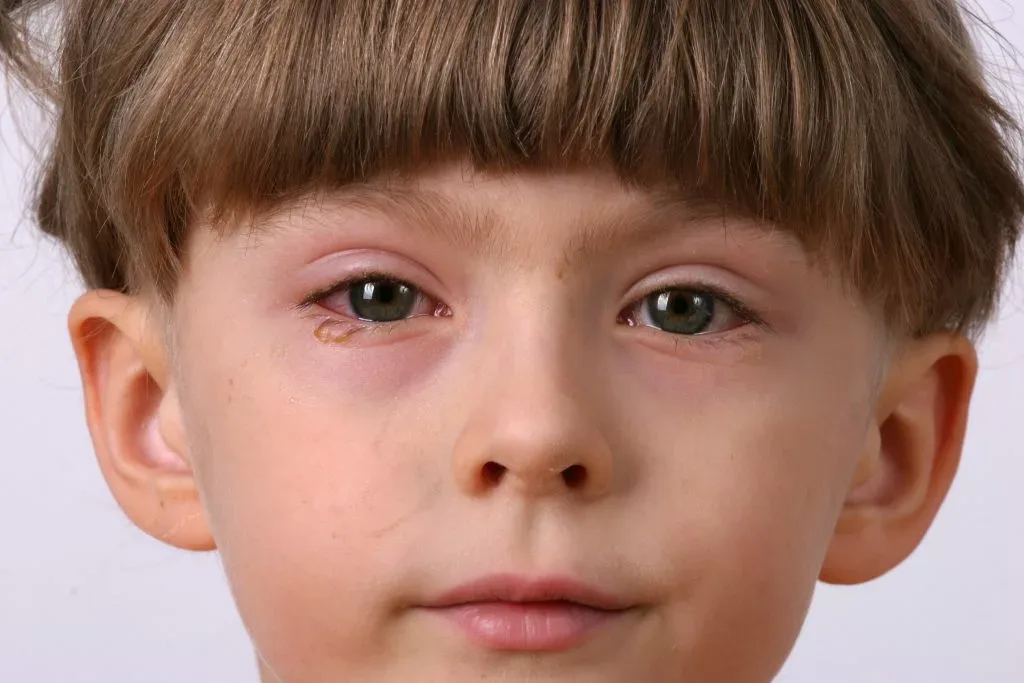
When your child wakes up with red eyes, watery eyes, or crusting on the lashes, it is easy to think one thing.
Pink eye.
But not every red eye is pink eye.
And not every pink eye is the same.
Some red eyes are caused by viruses. Some are caused by bacteria. Some are caused by allergies. Some are caused by irritants like pool water, sunscreen, smoke, dust, makeup, or contact lens problems.
The reason matters because the treatment is different.
- A viral infection does not need the same care as allergies.
- Allergies are not contagious.
- Bacterial conjunctivitis may need medication.
- A contact lens related red eye needs special attention.
- And a painful red eye with light sensitivity or blurry vision should not be treated like simple pink eye.
The goal is not for parents to diagnose everything at home.
The goal is to know the clues and understand when your child should be checked.
What Is Pink Eye?
Pink eye is the common name for conjunctivitis.
The conjunctiva is the clear tissue that covers the white part of the eye and lines the inside of the eyelids.
When that tissue becomes inflamed, the eye can look pink or red.
Pink eye can be caused by:
- Viruses
- Bacteria
- Allergies
- Irritants
- Contact lens problems
- Other eye surface conditions
This is why the phrase pink eye can be confusing.
It describes how the eye looks, not always what caused it.
What Is Allergy Eye?
Allergy eye is usually called allergic conjunctivitis.
It happens when the eyes react to allergens such as pollen, dust, mold, grass, pet dander, or other triggers.
The biggest allergy clue is itching.
If your child’s eyes are very itchy, allergies are more likely.
Allergy eyes may look pink or red, but they are not contagious.
That means your child cannot spread allergy eye to another child the way viral or bacterial pink eye can spread.
The Biggest Clue: Itching
Itching strongly points toward allergies.
A child with allergy eyes may rub constantly.
They may say:
“My eyes itch.”
“My eyes feel scratchy.”
“My eyes feel weird.”
They may rub so much that the eyelids become puffy or swollen.
Allergy symptoms often include:
- Itchy eyes
- Watery eyes
- Redness
- Puffy eyelids
- Clear discharge
- Eye rubbing
- Sneezing
- Runny nose
- Symptoms after outdoor play
- Symptoms around pets, dust, grass, pollen, or mold
If itching is the main symptom, allergies should be high on the list.
The Biggest Clue for Bacterial Pink Eye: Thick Discharge
Bacterial pink eye often causes thicker discharge.
Parents may notice:
- Yellow or green discharge
- Eyelids stuck together after sleep
- Crusting on the lashes
- Mucus that comes back after wiping
- One eye affected first
- Redness
- Mild swelling
This does not mean every child with crusting needs antibiotics.
Children can have crusting from viral pink eye, allergies, blocked tear drainage, or irritation too.
But thick yellow or green discharge is more suspicious for bacterial infection and should be evaluated.
Viral Pink Eye Often Looks Watery
Viral pink eye is common.
It may happen with a cold, cough, sore throat, runny nose, or recent exposure to someone with pink eye.
Viral pink eye often causes:
- Redness
- Watery discharge
- Burning
- Gritty feeling
- Mild swelling
- One eye starting first
- The other eye becoming involved later
- Cold symptoms
- Recent exposure to someone sick
Viral pink eye can be contagious.
Antibiotic drops do not treat viruses.
The eye doctor can help determine whether the symptoms look viral, bacterial, allergic, or something else.
Allergy Eyes Usually Affect Both Eyes
Allergies often affect both eyes.
One eye may look worse if your child rubs it more, but both eyes are commonly involved.
Allergy symptoms may come and go depending on exposure.
Your child may be worse after:
- Outdoor play
- Recess
- Grass
- Windy days
- Pet exposure
- Dusty rooms
- Mold exposure
- Seasonal changes
- Swimming
- Rubbing the eyes
In South Florida, allergies can be a year round issue for some children.
Pink Eye May Start in One Eye
Viral or bacterial pink eye may start in one eye and then spread to the other.
This is one reason hand washing matters.
Children touch their eyes, then touch toys, towels, desks, phones, tablets, doorknobs, and other people.
- If the cause is viral or bacterial, it can spread.
- If the cause is allergies, it is not contagious.
But because symptoms can overlap, it is not always obvious at home.
Redness Alone Does Not Tell You the Cause
A red eye can happen from many things.
Possible causes include:
- Viral pink eye
- Bacterial pink eye
- Allergic conjunctivitis
- Dry eye
- Contact lens irritation
- Corneal scratch
- Something in the eye
- Pool irritation
- Sunscreen irritation
- Eye injury
- Eyelid inflammation
- Eye inflammation
This is why parents should not treat every red eye the same way.
- A red itchy eye is different from a red painful eye.
- A watery red eye is different from a thick discharge red eye.
- A red eye in a contact lens wearer is different from a red eye in a child who does not wear contacts.
When Pink Eye Is Contagious
Pink eye caused by viruses or bacteria can be contagious.
Allergy eye is not contagious.
Irritation from pool water, sunscreen, smoke, or dry eye is not contagious either.
If your child has suspected infectious pink eye, schedule urgent eye care and reduce spread by:
- Washing hands often
- Avoiding eye rubbing
- Not sharing towels
- Not sharing pillows
- Not sharing eye drops
- Cleaning commonly touched surfaces
- Throwing away contaminated eye makeup if applicable
- Keeping hands away from the eyes
- Following school or daycare policies
- Calling the eye doctor if symptoms are unclear
Schools often have their own return rules, so parents may need to check both the doctor’s guidance and school policy.
Does My Child Need Antibiotic Drops?
Not always.
-
Antibiotics only treat bacterial infections.
-
They do not treat viral pink eye.
-
They do not treat allergies.
-
They do not treat dry eye.
-
They do not treat irritation from pool water or sunscreen.
-
They do not fix a corneal scratch unless there is a specific reason the doctor prescribes them.
-
Using old antibiotic drops is not a good idea.
-
Using someone else’s drops is not a good idea.
The wrong drops can delay the right diagnosis and treatment.
What About Allergy Drops?
Allergy eye drops may help when itching is the main symptom.
Some are available over the counter. Some are prescription.
The right choice depends on:
- Your child’s age
- Symptoms
- Contact lens use
- Other medications
- Eye health
- Whether dry eye is also present
- How often symptoms occur
Ask the eye doctor before using drops regularly, especially for young children or contact lens wearers.
What About Redness Reliever Drops?
Try not to rely on redness reliever drops.
Some drops make the eyes look whiter temporarily, but they do not treat the cause.
They can also cause rebound redness if used too often.
For children, it is better to find out why the eye is red.
- If the issue is allergy, treat allergy.
- If the issue is infection, treat infection.
- If the issue is dry eye, support the tear film.
- If the issue is contact lens related, contacts need to come out and the eye needs to be checked.
What If My Child Wears Contacts?
A red eye in a contact lens wearer needs extra caution.
If your child or teen wears contacts and has redness, pain, light sensitivity, blurry vision, discharge, or tearing, the contact lenses should come out.
Then call the eye doctor.
- Do not put in a fresh lens and keep going.
- Do not wear contacts to school, practice, dance, or a game with a painful red eye.
Contact lens related infections can become serious quickly.
Every contact lens wearer needs backup glasses for this reason.
What If Only One Eye Is Red?
One eye redness can happen with viral pink eye, bacterial pink eye, a scratch, a foreign body, contact lens irritation, injury, or rubbing.
One sided redness is more concerning if there is:
- Pain
- Light sensitivity
- Blurry vision
- Swelling
- Discharge
- Trouble opening the eye
- Contact lens wear
- A recent injury
- Something stuck in the eye
- Symptoms that are worsening
If one eye is clearly worse and your child is uncomfortable, call.
What If Both Eyes Are Red and Itchy?
Both eyes being red and itchy often points toward allergy.
This is especially likely if your child also has sneezing, runny nose, puffy eyelids, or symptoms after outdoor exposure.
But both eyes can also be red from viral pink eye, dry eye, irritants, or screen related dryness.
- If symptoms are mild and clearly allergy like, allergy care may help.
- If symptoms are painful, light sensitive, blurry, or persistent, schedule an exam.
What If There Is Crusting in the Morning?
Morning crusting can happen with bacterial pink eye, viral pink eye, eyelid inflammation, allergies, or dry eye.
The type of discharge matters.
- Clear watery discharge points more toward allergy or viral causes.
- Thick yellow or green discharge points more toward bacterial infection.
- Crusting that keeps coming back with red eyelid edges may point toward eyelid inflammation.
If the lashes are stuck shut with thick discharge, call the eye doctor.
What If My Child Has a Cold Too?
Pink eye with a cold is often viral.
Viral pink eye can cause watery redness, irritation, and a gritty feeling.
It may spread easily.
Antibiotic drops usually do not help viral pink eye.
Supportive care may include cool compresses, artificial tears, hygiene, and time, but your child should be evaluated if symptoms are significant, worsening, or unclear.
Call sooner if there is pain, light sensitivity, blurry vision, swelling, or a contact lens history.
What If My Child Has Swelling?
Mild puffiness can happen with allergies.
More significant swelling deserves caution.
Call promptly if swelling is:
- One sided
- Painful
- Warm to the touch
- Associated with fever
- Getting worse
- Preventing the eye from opening
- Associated with trouble moving the eye
- Associated with vision changes
Swelling around the eye can sometimes be more than simple pink eye or allergy.
What If the Eye Hurts?
Eye pain is not typical simple allergy.
A gritty or burning feeling can happen with viral pink eye, dry eye, or irritation.
But true pain, especially with light sensitivity or blurry vision, should be checked.
Pain can happen with:
- Corneal scratch
- Contact lens problem
- Infection
- Inflammation
- Injury
- Foreign body
- Chemical irritation
- More serious eye conditions
Do not assume a painful red eye is routine pink eye.
What If Light Bothers My Child?
Light sensitivity with red eye should be checked.
This can happen with corneal scratches, contact lens problems, inflammation, infection, injury, or other eye conditions.
If your child wants to keep one eye closed because light hurts, call the eye doctor.
This is especially important if vision is blurry or the eye is painful.
What If Vision Is Blurry?
Blurry vision with red eye matters.
Mild blur from watery discharge may clear after blinking.
But persistent blurry vision, especially with pain or light sensitivity, should be evaluated.
Do not treat blurry vision as simple pink eye without checking.
What Can Parents Do at Home While Waiting?
For mild symptoms without warning signs, parents can:
-
Encourage hand washing
-
Avoid eye rubbing
-
Use a clean cool compress
-
Use artificial tears if recommended
-
Keep towels separate
-
Avoid sharing pillows
-
Remove contact lenses if worn
-
Avoid eye makeup
-
Avoid old eye drops
-
Call if symptoms worsen
-
Do not use steroid eye drops unless prescribed.
-
Do not use leftover antibiotic drops.
-
Do not share drops between siblings.
When Should You Call the Eye Doctor?
Call if your child has:
- Eye pain
- Light sensitivity
- Blurry vision
- Thick yellow or green discharge
- Significant swelling
- One eye much worse than the other
- Contact lens wear
- Symptoms after injury
- Symptoms after chemical exposure
- A white spot on the eye
- Trouble opening the eye
- Symptoms that are worsening
- Symptoms that do not improve
- Recurrent red eyes
- A baby with red eye or discharge
You do not need to know whether it is pink eye or allergy before calling.
That is what the exam helps determine.
How the Eye Doctor Can Tell the Difference
The eye doctor may check:
- Vision
- Type of redness
- Type of discharge
- Eyelid swelling
- Cornea health
- Tear film
- Allergy signs
- Dry eye signs
- Contact lens fit if relevant
- Whether there is a scratch
- Whether there is infection
- Whether medication is needed
The exam helps avoid guessing.
That matters because the wrong treatment may not help and can sometimes make things worse.
Pink Eye and Allergy Eye Care at Pediatric & Family Vision
At Pediatric & Family Vision, we see children, teens, and adults for red eyes, pink eye, allergy eyes, dry eye, contact lens irritation, eyelid swelling, discharge, and medical eye concerns.
We help families understand whether the red eye looks viral, bacterial, allergic, irritant related, contact lens related, or something else.
- Sometimes the answer is simple allergy care.
- Sometimes a child needs medication.
- Sometimes contact lenses need to stop temporarily.
- Sometimes the problem is not pink eye at all.
If your child has red, itchy, watery, crusty, painful, or swollen eyes, we can help you figure out what is happening and what to do next.
Not every red eye is pink eye.
And not every pink eye needs the same treatment.