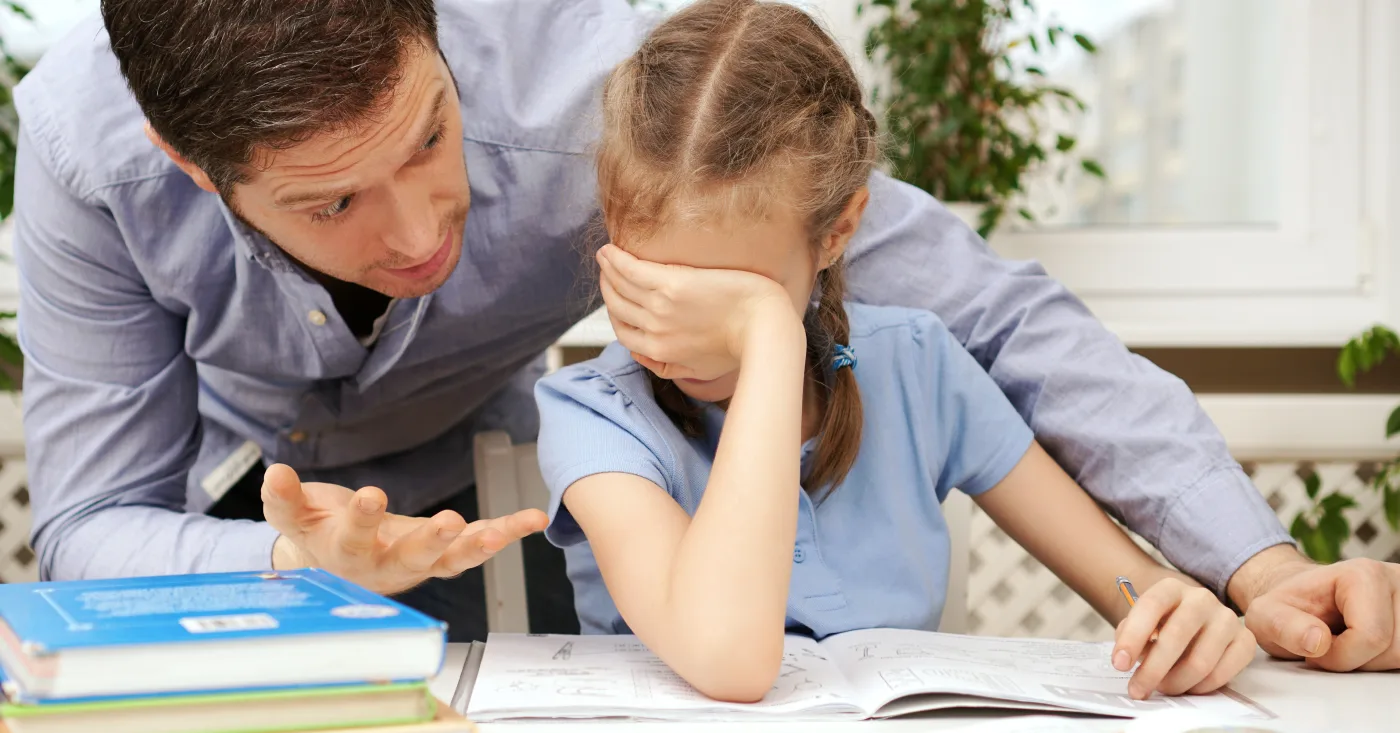
A child who gets headaches after school can be hard to figure out.
They may seem fine in the morning.
They go to school.
They come home tired, cranky, emotional, or complaining that their head hurts.
- Sometimes the headache happens during homework.
- Sometimes it happens after reading.
- Sometimes it happens after screens.
- Sometimes it happens after sports.
Sometimes the child rubs their eyes, squints, asks for breaks, or avoids schoolwork completely.
Parents often wonder:
- Is this vision?
- Is this stress?
- Is this dehydration?
- Is it too much screen time?
- Is it migraine?
- Is it something serious?
The answer is that headaches after school can have many causes. Vision is one possible cause, especially when headaches happen with reading, screens, copying from the board, blurry vision, eye rubbing, double vision, or visual fatigue.
But headaches are not always from the eyes.
That is why the pattern matters.
Headaches After School Are Common, but They Should Not Be Ignored
Many children have headaches at some point.
A headache after a long school day does not automatically mean something serious is wrong.
Children may get headaches from:
- Not drinking enough water
- Skipping meals
- Poor sleep
- Stress
- Migraine
- Sinus pressure
- Illness
- Screen time
- Reading strain
- Uncorrected vision problems
- Dry eye
- Eye allergies
- Concussion
- Neck or posture strain
- Contact lens discomfort
The goal is not to panic.
The goal is to notice the pattern and know what needs to be checked.
When Headaches May Be Vision Related
Headaches may be more likely to involve vision when they happen during or after visual tasks.
This may include:
- Reading
- Homework
- Screens
- Copying from the board
- Looking back and forth from desk to board
- Standardized testing
- Computer based schoolwork
- Small print
- Long writing assignments
- Studying at the end of the day
Vision related headaches often show up after effort.
A child may be able to see clearly for a short time, but their eyes may get tired after sustained work.
This is one reason a child can pass a school vision screening and still have symptoms.
The Eye Chart Does Not Explain Every Headache
A basic vision screening often checks whether a child can see at a distance.
That is useful, but school is not only distance vision.
Children spend much of the day using their eyes up close.
They read books, write, use tablets, look at Chromebooks, copy from the board, shift focus across the room, and work under bright classroom lighting.
A child can have 20/20 distance vision and still have headaches from focusing strain, eye teaming problems, dry eye, screen strain, or an uncorrected prescription that does not show up clearly on a simple screening.
20/20 is helpful information.
It is not the whole visual story.
Uncorrected Prescription Can Cause Headaches
A child may get headaches if they need glasses or if their current prescription has changed.
This may happen with:
-
Nearsightedness
-
Farsightedness
-
Astigmatism
-
A prescription difference between the two eyes
-
An outdated glasses prescription
-
Glasses that do not fit correctly
-
Contacts that are not correcting clearly
-
A child with blurry distance vision may squint to see the board.
-
A child with farsightedness may use extra focusing effort to keep near work clear.
-
A child with astigmatism may see letters as shadowed, smeared, or distorted.
All of that extra effort can lead to headaches.
Farsightedness Can Be Missed
Farsightedness can be confusing because some children can still see clearly.
Children have strong focusing systems.
A farsighted child may be able to force their eyes to make the words clear, especially for short periods.
But that does not mean the eyes are relaxed.
A farsighted child may get headaches during reading, homework, screens, or close work because the focusing system is working too hard.
Parents may notice:
- Headaches after school
- Eye rubbing
- Avoiding homework
- Blurry vision after reading
- Trouble staying with near work
- Fatigue during worksheets
- Emotional meltdowns during homework
- Needing breaks often
A full eye exam can check whether farsightedness is part of the problem.
Astigmatism Can Cause Strain
Astigmatism can make vision blurry or distorted at distance, near, or both.
A child with astigmatism may squint, rub their eyes, complain of headaches, or avoid visually demanding tasks.
They may still function well enough that the problem is not obvious.
Astigmatism can make the eyes work harder to get a clear image.
That effort may build up over the school day.
If your child has headaches with squinting, blurry vision, trouble seeing the board, or tired eyes, an eye exam can check for astigmatism.
Myopia Can Cause Distance Related Headaches
Myopia means nearsightedness.
A child with myopia usually sees better up close than far away.
They may get headaches from squinting to see the board, trying to see across the classroom, watching presentations, or playing sports without clear distance vision.
Parents may notice:
- Squinting
- Sitting closer to screens
- Trouble seeing signs
- Trouble seeing the board
- Complaints that things far away are blurry
- Stronger glasses needed over time
- Headaches after school or sports
If your child is nearsighted and the prescription keeps changing, ask about myopia management and how to choose between MiSight, ortho-K, and atropine.
Eye Focusing Problems Can Cause Headaches
Focusing is the ability to keep vision clear, especially up close.
Children use their focusing system constantly during school.
They also have to shift focus from desk to board and back again.
A focusing problem may cause:
- Headaches with reading
- Blurry vision after near work
- Trouble copying from the board
- Words going in and out of focus
- Eye strain
- Avoiding homework
- Trouble switching from near to far
- Needing frequent breaks
A child may pass a distance vision screening and still have focusing symptoms.
A comprehensive eye exam can help determine whether focusing is part of the headache pattern.
Eye Teaming Problems Can Cause Headaches
Eye teaming means both eyes work together as a pair.
For reading and close work, both eyes need to aim at the same place at the same time.
If the eyes do not team comfortably, a child may get headaches, eye strain, double vision, or trouble staying focused during near work.
One common eye teaming problem is convergence insufficiency.
Symptoms may include:
- Headaches while reading
- Eye strain
- Double vision
- Words moving or swimming
- Blurry vision with near work
- Losing place while reading
- Closing one eye
- Trouble concentrating during homework
- Avoiding reading
- Fatigue after school
A child with convergence insufficiency may have 20/20 distance vision.
That is why symptoms matter.
Dry Eye Can Cause Headaches and Eye Discomfort
Dry eye can happen in children and teens.
They may not say, “My eyes are dry.”
They may say:
- My eyes hurt
- My eyes burn
- My head hurts
- My vision gets blurry
- My eyes feel tired
- My eyes are watery
Dry eye can be worse with screens, air conditioning, fans, allergies, contact lenses, reading, and long school days.
When the eye surface is irritated, the child may blink hard, rub their eyes, or feel visually uncomfortable. Dry eye care can help when symptoms keep coming back.
That discomfort can contribute to headaches, especially after a full day of school and screens.
Screens Can Make Symptoms Worse
Screens can contribute to headaches in several ways.
Children blink less during screen use. Reduced blinking can make the eyes dry and irritated.
Screens also require sustained near focus.
- Children may hold tablets or phones too close.
- They may work in poor lighting.
- They may use screens late in the day when the eyes are already tired.
Screen related symptoms may include:
- Headaches
- Eye strain
- Dry eyes
- Blurry vision
- Burning
- Watering
- Neck strain
- Trouble focusing
- Fatigue
- Irritability after schoolwork
Better screen habits may help, but repeated screen related headaches deserve an eye exam.
Blue Light Is Usually Not the Main Issue
Parents often ask if blue light is causing headaches.
For most children, blue light is not the main reason for eye strain.
The bigger issues are usually:
- Long periods of near focus
- Reduced blinking
- Dryness
- Glare
- Poor posture
- Screens held too close
- Uncorrected prescription
- Eye focusing problems
- Eye teaming problems
- Poor sleep after evening screens
Blue light glasses may make some children feel more comfortable, but they do not diagnose or fix the underlying cause of headaches.
If your child has headaches with screens, start with an eye exam and better screen habits.
Poor Posture Can Contribute
Headaches after school may also come from posture.
A child may lean close to the paper, hunch over a Chromebook, tilt the head, lie on the floor with a tablet, or work with the neck bent for long periods.
Posture strain can affect the neck, shoulders, and head.
But posture can also be a clue.
- A child may lean close because they cannot see well.
- They may tilt the head because one eye works differently.
- They may close one eye because the eyes do not team well.
So posture should be noticed, not dismissed.
Glasses That Do Not Fit Can Cause Symptoms
If your child already wears glasses and still gets headaches, the glasses should be checked.
The issue may be:
- Prescription changed
- Lenses are scratched
- Frame is sliding
- Glasses sit crooked
- Child looks over the lenses
- Glasses are too low
- Nose pads are bent
- Lens measurements are off
- Child is not wearing them when needed
- The glasses are the wrong design for the task
A correct prescription can still feel wrong if the frame does not sit properly.
Bring current glasses to the exam.
Contact Lenses Can Cause Headaches Too
If your child or teen wears contact lenses, headaches may relate to the lenses.
Possible issues include:
- Prescription change
- Dryness
- Poor lens fit
- Astigmatism not fully corrected
- Lenses worn too long
- Allergies
- Sleeping in lenses
- Swimming in lenses
- Contact lens discomfort
- Blurry vision during the day
A contact lens wearer with eye redness, pain, light sensitivity, or blurry vision should remove the lenses and call the eye doctor.
Headaches with contact lens discomfort should not be ignored.
Headaches After Concussion Need Attention
A concussion can affect the visual system.
After a concussion, a child may still see 20/20 but have trouble with focusing, eye teaming, tracking, reading, screens, motion, or light sensitivity.
Concussion related symptoms may include:
- Headaches
- Light sensitivity
- Blurry vision
- Double vision
- Dizziness
- Balance problems
- Trouble reading
- Screen intolerance
- Trouble concentrating
- Fatigue after schoolwork
If headaches started after a head injury, follow pediatrician, sports medicine, or emergency care guidance.
If visual symptoms persist, an eye exam can help determine whether vision is part of the recovery problem.
Migraine Can Cause Eye Symptoms
Some children have migraines.
Migraine can cause headache, nausea, vomiting, light sensitivity, sound sensitivity, visual changes, or fatigue.
Some children see spots, shimmering lights, or other visual symptoms before or during a migraine.
Migraine is not the same as a vision prescription problem, but the symptoms can overlap.
A child with migraine may still need an eye exam to rule out vision contributors.
A child with frequent or severe headaches should also be evaluated by their pediatrician.
Sinus and Allergy Issues Can Cause Head Pain
Sinus pressure, nasal allergies, and illness can cause pain around the forehead, cheeks, or eyes.
A child may describe this as eye pain or headache.
Clues may include:
- Stuffy nose
- Runny nose
- Cough
- Fever
- Facial pressure
- Thick nasal drainage
- Symptoms worse when bending forward
- Seasonal allergy pattern
Even if sinus symptoms are present, eye symptoms still matter.
If there is blurry vision, double vision, eye redness, eye pain, swelling around the eye, or trouble moving the eye, seek care promptly.
Sleep Matters
Poor sleep is a major headache trigger for many children.
A child may get headaches after school if they are not sleeping enough, waking often, using screens late, snoring, or having inconsistent sleep routines.
Sleep related headaches may be worse when the child is overtired.
Even when vision contributes, poor sleep can make symptoms worse.
A child who is visually straining all day and sleeping poorly may have more headaches than a child with only one of those issues.
Hydration and Food Matter Too
Children may get headaches when they do not drink enough water or skip meals.
This can happen easily at school.
- Some children barely drink during the day because they do not want to use the bathroom.
- Some skip lunch.
- Some eat very little protein.
- Some have long sports practices after school.
If headaches happen late in the day, ask:
- Did they drink water?
- Did they eat lunch?
- Did they have protein?
- Did they have PE or sports?
- Was it hot outside?
- Did they have a long screen day?
- Did they sleep well?
These details help separate visual strain from other common headache triggers.
Stress Can Show up as Headaches
School stress can also cause headaches.
A child may have headaches related to testing, anxiety, social stress, sensory overload, workload, or emotional exhaustion.
Stress headaches may happen more often during busy school weeks.
But this should not be used to dismiss symptoms.
- A child can have stress and a vision problem.
- A child can have anxiety about homework because homework feels visually uncomfortable.
If headaches happen during reading, screens, or close work, the eyes should be checked even if stress is also present.
When to Call the Pediatrician
Call your child’s pediatrician if headaches are frequent, severe, worsening, new, or interfering with school or daily life.
Seek prompt medical care if headaches:
- Wake your child from sleep
- Are sudden and severe
- Follow a head injury
- Cause persistent vomiting
- Come with fever and stiff neck
- Come with confusion or personality change
- Come with weakness, numbness, or trouble walking
- Come with seizures
- Come with significant vision changes
- Are getting more frequent or more severe
These are medical red flags and should not be handled as routine eye strain.
When to Call the Eye Doctor
Schedule an eye exam if headaches happen with:
- Reading
- Homework
- Screens
- Eye rubbing
- Squinting
- Blurry vision
- Double vision
- Losing place while reading
- Trouble copying from the board
- Light sensitivity
- Trouble seeing the board
- Words moving or swimming
- Closing one eye
- Contact lens discomfort
- A glasses prescription that may have changed
- Headaches after concussion with visual symptoms
- Teacher concerns about visual attention
- A failed or borderline vision screening
You do not need to prove the headaches are from vision before scheduling.
The exam is how you find out.
When It May Be Both
Many children have more than one reason for headaches.
- For example, a child may have mild farsightedness, dry eye from screens, allergies, poor sleep, and stress.
- Another child may have myopia, long school days, dehydration, and sports practice.
- Another may have concussion related visual strain and migraine.
The best care often comes from looking at the whole picture.
That may involve the eye doctor, pediatrician, school, and sometimes other specialists.
What to Track Before the Visit
Before the eye exam or pediatrician visit, write down the headache pattern.
Track:
- Time of day
- Location of pain
- How often it happens
- How long it lasts
- Whether reading triggers it
- Whether screens trigger it
- Whether sports trigger it
- Whether light bothers your child
- Whether vision gets blurry
- Whether double vision happens
- Whether nausea or vomiting happens
- Whether your child slept well
- Whether your child ate and drank normally
- Whether the headache happened after injury
- What helps it improve
- What makes it worse
These details are extremely helpful.
They help the doctor avoid guessing.
What to Bring to the Eye Exam
Bring:
- Current glasses
- Old glasses if available
- Contact lens boxes if your child wears contacts
- School screening results
- Teacher concerns
- Headache notes
- Medication list
- History of concussion or head injury
- Details about screen use
- Details about reading symptoms
- Any pediatrician or neurology notes if relevant
If your child gets headaches at a specific school task, mention that task.
For example:
“My child gets headaches after Chromebook work.”
“My child gets headaches when copying from the board.”
“My child is fine until homework.”
Specific details help.
What the Eye Doctor May Check
A headache related eye exam may include:
- Distance vision
- Near vision
- Glasses prescription
- Eye health
- Eye alignment
- Eye movement
- Eye focusing
- Eye teaming
- Depth perception
- Dry eye signs
- Allergy signs
- Contact lens fit if relevant
- Dilation when needed
- Whether a more detailed binocular vision evaluation is recommended
The goal is to determine whether the eyes are contributing to the headache pattern.
- Sometimes the exam finds a clear vision issue.
- Sometimes the eye exam is normal, which is also useful.
What If the Eye Exam Is Normal?
A normal eye exam does not mean your child’s headaches are not real.
It means the eyes are less likely to be the main cause.
That can help you look more confidently at other possibilities, such as migraine, sleep, hydration, sinus issues, stress, illness, concussion, or another medical cause.
If headaches continue, follow up with your pediatrician.
The eye exam is one piece of the bigger picture.
What If the Eye Exam Finds Something?
If the exam finds a vision issue, the plan depends on what was found.
Your child may need:
-
Glasses
-
Updated glasses
-
A better wearing schedule
-
Contact lens changes
-
Dry eye treatment
-
Allergy treatment
-
Screen habit changes
-
Myopia management
-
A binocular vision evaluation
-
Vision therapy discussion when appropriate
-
Referral if another medical issue is suspected
-
Not every child with headaches needs glasses.
-
Not every child with headaches needs vision therapy.
The treatment should match the diagnosis.
Can Glasses Fix Headaches?
Sometimes.
If headaches are from uncorrected prescription, outdated glasses, astigmatism, farsighted strain, or myopia, glasses may help.
But glasses do not fix every headache.
If headaches are from migraine, concussion, dehydration, sleep, illness, stress, sinus problems, or other causes, glasses may not be the main answer.
This is why the exam and history matter.
The goal is not to sell glasses.
The goal is to find out what your child needs.
Can Vision Therapy Help Headaches?
Vision therapy may help in selected cases when headaches are related to specific binocular vision, focusing, or eye movement problems.
For example, a child with convergence insufficiency may have headaches and eye strain with reading.
But vision therapy is not the treatment for every headache.
A proper diagnosis comes first.
If your child has headaches with double vision, eye teaming symptoms, loss of place, words moving, or reading fatigue, a more detailed binocular vision evaluation may be appropriate.
Can Screen Breaks Help?
Yes, for many children.
Screen breaks can reduce visual fatigue.
Helpful habits include:
- Look away from the screen regularly
- Blink fully
- Keep screens at a comfortable distance
- Increase font size if needed
- Reduce glare
- Avoid screens in a dark room
- Use good lighting
- Limit long uninterrupted screen sessions
- Avoid screens right before bed when possible
- Take breaks before symptoms start
But screen breaks should not replace an eye exam if headaches are frequent or associated with visual symptoms.
Can Outdoor Time Help?
Outdoor time can support general health and may be helpful in the larger myopia conversation.
It also naturally gives the eyes a break from close work.
If your child spends long stretches indoors doing near work, adding outdoor time may help reduce visual fatigue and support better daily balance.
Outdoor time does not replace needed glasses, myopia management, dry eye care, or medical headache evaluation.
It is one helpful habit.
What Should Parents Do at Home?
While waiting for an appointment, you can watch patterns and support healthy habits.
Helpful steps include:
- Make sure your child wears prescribed glasses as directed
- Check that glasses fit and are not scratched
- Encourage water during school
- Pack balanced snacks if allowed
- Build screen breaks into homework
- Watch for squinting or eye rubbing
- Encourage outdoor time
- Keep bedtime consistent
- Reduce screens before bed
- Track headache timing and triggers
- Avoid letting contact lens wearers push through red or painful eyes
- Call sooner if warning signs appear
These steps may help, but they do not replace care when symptoms persist.
What Not to Do
Try not to:
- Assume every headache is from screens
- Assume every headache is from vision
- Ignore headaches because a school screening was passed
- Buy blue light glasses instead of checking symptoms
- Let a contact lens wearer keep wearing lenses with a painful eye
- Use old eye drops
- Ignore double vision
- Ignore headaches after concussion
- Ignore headaches that wake a child from sleep
- Wait months if headaches are affecting school
Headaches deserve a thoughtful approach.
Headache Visits at Pediatric & Family Vision
At Pediatric & Family Vision, we see children and teens for headaches that may be connected to vision, reading, screens, schoolwork, glasses, contacts, dry eye, allergies, concussion, or eye teaming problems.
We do not assume every headache is from the eyes.
We also do not dismiss vision just because a child can see 20/20.
We look at the full picture: prescription, eye health, focusing, eye teaming, dry eye, screen habits, glasses fit, contact lens wear, school demands, and the pattern of symptoms.
If your child gets headaches after school, during homework, while reading, after screens, or after a concussion, a comprehensive eye exam can help determine whether vision is part of the problem.
If the headache pattern suggests a medical concern, we will also guide you to involve your pediatrician or seek urgent care when needed.
Your child should not have to push through headaches every school day.
Finding the cause is the first step.