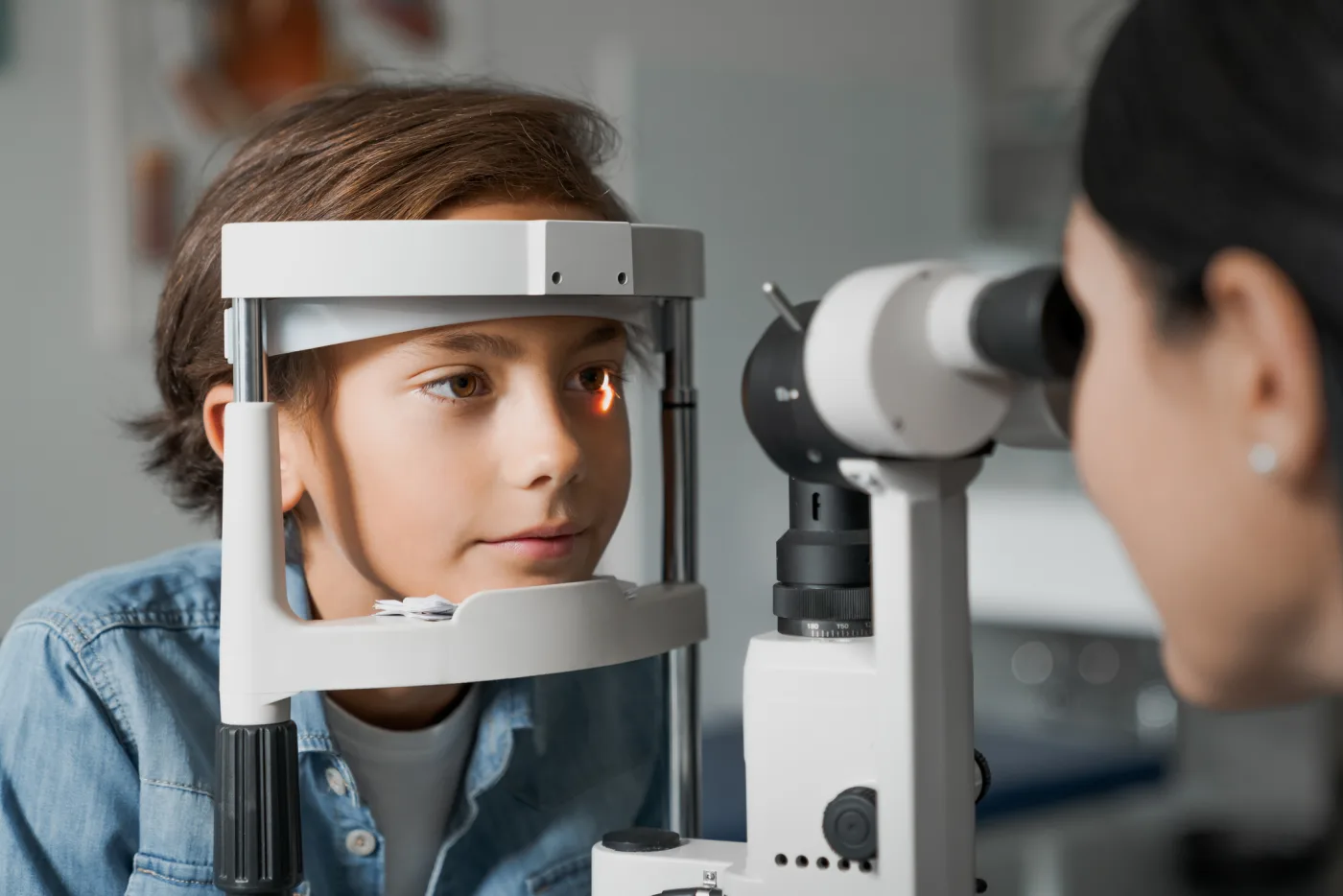
Contact lenses can be a great option for kids and teens.
They can help with sports, confidence, side vision, strong prescriptions, dance, gymnastics, theater, myopia management, and freedom from glasses during certain activities.
But contact lenses should not hurt.
- They should not feel scratchy every day.
- They should not make the eyes red.
- They should not cause blurry vision that keeps coming back.
- They should not make your child want to rip them out by lunchtime.
Some mild awareness can happen when a child is first learning to wear contacts, but ongoing discomfort is a sign that something needs to be checked.
- Sometimes the answer is simple. The lens may be inside out, dry, torn, dirty, or worn too long.
- Sometimes the child needs a different lens material, daily disposable lenses, allergy treatment, dry eye care, a prescription update, better hygiene habits, or a different wearing schedule.
- And sometimes discomfort is a warning sign of a more serious contact lens problem.
The safest rule is this:
If the eye is red, painful, light sensitive, or blurry, the contact lens comes out and you call the eye doctor.
Contact Lenses Are Medical Devices
Contact lenses may seem simple because so many people wear them.
But they are medical devices.
They sit directly on the eye, which means fit, material, wearing time, hygiene, replacement schedule, and eye health all matter.
A child should not wear contact lenses that were borrowed, bought without a valid prescription, ordered from an unverified seller, or chosen only by matching the glasses prescription.
A contact lens prescription is different from a glasses prescription.
The lens has to fit the eye.
If it does not, it can cause irritation, redness, dryness, scratches, infection, or other problems.
Contact Lenses Should Be Comfortable
A well-fit contact lens should usually feel comfortable once it settles on the eye.
Your child may notice the lens a little when they are first learning, but they should not have ongoing pain.
Contact lens discomfort may feel like:
- Scratchiness
- Burning
- Stinging
- Dryness
- Grittiness
- Something stuck in the eye
- Lens awareness that does not go away
- Blurry vision
- Redness
- Excess tearing
- Light sensitivity
- Trouble keeping the eye open
- Wanting to remove lenses early
- Worse comfort later in the day
Any of these symptoms can happen for simple reasons, but they still matter.
A child should not be told to just get used to pain.
First Question: Is the Eye Red, Painful, Light Sensitive, or Blurry?
This is the most important screening question.
If your child has contact lens discomfort with redness, pain, light sensitivity, or blurry vision, the lens should come out.
Then call the eye doctor.
- Do not put in a new lens and keep going.
- Do not send your child to school in contacts if the eye is painful.
- Do not let your teen wear contacts to a game, dance, or event with a red eye.
- Do not use old antibiotic drops from a previous infection.
Contact lens-related eye problems can become serious. It is better to check early.
Common Reason 1: the Lens Is Inside Out
A soft contact lens can accidentally be placed on the eye inside out.
When this happens, the lens may feel uncomfortable, move too much, or make vision blurry.
Your child may say:
“It feels weird.”
“I can feel the edge.”
“It will not settle.”
“My vision is not clear.”
Teaching your child how to check the lens shape before insertion can help.
If the lens is inside out, it should be removed, checked, rinsed with appropriate solution if reusable, or replaced with a fresh lens if daily disposable.
Never rinse lenses with water.
Common Reason 2: the Lens Is Torn
A torn lens can scratch or irritate the eye.
Even a small tear can feel very uncomfortable.
Your child should never wear a torn contact lens.
Signs of a torn lens may include:
- Sharp discomfort
- Sudden irritation
- Lens feeling rough
- Blurry vision
- Lens folding or moving oddly
- Redness after insertion
- Feeling like something is stuck
If the lens tears, throw it away.
If discomfort continues after removing the lens, call the eye doctor.
Common Reason 3: the Lens Is Dirty or Has Buildup
Reusable contact lenses can collect deposits over time.
This may come from tears, oils, allergies, makeup, sunscreen, dust, or poor cleaning habits.
A dirty lens may feel uncomfortable and may make vision blurry.
This is more common with monthly or reusable lenses than daily disposable lenses.
Signs may include:
- Comfort gets worse over the day
- Vision looks cloudy
- Lenses feel sticky
- Eyes feel irritated after insertion
- Lenses do not feel as good as they used to
- The child needs drops often
- Redness or itching increases
If buildup is a recurring problem, the doctor may recommend a different lens, daily disposables, allergy treatment, or changes to the cleaning routine.
Common Reason 4: the Lenses Are Worn Too Long
Children and teens often try to wear contacts longer than they should.
They may put them in before school and wear them through practice, homework, dinner, and evening screens.
Long wear time can cause dryness, redness, and discomfort.
This is especially common during:
- Sports tournaments
- Dance competitions
- Long school days
- Travel
- Screen-heavy days
- Sleepovers
- Late nights
- Events where the child does not want to wear glasses
Contact lenses need a wearing schedule.
If your child is uncomfortable by the end of the day, they may need shorter wear time, a different lens type, contact lens-safe lubricating drops, or dry eye treatment.
Common Reason 5: Dry Eye
Dry eye can make contact lenses uncomfortable.
Children may not say, “My eyes are dry.”
They may say:
“My contacts hurt.”
“My eyes feel scratchy.”
“My vision gets blurry.”
“I need to blink a lot.”
“I want to take them out.”
Dryness may be worse with:
- Screens
- Air conditioning
- Fans
- Long school days
- Sports
- Allergies
- Contact lens overwear
- Certain medications
- Not drinking enough water
- South Florida heat, wind, and sun exposure
Dry eye can sometimes be managed with a better lens choice, daily disposable lenses, approved lubricating drops, eyelid care, allergy treatment, or changes in wear time.
The right plan depends on the exam.
Common Reason 6: Allergies
Eye allergies can make contacts miserable.
Allergies may cause itching, redness, watering, swelling, mucus, and eye rubbing.
Rubbing the eyes while wearing contacts can move the lens, irritate the cornea, or make symptoms worse.
In South Florida, allergies can be a year-round issue for some children.
Allergy-related contact lens symptoms may include:
- Itching
- Redness
- Watery eyes
- Puffy eyelids
- Mucus
- Lens awareness
- Lenses becoming uncomfortable quickly
- Comfort that is worse outdoors
- Symptoms around pollen, grass, dust, mold, or pets
- Needing to remove lenses early
Daily disposable contacts may help some allergy-prone children because a fresh lens is used each day.
But contacts may need to be paused during a bad allergy flare.
Common Reason 7: the Lens Fit Is Not Right
A contact lens can have the right prescription power but still not fit well.
A lens may be too tight, too loose, too dry, too thick, or not the best material for your child’s eye.
A poor-fitting lens may cause:
- Discomfort
- Redness
- Blurry vision
- Lens movement
- Lens awareness
- Dryness
- Trouble wearing lenses all day
- Corneal irritation
- Fluctuating vision
- Contact lens intolerance
Different brands fit differently.
Your child should not switch brands without the eye doctor approving the new lens.
A contact lens fitting is not just about the power. It is about how the lens behaves on the eye.
Common Reason 8: the Prescription Changed
If your child’s contacts used to feel fine but now vision is blurry, the prescription may have changed.
This is common in children and teens, especially if they are nearsighted.
Myopia can progress during childhood.
Signs that the prescription may have changed include:
- Blurry distance vision
- Squinting with contacts
- Trouble seeing the board
- Trouble seeing during sports
- Headaches
- Vision better with old glasses or different correction
- Needing to move closer
- Complaints that contacts are not strong enough
If the prescription is changing often, ask whether myopia management should be discussed.
Common Reason 9: Astigmatism Is Not Fully Corrected
Some children have astigmatism.
Astigmatism can make vision look blurry, shadowed, smeared, or distorted.
If a child has astigmatism and wears a regular spherical contact lens, they may not see as clearly as they do in glasses.
Some children need toric contact lenses to correct astigmatism.
Signs may include:
- Blurry vision with contacts
- Better vision in glasses than contacts
- Squinting
- Headaches
- Trouble with small print
- Trouble seeing during sports
- Vision that changes when blinking
- Contacts that rotate or move
Toric contact lenses must fit and orient properly on the eye.
If they rotate too much, vision may fluctuate.
Common Reason 10: the Child Is Wearing Contacts in Water
Contacts should not be worn in pools, oceans, lakes, showers, hot tubs, splash pads, or water parks.
Water exposure can increase the risk of serious eye infection.
It can also make lenses uncomfortable.
If your child’s contacts feel uncomfortable after swimming, showering, or water exposure, they should remove the lenses and switch to glasses.
Daily lenses should be thrown away after water exposure.
Do not put the same lens back in.
Call the eye doctor if there is pain, redness, light sensitivity, blurry vision, or irritation that does not improve.
Common Reason 11: Sleeping or Napping in Contacts
Most children and teens should not sleep or nap in contacts unless the doctor has specifically prescribed a lens for overnight wear, such as ortho-K.
Sleeping in regular soft contact lenses can increase infection risk and make eyes red, dry, irritated, or painful.
This often happens after:
- Sports tournaments
- Long school days
- Sleepovers
- Car rides
- Travel
- Late nights
- Watching TV in bed
- Forgetting to remove lenses
If your child accidentally sleeps in contacts, have them remove the lenses carefully when awake.
Call the eye doctor if there is redness, pain, light sensitivity, blurry vision, discharge, or symptoms that continue.
Common Reason 12: Makeup, Sunscreen, or Skin Products
Teens may have contact lens discomfort from makeup, sunscreen, facial cleansers, acne products, lotion, or hair products.
These can get on the fingers, transfer to the lens, or get into the eye.
Sunscreen is a common issue in South Florida.
Makeup and glitter can also irritate the eye.
Helpful habits include:
- Wash and dry hands before touching lenses
- Insert contacts before applying makeup
- Remove contacts before removing makeup
- Avoid glitter near the eyes
- Avoid oily products near lenses
- Wash hands after applying sunscreen
- Remove lenses if something gets in the eye
- Do not wear contacts with irritated eyes
If products keep causing irritation, talk with the eye doctor.
Common Reason 13: Poor Hand Hygiene
Dirty hands can make contacts uncomfortable and unsafe.
Children may handle lenses after touching phones, sports equipment, pets, sunscreen, food, dirt, or school surfaces.
Contacts should only be handled with clean, dry hands.
Hand hygiene is especially hard during sports, school, camp, and travel.
If your child cannot reliably wash and dry hands before handling lenses, they may not be ready for contact lenses or may need closer supervision.
Common Reason 14: Reusing Daily Lenses
Daily disposable lenses are designed for one day of wear.
They should be thrown away after use.
They should not be saved in solution and worn again.
Reusing daily lenses can increase irritation and infection risk.
Teens may try to reuse dailies to save money or because they ran out of lenses.
That is not safe.
If cost or supply is a problem, talk with the eye doctor. Do not stretch lenses beyond their intended use.
Common Reason 15: Stretching Monthly Lenses Too Long
Monthly lenses should be replaced on the schedule prescribed by the eye doctor.
They should not be worn for extra weeks to save money.
Old lenses may have deposits, reduced comfort, more dryness, and greater irritation.
If your child cannot track replacement dates, parents should help.
Use a calendar, phone reminder, or lens tracking system.
Replacement schedules are part of safe contact lens wear.
Common Reason 16: Using the Wrong Solution
Reusable lenses require the correct solution.
Not all contact lens solutions work well for every patient or every lens.
Some children are sensitive to certain solutions.
Others use solution incorrectly.
Problems may happen when a child:
- Uses water
- Uses saliva
- Tops off old solution
- Reuses yesterday’s solution
- Stores lenses in the wrong solution
- Mixes solution types
- Uses expired solution
- Does not clean the case
- Uses solution not recommended for the lens
If comfort worsened after changing solution, tell the eye doctor.
Common Reason 17: Contact Lens Case Problems
For reusable lenses, the case matters.
A dirty or old case can increase contamination risk.
The case should be cleaned and replaced as directed.
Children and teens often forget this step.
- They may keep the same case for months.
- They may leave old solution inside.
- They may store it in a wet bathroom area.
If your child wears monthly lenses and has recurring irritation, the case and cleaning habits should be reviewed.
Daily disposable lenses avoid this issue because there is no storage case.
Common Reason 18: the Child Is Not Ready for Contacts
Some children want contacts before they are ready for the responsibility.
They may be motivated for sports or appearance, but still struggle with hygiene, insertion, removal, or safety rules.
Signs your child may not be ready include:
- Skipping hand washing
- Sleeping in lenses
- Wearing lenses too long
- Swimming in lenses
- Reusing daily lenses
- Ignoring discomfort
- Losing lenses often
- Not telling adults when eyes hurt
- Sharing lenses
- Not having backup glasses
Contacts are a privilege that requires responsibility.
If a child cannot follow the rules, glasses or sport goggles may be safer for now.
What If Discomfort Happens Only at the End of the Day?
End-of-day discomfort is common.
It may be related to dryness, long wear time, screen use, allergies, lens material, lens deposits, or overwear.
Ask:
- What time are lenses inserted?
- What time do symptoms start?
- Is school air conditioned?
- How much screen time happens?
- Are there sports after school?
- Does your child nap in contacts?
- Are lenses being replaced on schedule?
- Does the discomfort improve with glasses?
- Are approved lubricating drops helping?
- Is the eye red or painful?
End-of-day discomfort should still be addressed.
A different lens or schedule may help.
What If Discomfort Happens Right Away?
Immediate discomfort may suggest:
- Lens inside out
- Torn lens
- Dirt or debris on lens
- Lens placed on the wrong eye
- Wrong lens brand
- Poor lens fit
- Dryness
- Allergy
- Corneal scratch
- Product residue on hands
If a lens hurts immediately, it should come out.
If pain continues after removal, call the eye doctor.
What If Only One Eye Is Uncomfortable?
One-sided discomfort matters.
It may be from a torn lens, debris, poor fit, scratch, infection, dryness, allergy, or something under the lid.
- Remove the lens.
- Check whether the lens is torn or dirty.
- Do not keep trying to wear it if the eye hurts.
Call the eye doctor if symptoms continue or if there is redness, light sensitivity, blurry vision, discharge, or pain.
What If the Contacts Are Blurry but Not Painful?
Blurry contacts can happen for many reasons.
Possibilities include:
- Prescription change
- Lens rotation
- Astigmatism
- Dryness
- Deposits
- Dirty lens
- Lens on the wrong eye
- Lens inside out
- Poor fit
- Myopia progression
- Allergies
- Wearing lenses too long
If blinking clears the blur temporarily, dryness or lens movement may be involved.
If distance is blurry all the time, the prescription may need to be checked.
If blur is sudden, especially with redness or pain, remove the lens and call.
What If Contacts Feel Worse During Screens?
Screen use often reduces blinking.
Less blinking can dry the lens and tear film.
Your child may notice discomfort during:
- Computer use
- Tablets
- Phone use
- Gaming
- Online homework
- Reading on screens
- Long school assignments
Helpful steps may include better blinking habits, screen breaks, contact lens safe lubricating drops if recommended, shorter wear time, or a different lens material.
But if symptoms are frequent, the doctor should check the eyes.
What If Contacts Feel Worse Outdoors?
Outdoor discomfort may come from wind, pollen, dust, sunscreen, sweat, sun, or dry air.
In South Florida, outdoor sports, beach days, pool areas, and heat can all affect comfort.
Your child may need sunglasses, a hat, daily disposable lenses, allergy care, approved lubricating drops, or a different wearing plan.
If contacts are uncomfortable during outdoor sports, do not assume contacts are impossible.
The lens type or routine may need adjustment.
What If Contacts Feel Worse During Allergy Season?
Allergy season can make contact lens wear more difficult.
Itching is the biggest clue.
If your child’s eyes are itchy, red, watery, swollen, or full of mucus, contacts may not feel good.
The eye doctor may recommend:
- Allergy eye drops
- Temporary reduction in contact lens wear
- Daily disposable lenses
- Avoiding eye rubbing
- Washing face after outdoor exposure
- Using glasses during flare-ups
- Follow-up if redness or irritation continues
Do not keep forcing contacts during significant allergy flares.
What Should Parents Do When Contacts Hurt?
Use this simple plan.
-
First, have your child remove the contact lens.
-
Second, check whether the eye is red, painful, light sensitive, or blurry.
-
Third, switch to glasses.
-
Fourth, call the eye doctor if symptoms are significant or do not quickly resolve.
-
Do not let your child put the same lens back in if it caused pain.
-
Do not send them back to sports or school in a painful lens.
-
Do not assume discomfort is normal.
When to Call the Eye Doctor Right Away
Call promptly if your child has:
- Eye pain
- Redness
- Light sensitivity
- Blurry vision
- Discharge
- Excess tearing
- Swelling
- A white spot on the eye
- Trouble opening the eye
- Symptoms after sleeping in contacts
- Symptoms after swimming or showering in contacts
- Symptoms after a torn lens
- Symptoms that continue after the lens is removed
- One eye that is much worse than the other
Contact lens symptoms can worsen quickly.
Same-day care may be needed.
What the Eye Doctor May Check
A contact lens problem visit may include:
- Vision
- Corneal health
- Contact lens fit
- Lens movement
- Redness
- Signs of infection
- Scratches
- Dry eye signs
- Allergy signs
- Eyelid health
- Lens replacement habits
- Cleaning routine
- Water exposure
- Wearing time
- Backup glasses
The doctor may recommend stopping contacts temporarily while the eye heals.
That is another reason backup glasses matter.
Does My Child Need a Different Lens?
Maybe.
Your child may need a different lens if they have:
- Dryness
- Allergies
- Astigmatism
- Myopia progression
- Poor comfort
- Lens deposits
- Trouble with monthly lens care
- Sports needs
- Long school days
- Screen-related discomfort
- Lens movement
- Redness or irritation
Daily disposable lenses may be better for some children.
Toric lenses may be needed for astigmatism.
Myopia control lenses may be considered for progressing nearsightedness.
A different material may improve comfort.
The answer depends on the eye exam.
Should My Child Switch to Daily Contacts?
Daily contacts can help many children because they remove the cleaning and storage steps.
They may be especially helpful if your child:
- Has allergies
- Has lens deposits
- Wears contacts part-time
- Plays sports
- Travels often
- Struggles with cleaning routines
- Has discomfort with reusable lenses
- Needs a simpler routine
- Loses or tears lenses occasionally
- Is new to contact lenses
Daily contacts are not a cure for every problem, but they can reduce some common sources of irritation and care mistakes.
Should My Child Stop Contacts Completely?
Sometimes temporarily.
If the eye is irritated, scratched, infected, or inflamed, contacts may need to stop while the eye heals.
This does not always mean your child can never wear contacts again.
It may mean the child needs treatment, a new lens type, better habits, or a clearer safety plan.
In some cases, if a child repeatedly breaks safety rules, contacts may need to pause until they are more responsible.
Eye health comes first.
How to Prevent Contact Lens Discomfort
Helpful prevention steps include:
- Wash and dry hands before touching lenses
- Do not sleep in contacts
- Do not swim or shower in contacts
- Do not reuse daily lenses
- Replace lenses on schedule
- Use only recommended solution
- Do not top off old solution
- Replace the case as directed
- Keep backup glasses available
- Avoid wearing lenses with red or painful eyes
- Use contact lens safe drops only if approved
- Keep follow-up visits
- Tell the doctor about allergies or dryness
- Do not switch brands without approval
- Remove lenses if discomfort starts
These habits make contact lens wear safer and more comfortable.
Contact Lens Comfort at Pediatric & Family Vision
At Pediatric & Family Vision, we help children and teens wear contact lenses safely and comfortably.
If your child’s contacts are uncomfortable, we do not just tell them to push through it.
We look at the lens fit, prescription, tear film, allergies, dryness, wearing time, replacement schedule, cleaning habits, sports routine, screen use, water exposure, and whether the current lens is still the best choice.
- Sometimes the solution is simple.
- Sometimes your child needs a different lens.
- Sometimes contact lens wear needs to pause while the eye heals.
- Sometimes daily disposables, allergy treatment, dry eye care, or updated glasses are part of the plan.
The goal is clear vision with healthy eyes.
If your child’s contacts hurt, make the eyes red, blur their vision, or become uncomfortable every day, schedule a contact lens check.
Contact lenses should help your child’s life feel easier, not create a daily battle.