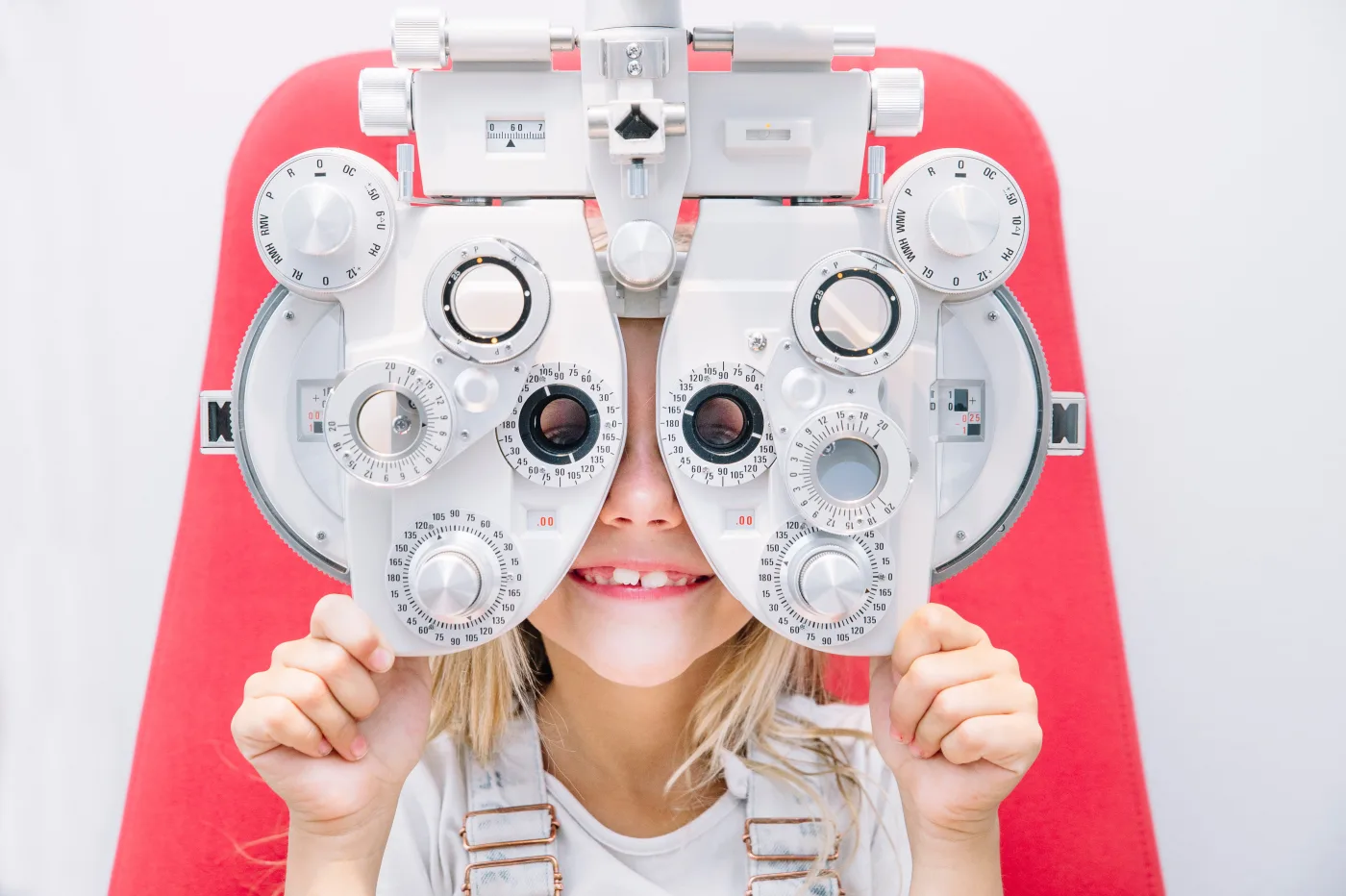
A child’s eye exam goes better when parents bring the right information.
You do not need to bring a huge folder. You do not need to know every medical term. You do not need to explain everything perfectly.
But a few simple things can help the doctor understand your child’s eyes, symptoms, school concerns, medical history, and daily visual needs.
This matters because a child’s eye exam is not only about reading letters on a chart.
The doctor may check eye health, glasses prescription, focusing, eye teaming, eye movement, depth perception, and how the eyes are working for school, reading, screens, sports, and daily life.
The more complete the picture, the better the exam can be.
Bring Your Child’s Current Glasses
If your child already wears glasses, bring every pair they use.
That includes:
- Main everyday glasses
- Backup glasses
- Reading glasses
- Computer glasses
- Sports glasses
- Prescription sunglasses
- Glasses they refuse to wear
- Old glasses if the current pair is not working well
Even if the glasses are broken, scratched, too small, or no longer worn, bring them.
The doctor or optical team may want to check the prescription, lens condition, fit, and whether your child is looking through the right part of the lenses.
Sometimes the problem is not the prescription.
Sometimes the glasses are sliding, sitting crooked, too low, scratched, or too loose.
Bring Contact Lens Information
If your child or teen wears contact lenses, bring the contact lens boxes or a photo of the prescription on the box.
It helps to know:
- Brand
- Lens power
- Base curve
- Diameter
- Replacement schedule
- Wearing time
- Cleaning solution
- Whether the lenses are daily, two-week, or monthly
- Any comfort problems
- Whether your child sleeps, swims, or showers in contacts
Contact lenses are medical devices, so the doctor needs to know exactly what your child is wearing.
If your child has redness, pain, light sensitivity, discharge, or blurry vision with contacts, have them stop wearing the lenses and call the eye doctor.
Bring Your Insurance Cards
Bring both medical insurance and vision insurance cards if you have them.
This is important because eye visits may be billed differently depending on the reason for the exam.
- A routine vision exam may be billed differently than a medical eye visit.
- A visit for glasses may use vision benefits.
- A visit for red eye, eye pain, dry eye, injury, headaches after concussion, or a medical eye condition may involve medical insurance.
You do not have to figure this out alone, but bringing all insurance information helps the office check coverage and guide you.
Bring School Screening Results
If your child failed a school vision screening, bring the paper or upload a photo if the office allows it.
The screening may include useful information, such as:
- Which eye did not pass
- Distance vision results
- Near vision results
- Photoscreening results
- Referral reason
- Date of screening
- School nurse notes
- Whether glasses were worn during screening
Even if the screening was normal, it can still be helpful to mention it.
A passed screening is useful information, but it does not replace a full eye exam.
Bring Notes from Teachers
Teachers often notice vision clues that parents do not see at home.
Bring any teacher concerns about:
- Trouble seeing the board
- Moving closer in class
- Copying mistakes
- Losing place while reading
- Avoiding reading
- Slow work completion
- Headaches at school
- Eye rubbing
- Poor attention during desk work
- Trouble using a Chromebook or tablet
- Messy handwriting
- Reduced confidence with reading
- Closing one eye
- Trouble tracking during class
A short teacher note can be very helpful.
It does not need to be formal. Even a message or email can give the doctor more context.
Bring Previous Eye Exam Records If You Have Them
If your child has seen another eye doctor before, bring the records if possible.
Helpful records may include:
- Previous glasses prescriptions
- Contact lens prescriptions
- Eye health findings
- Dilation results
- Diagnoses
- Amblyopia history
- Patching history
- Eye turn history
- Myopia progression records
- Vision therapy records
- Surgery records
- Specialist reports
Old prescriptions are especially helpful for children with myopia.
They allow the doctor to see how quickly the prescription has changed over time.
Bring a List of Symptoms
Before the visit, write down what you have noticed.
Parents often remember more at home than they do in the exam room.
Helpful symptoms to list include:
- Squinting
- Sitting close to the TV
- Holding books or screens close
- Headaches
- Eye rubbing
- Blurry vision
- Double vision
- Losing place while reading
- Skipping words or lines
- Trouble copying from the board
- Avoiding reading
- Trouble with homework
- Light sensitivity
- Red or watery eyes
- Eye pain
- Dizziness with reading or screens
- Closing one eye
- Head tilting
- Trouble with sports
- Difficulty seeing at night
You do not need to know what the symptoms mean.
Just write down what you see.
Write Down When Symptoms Happen
Timing matters.
The doctor may ask:
- Does it happen in the morning or after school?
- Does it happen during reading?
- Does it happen during screen use?
- Does it happen outside in bright light?
- Does it happen during sports?
- Does it happen with current glasses?
- Does it happen only when tired?
- Does it happen after a concussion?
- Does it happen in one eye or both?
- Does it happen every day or only sometimes?
This helps separate different causes.
- Headaches only during reading may suggest a different issue than headaches with fever or headaches after a head injury.
- Squinting outside may mean something different than squinting at the board.
- Blurry vision that clears after blinking may mean something different than constant blurry distance vision.
Bring a Medication List
Bring a list of your child’s medications and supplements.
Include:
- Prescription medications
- Over-the-counter medications
- Allergy medicines
- ADHD medications
- Migraine medications
- Acne medications
- Eye drops
- Supplements
- Recent antibiotics or steroids
- Any medication changes
Some medications can affect focusing, dryness, pupil size, light sensitivity, or visual comfort.
The eye doctor does not need this information to judge the medication. The goal is to understand anything that could affect the eyes.
Bring Medical History
Be ready to share your child’s medical history.
Important details may include:
- Premature birth
- NICU stay
- Developmental delays
- Genetic conditions
- Neurologic conditions
- Diabetes
- Autoimmune disease
- Allergies
- Asthma
- Migraines
- Concussion
- Eye injury
- Seizures
- Prior surgery
- Hearing concerns
- Occupational therapy, physical therapy, or speech therapy history
You do not need to bring every medical record unless the history is complex, but it helps to know the big picture.
The eyes are connected to overall health.
Bring Family Eye History
Family history matters.
Tell the doctor if anyone in the family has:
- Strong glasses prescriptions
- Myopia
- Lazy eye
- Eye turns
- Eye muscle surgery
- Patching history
- Childhood glasses
- Retinal detachment
- Glaucoma
- Cataracts at a young age
- Genetic eye disease
- Keratoconus
- Color vision problems
- Blindness or significant vision loss
A family history does not mean your child will have the same problem.
But it may change what the doctor watches for.
Bring Concussion or Injury Details
If your child had a concussion or eye injury, write down what happened.
Helpful details include:
- Date of injury
- How it happened
- Whether there was loss of consciousness
- Whether imaging was done
- Current symptoms
- Headaches
- Dizziness
- Light sensitivity
- Blurry vision
- Double vision
- Trouble reading
- Screen intolerance
- School accommodations
- Sports restrictions
- Doctors already involved
Concussion-related vision symptoms can show up during reading, screens, schoolwork, and busy visual environments.
The eye chart alone may not explain the symptoms.
Bring Concerns About Reading or Schoolwork
If your child is struggling with reading or schoolwork, bring specific examples.
Helpful details include:
- Homework takes much longer than expected
- Your child avoids reading
- Your child loses place
- Your child skips words or lines
- Your child rereads the same sentence
- Your child complains of headaches
- Your child rubs their eyes
- Your child reads better when you read aloud to them
- Your child struggles to copy from the board
- Your child does better with listening than reading
- Your child becomes emotional during homework
- Your child needs frequent breaks
The doctor will not assume every reading struggle is caused by vision.
But these details help determine whether focusing, eye teaming, tracking, or visual stamina should be checked more closely.
Bring Your Child’s Usual Devices If Relevant
You do not need to bring every screen your child uses.
But if your child’s symptoms happen mainly with a specific device, it may help to know what they use.
For example:
- Chromebook
- iPad
- Phone
- Gaming device
- Laptop
- Desktop monitor
- E-reader
You can also bring a photo of your child’s homework setup.
Helpful details include:
- How close they sit
- Screen size
- Desk setup
- Lighting
- Whether they lie down with devices
- Whether glare is present
- Whether they use screens before bed
Screen-related symptoms are common, but the cause is not always blue light.
The doctor may look at prescription, focusing, eye teaming, dry eye, allergies, and screen habits.
Bring Sunglasses If Dilation Is Possible
Some children need dilation during an eye exam.
Dilation uses drops to make the pupils larger. This helps the doctor look inside the eye and can also help measure the prescription more accurately in some children.
After dilation, your child may be light sensitive for a few hours.
Bring sunglasses or a hat if you have them.
If your child has schoolwork, sports, or another activity right after the exam, ask the office whether dilation may affect the rest of the day.
Bring a Snack or Comfort Item for Younger Children
For young children, it can help to bring:
- A small snack
- Water
- A comfort toy
- A favorite book
- A pacifier if used
- Diapers or wipes if needed
- A stroller if helpful
- A quiet activity
Try to schedule the appointment away from nap time if possible.
A rested, fed child usually does better.
That said, children do not need to be perfect during the exam.
A pediatric eye exam should be flexible.
Bring Questions
Write down your questions before the visit.
Parents often forget questions once the exam starts.
Good questions may include:
- Does my child need glasses?
- Does my child need to wear glasses all day?
- Is the prescription expected to change?
- Is my child nearsighted?
- Should we talk about myopia management?
- Are the eyes healthy?
- Are both eyes seeing equally?
- Are the eyes working together well?
- Could vision be contributing to headaches?
- Could vision be affecting reading comfort?
- Does my child need dilation?
- When should we come back?
- Should the school know anything?
- Does my child need sports glasses?
- Are contacts an option?
- Should we get a backup pair?
There is no wrong question.
If you are wondering about it, ask.
What Not to Worry About
Parents sometimes feel pressure before a child’s eye exam.
Try not to worry if:
- Your child does not know letters
- Your child is shy
- Your child is silly
- Your child is nervous
- Your child gives inconsistent answers
- Your child needs breaks
- Your child wants to sit with you
- Your child cannot explain symptoms clearly
Pediatric eye exams are designed for children.
The doctor can use age-appropriate testing.
Your child does not need to perform perfectly for the exam to be useful.
Should You Practice the Eye Chart at Home?
Usually no.
You do not need to teach your child how to pass an eye exam.
In fact, practicing too much can make some children anxious or lead them to memorize letters instead of responding naturally.
A simple explanation is enough.
You can say:
“The doctor is going to check how your eyes are working. You may look at pictures, lights, letters, or shapes. I will be there with you.”
Keep it calm.
The visit is not a test your child needs to pass.
Should Your Child Wear Glasses to the Appointment?
Yes.
If your child has glasses, have them wear or bring the glasses they use most often.
If they do not wear them consistently, be honest about that.
The doctor needs to know.
Say:
“They wear them at school but not at home.”
“They refuse to wear them.”
“They wear them for reading only.”
“They say they see better without them.”
“They keep taking them off.”
This information helps determine whether the issue is prescription, fit, comfort, clarity, or routine.
What If Your Child Refuses Glasses?
Bring the glasses anyway.
The doctor or optical team can check:
- Whether the prescription is correct
- Whether the glasses fit properly
- Whether the frame slides
- Whether the lenses are scratched
- Whether the child is looking through the right part of the lens
- Whether the glasses feel too strong
- Whether another design may work better
Refusing glasses is not always behavior.
Sometimes something about the glasses is not working.
What If Your Child Has an IEP, 504 Plan, or School Evaluation?
Bring relevant school information if vision is part of the concern.
You do not need to bring the entire file unless it is useful.
Helpful items may include:
- Vision screening results
- Teacher notes
- Reading concerns
- Occupational therapy notes
- Psychoeducational testing summary
- 504 accommodations
- IEP vision-related concerns
- Reports mentioning headaches, copying, tracking, or visual fatigue
The eye doctor is not replacing school testing.
But if school struggles overlap with visual symptoms, this information can help guide the conversation.
What If Your Child Is Coming for Red Eye or a Medical Concern?
Bring different details for medical visits.
If your child has a red eye, pain, discharge, injury, or swelling, be ready to explain:
- When it started
- Whether one eye or both eyes are affected
- Whether there is pain
- Whether light hurts
- Whether vision is blurry
- Whether there is discharge
- Whether your child wears contacts
- Whether there was an injury
- Whether anyone else is sick
- Whether there are allergy symptoms
- What drops or medications have been used
- Whether symptoms are getting better or worse
Do not use old prescription drops before the visit unless a doctor told you to.
Old drops can make it harder to know what is happening.
What If Your Child Wears Contact Lenses and Has a Red Eye?
Have your child remove the contact lenses and call the eye doctor.
Bring the lenses, case, and solution if possible.
Do not let your child keep wearing contacts through redness, pain, light sensitivity, or blurry vision.
A contact lens-related red eye can be serious and should be checked promptly.
What If You Forget Something?
Do not worry.
The exam can still happen.
If you forget records, glasses, or screening results, you can often send them later.
The most important thing is that your child is seen.
But if you can bring the items above, the visit may be smoother and more complete.
A Quick Checklist for Parents
Bring these to your child’s eye exam:
- Current glasses
- Backup or old glasses
- Contact lens boxes or prescription
- Medical insurance card
- Vision insurance card
- School vision screening results
- Teacher notes
- Previous eye records if available
- Medication list
- Medical history
- Family eye history
- Symptom notes
- Concussion or injury details if relevant
- Questions you want answered
- Sunglasses if dilation may be done
- Snack or comfort item for younger children
You do not need every item for every visit.
Bring what applies to your child.
Eye Exams at Pediatric & Family Vision
At Pediatric & Family Vision, we see babies, children, teens, and adults for primary eye care, glasses, contact lenses, medical eye concerns, and vision symptoms that affect school, reading, screens, and daily life.
For children, we do not expect parents to have everything perfectly organized.
We ask questions, listen to your concerns, and use age-appropriate testing to understand how your child’s eyes are working. See our new-patient page for more on the first visit.
Bringing glasses, screening results, teacher notes, symptom details, medical history, and questions can help us give you clearer answers.
If your child has never had a full eye exam, failed a school screening, needs glasses, squints, rubs their eyes, gets headaches, struggles with reading, or complains about screens, scheduling a comprehensive eye exam is a good next step.
You bring what you know.
We help figure out what it means.