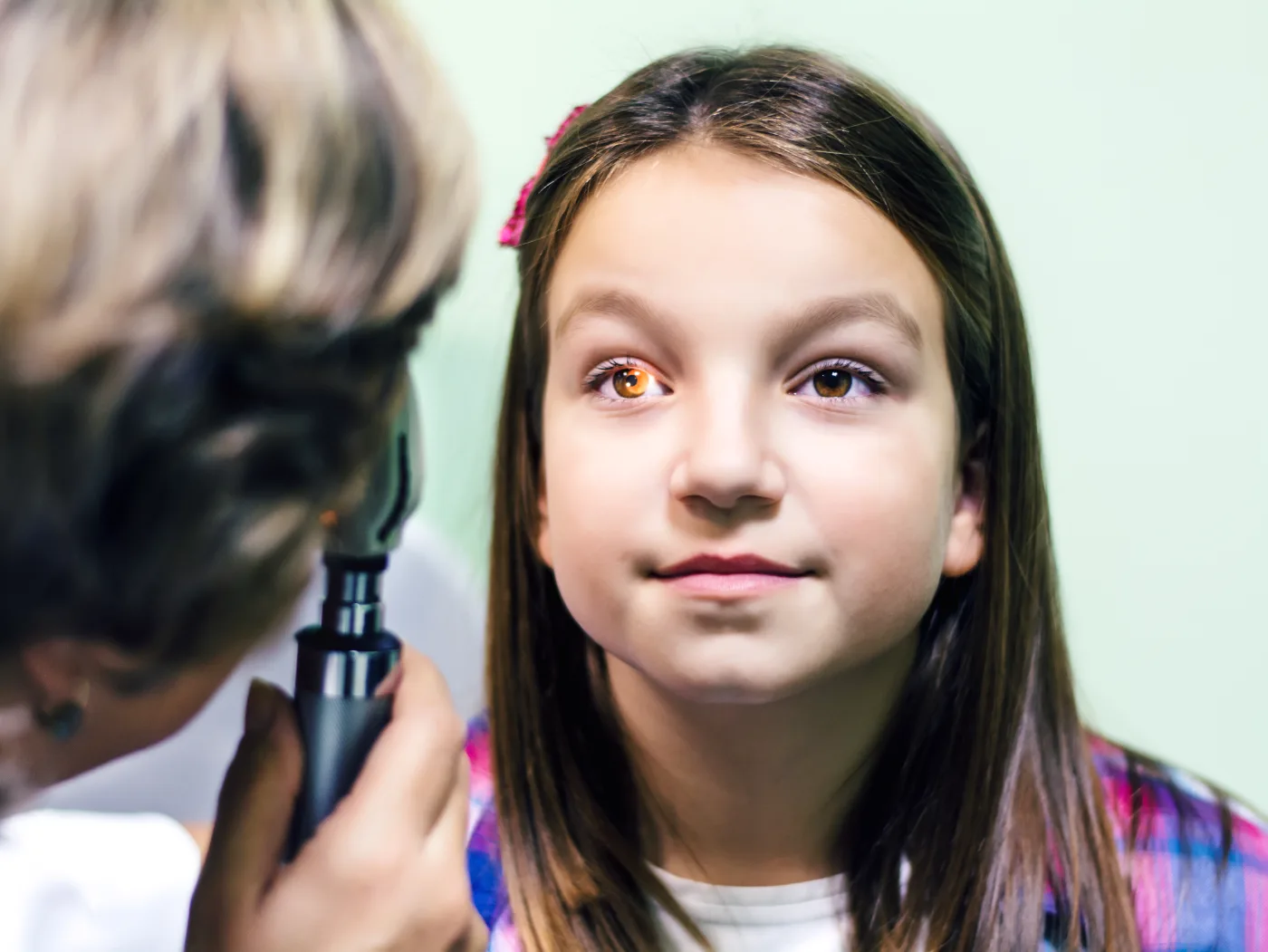
Some children squint every time they go outside.
Some complain that classroom lights are too bright.
Some cover their eyes in stores.
Some avoid screens after a concussion.
Some wear sunglasses even on cloudy days.
Some say their eyes hurt when light hits them.
Parents often wonder:
- Is this normal?
- Is my child just sensitive?
- Is it allergies?
- Is it migraine?
- Is it from screens?
- Could something be wrong with the eyes?
Light sensitivity can be simple, but it can also be a warning sign.
The medical word for light sensitivity is photophobia. It does not mean a child is afraid of light. It means light causes discomfort, pain, eye strain, headache, or the need to avoid brightness.
The key is the pattern.
- A child who squints in bright South Florida sun may simply need sunglasses and a hat.
- A child who suddenly cannot tolerate light, has eye pain, has redness, has blurry vision, had an injury, wears contact lenses, or recently had a concussion needs a closer look.
What Light Sensitivity Can Feel Like
Children do not always say, “I am sensitive to light.”
They may say:
- My eyes hurt
- The light is too bright
- I need my sunglasses
- My head hurts
- I cannot look at the screen
- My eyes are tired
- I want the lights off
- I cannot open my eye
- The sun hurts
- The classroom lights bother me
- My eyes burn
- I see better in the dark
Younger children may not explain it at all.
They may squint, cover their eyes, hide their face, avoid outside play, complain in bright stores, or become upset in visually busy places.
The behavior can be the clue.
Bright Sunlight Can Bother Normal Eyes
Some light sensitivity is normal.
Bright sunlight can make anyone squint.
In South Florida, children are exposed to intense sun, glare from pavement, reflection from water, bright beach days, pools, sports fields, and outdoor playgrounds.
A child may be more sensitive outside if they have:
- Light colored eyes
- Large pupils
- No sunglasses
- No hat
- Eye allergies
- Dry eye
- Recent eye irritation
- Contact lenses
- Migraine tendency
- Recent concussion
If your child only squints in very bright outdoor light and has no pain, redness, blurry vision, headache, or eye rubbing, sunglasses and a hat may be enough.
But if light hurts indoors too, or symptoms are new or worsening, the eyes should be checked.
Light Sensitivity Is a Symptom, Not a Diagnosis
Light sensitivity can come from many different causes.
Some are mild.
Some need urgent care.
Possible causes include:
- Bright sun and glare
- Eye allergies
- Dry eye
- Screen related eye strain
- Migraine
- Concussion
- Corneal scratch
- Something in the eye
- Pink eye
- Contact lens irritation
- Eye infection
- Eye inflammation
- Medication effects
- Recent dilation drops
- Eye injury
Because the causes are so different, the question is not only whether light bothers your child.
The question is what else is happening with it.
Warning Signs Parents Should Not Ignore
Call the eye doctor promptly if light sensitivity comes with:
-
Eye pain
-
Redness
-
Blurry vision
-
Vision loss
-
Double vision
-
Head injury or concussion
-
Eye injury
-
Chemical exposure
-
Contact lens wear
-
Discharge
-
Swelling around the eye
-
Fever
-
A child who cannot open the eye
-
A white spot on the eye
-
One eye much worse than the other
-
A misshapen pupil
-
New flashes or floaters
-
A curtain or shadow in vision
-
Severe headache
-
Vomiting or confusion
-
Light sensitivity by itself may be mild.
-
Light sensitivity with pain, redness, or vision change is different.
That should be checked.
Light Sensitivity and Eye Pain
Light sensitivity with eye pain is one of the most important combinations.
This can happen with a corneal scratch, infection, inflammation, contact lens problem, injury, or other medical eye condition.
If your child says light hurts and they want to keep one eye closed, do not assume they are being dramatic.
Children often keep an eye closed when the cornea is irritated or when inflammation makes light uncomfortable.
Call the eye doctor if your child has pain with light sensitivity, especially if one eye is worse.
Light Sensitivity and Redness
Redness with light sensitivity should also be taken seriously.
A mildly pink, itchy, watery eye may be allergy.
But a red eye that is painful, light sensitive, or blurry may be more concerning.
Possible causes include:
- Corneal scratch
- Contact lens related infection
- Inflammation inside the eye
- More serious infection
- Injury
- Foreign body
- Severe dry eye
- Certain types of pink eye
Parents do not need to know which one it is.
The symptom combination is enough reason to call.
Light Sensitivity and Blurry Vision
If light sensitivity comes with blurry vision, your child should be checked.
Blurry vision may happen because of:
-
Tear film problems
-
Dry eye
-
Corneal scratch
-
Eye infection
-
Contact lens problem
-
Eye inflammation
-
Migraine
-
Concussion
-
Prescription change
-
Eye injury
-
Temporary blur that clears after blinking may be dry eye or tear film related.
-
Sudden blur, persistent blur, or blur with pain and redness needs prompt care.
Light Sensitivity After a Concussion
Light sensitivity is common after concussion.
A child may be bothered by sunlight, classroom lights, store lighting, screens, busy hallways, or visual motion.
They may also have:
- Headaches
- Dizziness
- Nausea
- Blurry vision
- Double vision
- Trouble reading
- Screen intolerance
- Fatigue
- Trouble concentrating
- Noise sensitivity
- Balance problems
- Mood changes
After a concussion, a child may still see 20/20 but struggle with focusing, eye teaming, tracking, screens, and bright light.
If light sensitivity started after a head injury, follow your pediatrician, sports medicine, or emergency care guidance.
If visual symptoms continue, an eye exam can help determine whether the eyes are part of the recovery problem.
Light Sensitivity with Migraine
Migraine can cause light sensitivity.
Some children with migraine want to lie in a dark room.
They may also have:
- Headache
- Nausea
- Vomiting
- Sound sensitivity
- Visual spots or shimmering
- Fatigue
- Dizziness
- Family history of migraine
Migraine can overlap with eye symptoms.
A child with migraines may still need an eye exam, especially if headaches happen with reading, screens, blurry vision, double vision, eye pain, or a change in visual comfort.
If headaches are frequent, severe, worsening, or associated with neurologic symptoms, call your pediatrician.
Light Sensitivity with Allergies
Eye allergies can make children more sensitive to light because the eyes are irritated.
Allergy symptoms often include:
- Itching
- Redness
- Watery eyes
- Puffy eyelids
- Eye rubbing
- Clear discharge
- Symptoms after outdoor play
- Sneezing or runny nose
- Symptoms around grass, pollen, dust, mold, or pets
Itching is the biggest allergy clue.
If your child’s main symptom is itching, allergies may be likely.
But allergies should not cause significant eye pain, major light sensitivity, or blurry vision that does not clear.
If those symptoms are present, schedule an eye exam.
Light Sensitivity with Dry Eye
Dry eye can also cause light sensitivity.
Children may not say their eyes are dry.
They may say:
- My eyes hurt
- My eyes burn
- My eyes are tired
- My vision gets blurry
- My eyes water
- Screens bother me
- Bright light bothers me
Dry eye can be worse with screens, air conditioning, fans, allergies, contact lenses, long reading, wind, sun, and pool exposure.
Watery eyes can still be dry or irritated eyes.
If your child is light sensitive with burning, watering, blurry vision that comes and goes, or screen discomfort, dry eye may be part of the picture.
Light Sensitivity with Screens
Screens can make light sensitivity feel worse.
This may happen because children blink less during screen use. Less blinking can dry the eye surface and make the eyes feel irritated.
Screens can also create glare, visual fatigue, and focusing strain.
Screen related symptoms may include:
- Headaches
- Eye strain
- Burning
- Watery eyes
- Blurry vision
- Trouble focusing
- Eye rubbing
- Light sensitivity
- Tired eyes
- Avoiding homework on screens
If your child is light sensitive mainly with screens, do not assume blue light is the whole answer.
The exam should check prescription, eye health, dry eye, focusing, eye teaming, and screen habits.
Light Sensitivity After Dilation
If your child had an eye exam with dilation drops, light sensitivity for a few hours can be normal.
Dilation makes the pupils larger, so more light enters the eye.
Your child may have blurry near vision and be bothered by bright light until the drops wear off.
Sunglasses and a hat can help.
Call the eye doctor if symptoms seem extreme, last longer than expected, or are associated with pain, redness, or vision changes beyond what you were told to expect.
Light Sensitivity from a Scratched Eye
A scratch on the cornea can make light very uncomfortable.
This is called a corneal abrasion.
It can happen from:
- Fingernail
- Paper
- Toy
- Sand
- Dirt
- Stick or branch
- Contact lens
- Rubbing the eye
- Sports injury
- Something stuck under the eyelid
Symptoms may include:
-
Sharp pain
-
Tearing
-
Light sensitivity
-
Redness
-
Blinking
-
Trouble opening the eye
-
Feeling like something is in the eye
-
Blurry vision
-
Do not let your child rub the eye.
-
Do not use old prescription drops.
Call the eye doctor if you suspect a scratch.
Light Sensitivity and Contact Lenses
If your child or teen wears contact lenses, light sensitivity should be taken seriously.
Contact lens wearers should remove lenses and call the eye doctor if they have:
- Eye pain
- Redness
- Light sensitivity
- Blurry vision
- Discharge
- Excess tearing
- A white spot on the eye
- Trouble opening the eye
- Symptoms after sleeping in contacts
- Symptoms after swimming or showering in contacts
A contact lens related infection or corneal problem can worsen quickly.
Do not let your child keep wearing contacts because they have school, sports, dance, or a special event.
Backup glasses are required for contact lens wearers.
Light Sensitivity After Swimming
Swimming can irritate the eyes.
Pool chlorine, salt water, sunscreen, sweat, and rubbing can all contribute.
Mild irritation after swimming may improve with rinsing the face, avoiding rubbing, and using artificial tears if recommended.
But contact lens wear changes the situation.
Children should not swim in contact lenses because water exposure can increase the risk of serious eye infection.
Call the eye doctor if your child has light sensitivity after swimming, especially if there is pain, redness, blurry vision, discharge, or contact lens wear.
Light Sensitivity from Sunscreen or Soap
Sunscreen, soap, shampoo, and face wash can irritate the eyes.
This can cause burning, tearing, redness, and light sensitivity for a short time.
Rinse gently with clean water or saline if appropriate.
Do not let your child rub.
Call if symptoms do not improve, if vision is blurry, if pain is significant, or if the product was a chemical cleaner rather than a mild irritant.
Chemical exposures need immediate flushing and urgent care.
Light Sensitivity in One Eye
One eye being light sensitive is more concerning than both eyes being mildly sensitive in bright sun.
One eye symptoms may suggest a local problem such as:
- Scratch
- Foreign body
- Infection
- Contact lens issue
- Inflammation
- Injury
- Eyelid problem
- Corneal irritation
If your child keeps one eye closed, covers one eye, or says only one eye hurts in light, call the eye doctor.
Light Sensitivity in Both Eyes
Both eyes being light sensitive may happen with:
- Bright sun
- Migraine
- Concussion
- Dry eye
- Allergies
- Screen strain
- Medication effects
- Recent dilation
- Viral illness
- General light sensitivity
Both eyes does not automatically mean it is harmless.
The urgency depends on the other symptoms.
Pain, redness, blurry vision, fever, head injury, or neurologic symptoms still matter.
Light Sensitivity and Reading
Some children complain that light bothers them when reading.
This may be related to glare, dry eye, focusing strain, eye teaming problems, migraine, concussion, or visual fatigue.
Parents may notice:
- Avoiding bright pages
- Covering one eye
- Losing place
- Headaches with reading
- Blurry words
- Eye rubbing
- Fatigue during homework
- Better comfort with softer lighting
- Complaints after school
- Trouble with screens and paper work
If light sensitivity happens mainly during reading or homework, schedule an eye exam.
Your child may have 20/20 distance vision and still have near work symptoms.
Light Sensitivity and Fluorescent Lights
Some children are bothered by bright classroom lighting, store lighting, or fluorescent lights.
This can happen with migraine, concussion, dry eye, visual stress, light sensitivity patterns, or sensory sensitivities.
It can also happen when the eyes are already irritated from allergies, screens, or contact lenses.
- If your child only dislikes certain lighting but has no eye pain, redness, blurry vision, or headaches, it may be less urgent.
- If school lights trigger headaches, dizziness, eye pain, reading difficulty, or symptoms after concussion, the eyes should be evaluated and school supports may be needed.
Should My Child Wear Sunglasses Indoors?
Occasional indoor sunglasses after dilation or concussion may be recommended in specific situations.
But routine indoor sunglass use can sometimes make light sensitivity harder to manage over time because the visual system may adapt to darker environments.
Do not start having your child wear dark sunglasses indoors all day without guidance.
If light sensitivity is severe enough that your child needs sunglasses indoors, schedule an exam.
The goal is to find the cause and create a plan.
What Sunglasses Are Best for Kids?
For outdoor light sensitivity, sunglasses can help.
Look for:
- UV protection
- Comfortable fit
- Good coverage
- Durable frame
- Lenses that are not too dark for safe activity
- Sport safe design when needed
- Prescription sunglasses if your child wears glasses full time
A hat can also reduce overhead glare.
In South Florida, sunglasses and hats are practical for many children, especially during outdoor sports, beach days, and playground time.
Sunglasses help comfort, but they do not replace an eye exam when symptoms are concerning.
What About Transition Lenses?
Light adaptive lenses may help some children who wear glasses and are bothered by outdoor brightness.
They darken in response to UV exposure outdoors.
They may not darken the same way inside a car because car windshields block much of the UV light.
They also do not replace sport goggles when eye protection is needed.
For some children, prescription sunglasses may still be better for strong outdoor glare.
Ask the optical team what makes sense for your child’s prescription, age, and activities.
Can Blue Light Glasses Help Light Sensitivity?
Sometimes children feel more comfortable with certain lens tints or coatings, but blue light glasses are not the first answer for most light sensitivity.
If your child has light sensitivity with headaches, screens, reading, concussion, dry eye, or eye pain, the first step is to understand the cause.
The exam may find:
- Dry eye
- Prescription need
- Focusing problem
- Eye teaming problem
- Migraine pattern
- Concussion related visual symptoms
- Contact lens issue
- Eye inflammation or scratch
Blue light glasses should not be used as a substitute for medical evaluation when symptoms are significant.
Can Light Colored Eyes Be More Sensitive?
Children with lighter colored eyes may be more bothered by bright light because less pigment can mean more light scatter.
This can be normal.
But even if your child has light colored eyes, do not ignore new or severe light sensitivity.
- Light colored eyes may explain being bothered by bright sun.
- They do not explain eye pain, redness, blurry vision, or one eye suddenly becoming sensitive.
Can Medications Cause Light Sensitivity?
Some medications can make people more sensitive to light or affect the eyes.
This may include certain acne medications, allergy medicines, migraine medications, antibiotics, or other prescriptions.
Do not stop a medication without speaking to the prescribing doctor.
But do tell the eye doctor what your child takes.
Bring a medication list to the exam, including over the counter medicines, supplements, and eye drops.
What If My Child Is Autistic or Sensory Sensitive?
Some children have sensory sensitivity to bright lights, visual motion, or busy environments.
This can be real and significant.
But sensory sensitivity and eye problems can coexist.
A child may have sensory light sensitivity and also have dry eye, allergy, prescription needs, migraine, or visual strain.
If light sensitivity is affecting school, daily life, screens, or outdoor activities, an eye exam is still useful.
The goal is not to dismiss sensory needs.
The goal is to make sure the eyes are healthy and comfortable too.
What Parents Can Track Before the Visit
Before the appointment, write down:
- When light sensitivity started
- Whether it was sudden or gradual
- Whether one eye or both eyes are affected
- Whether there is pain
- Whether there is redness
- Whether vision is blurry
- Whether your child has headaches
- Whether there was a concussion
- Whether there was an eye injury
- Whether your child wears contacts
- Whether symptoms happen indoors or outdoors
- Whether screens make it worse
- Whether reading makes it worse
- Whether swimming or sunscreen is involved
- Whether sunglasses help
- Whether any medications changed
Patterns help the doctor narrow the cause.
What Not to Do
Try not to:
- Ignore light sensitivity with pain
- Ignore light sensitivity with red eyes
- Ignore blurry vision
- Let a contact lens wearer keep wearing lenses with symptoms
- Use old antibiotic drops
- Use steroid drops unless prescribed
- Use redness drops to hide symptoms
- Assume it is just allergies without checking
- Assume it is just screens
- Put dark sunglasses on indoors all day without guidance
- Delay care after injury or chemical exposure
- Let your child rub a painful eye
Light sensitivity is worth understanding, not just covering up.
What Parents Can Try for Mild Outdoor Sensitivity
If your child is only bothered by bright outdoor sun and has no warning signs, you can try:
- UV protective sunglasses
- A hat with a brim
- Breaks from glare
- Shade when possible
- Treating allergies if recommended
- Artificial tears if recommended
- Limiting eye rubbing
- Using prescription sunglasses if glasses are worn full time
- Avoiding direct sun after dilation
- Scheduling an eye exam if symptoms persist
Outdoor brightness is common.
Persistent discomfort still deserves attention.
When Should It Be a Same Day Visit?
Same day care may be needed if light sensitivity comes with:
- Eye pain
- Redness
- Blurry vision
- Contact lens wear
- Eye injury
- Chemical exposure
- Trouble opening the eye
- A white spot on the eye
- Swelling
- Discharge
- One eye much worse than the other
- Severe headache
- Symptoms after swimming in contacts
- Symptoms after sleeping in contacts
Call for guidance.
If symptoms are severe or related to chemical exposure or sharp injury, seek urgent care.
When Should You Involve the Pediatrician?
Call your pediatrician if light sensitivity is part of a broader medical picture, such as:
- Fever
- Severe headache
- Vomiting
- Stiff neck
- Confusion
- Head injury
- Dizziness
- Neurologic symptoms
- Migraine concerns
- Child appearing very ill
For concussion, migraine, illness, and neurologic symptoms, the pediatrician may need to be involved along with the eye doctor.
If there is eye pain, redness, blurry vision, or contact lens wear, the eye doctor should also be involved.
What the Eye Doctor May Check
A light sensitivity exam may include:
- Vision in each eye
- Glasses prescription
- Eye alignment
- Eye focusing
- Eye teaming
- Pupil response
- Eye pressure when appropriate
- Corneal health
- Dry eye signs
- Allergy signs
- Contact lens fit if relevant
- Eye inflammation signs
- Dilation when needed
- Referral if another medical cause is suspected
The exam depends on the symptoms.
A child with concussion symptoms needs a different evaluation than a child with allergy itching or a contact lens red eye.
What If the Eye Exam Is Normal?
A normal eye exam is still helpful.
It means the eyes look healthy and vision causes are less likely.
That may point the family toward migraine care, concussion management, sensory support, sleep, hydration, school environment changes, or pediatric follow up.
A normal exam does not mean the symptom is fake.
It means one important part has been checked.
What If the Exam Finds Something?
The treatment depends on the cause.
Your child may need:
- Allergy treatment
- Dry eye care
- Glasses
- Updated glasses
- Contact lens changes
- Temporary break from contacts
- Treatment for a scratch
- Treatment for infection
- Treatment for inflammation
- Migraine or pediatric care
- Concussion related school accommodations
- Binocular vision evaluation
- Follow up monitoring
The goal is not simply to make the light feel less bright.
The goal is to treat the reason the light is bothering your child.
Light Sensitivity Care at Pediatric & Family Vision
At Pediatric & Family Vision, we see children, teens, and adults for light sensitivity, headaches, eye pain, red eyes, dry eye, allergies, contact lens discomfort, vision changes, concussion related visual symptoms, and medical eye concerns.
We look at the full pattern.
- Is your child light sensitive only outdoors?
- Only with screens?
- After concussion?
- With headaches?
- With redness?
- With contact lenses?
- With reading?
- With eye pain?
- With allergies?
The answer matters.
- Sometimes the solution is sunglasses, allergy care, dry eye treatment, or updated glasses.
- Sometimes the child needs urgent medical eye care.
- Sometimes the symptoms connect to migraine, concussion, or another medical issue.
If your child is newly sensitive to light, cannot tolerate screens or classroom lights, keeps one eye closed, has pain or redness, or is wearing contacts with symptoms, schedule an eye exam or call for guidance.
Light sensitivity is common, but it should not be ignored when it changes your child’s daily life.