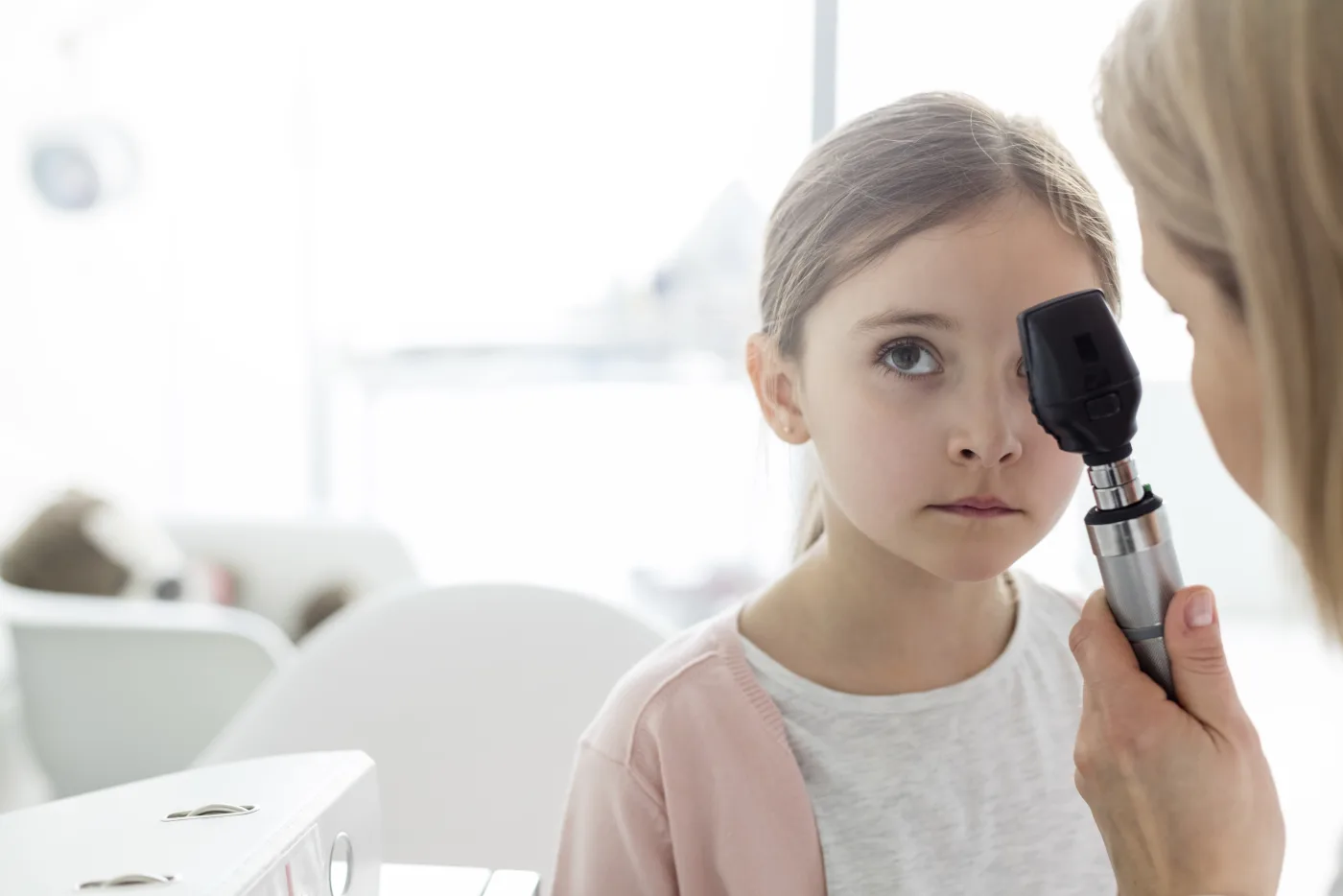
When a child says their eyes hurt, parents are left trying to figure out what that actually means.
- Do they mean the eye itself hurts?
- Do they mean the eyelid hurts?
- Is it burning?
- Is it itching?
- Is it a headache?
- Is it eye strain?
- Did something scratch the eye?
- Is it allergies?
- Is it pink eye?
- Is it from screens?
- Is it something urgent?
Children do not always describe eye symptoms clearly. A young child may say “my eye hurts” for many different reasons. A teen may ignore symptoms because they do not want to miss school, sports, contacts, or a special event.
- Sometimes eye discomfort is mild and temporary.
- Sometimes eye pain is a warning sign.
The important thing is knowing what clues matter and when your child should be seen.
Eye Pain Is a Symptom, Not a Diagnosis
Eye pain can come from many different causes.
Some are simple.
Some are more serious.
Common causes include:
- Dry eye
- Eye allergies
- Eye strain
- Blurry vision or uncorrected prescription
- Screen related irritation
- Pink eye
- Corneal scratch
- Foreign body in the eye
- Stye or eyelid inflammation
- Contact lens irritation
- Eye injury
- Sinus pressure
- Migraine
- Light sensitivity
- Inflammation inside the eye
Because there are so many possible causes, the words “my eye hurts” are only the beginning.
The pattern matters.
Start with the Warning Signs
Call the eye doctor promptly if your child has eye pain with any of these:
- Redness
- Light sensitivity
- Blurry vision
- Vision loss
- Double vision
- Eye injury
- Chemical exposure
- Contact lens wear
- Thick discharge
- Swelling around the eye
- Fever
- Trouble opening the eye
- A white spot on the eye
- A misshapen pupil
- New flashes or floaters
- Pain that is worsening
- One eye much worse than the other
- Pain after swimming in contacts
- Pain after sleeping in contacts
- A child who seems very uncomfortable
Pain plus vision change, light sensitivity, or contact lens wear should not be watched for days.
That child needs care.
The Red, Light Sensitive, Blurry, Painful Eye Matters
A helpful way to think about concerning symptoms is this:
Redness.
Sensitivity to light.
Vision change.
Pain.
If your child has one or more of these, especially if symptoms are significant or new, the eye should be checked.
- A child with mild itching and watery eyes may have allergies.
- A child with pain, light sensitivity, and blurry vision may have something more serious.
Parents do not need to know the diagnosis before calling.
The symptoms are enough.
Mild Irritation Can Feel Like Pain to a Child
Not every eye pain complaint is an emergency.
Children may say their eyes hurt when they are actually feeling:
- Dryness
- Itching
- Burning
- Tired eyes
- Eye strain
- Headache around the eyes
- Mild irritation from sunscreen
- Chlorine irritation
- Wind exposure
- Allergies
- Tiredness after screens
A child may not know how to separate “itchy,” “burning,” “tired,” “sore,” and “painful.”
That is why parents should ask follow up questions.
Questions to Ask Your Child
Try asking:
- Does it hurt or itch?
- Does light bother you?
- Is your vision blurry?
- Do you see double?
- Does it hurt when you blink?
- Does it feel like something is in your eye?
- Did something hit your eye?
- Did anything get in your eye?
- Did it start after screens?
- Did it start after swimming?
- Did it start after wearing contacts?
- Is one eye worse or both?
- Is your head hurting too?
- Is there discharge or crusting?
- Can you open the eye normally?
The answers help decide how urgent the situation is.
Eye Strain Can Make Eyes Hurt
Eye strain is common in children, especially with screens, reading, homework, and long school days.
Eye strain may cause:
- Tired eyes
- Aching around the eyes
- Headaches
- Blurry vision that comes and goes
- Trouble focusing
- Eye rubbing
- Squinting
- Avoiding reading
- Complaints after school
- Complaints after screens
Eye strain may happen because of long near work, reduced blinking, dry eye, glare, uncorrected prescription, focusing problems, or eye teaming problems.
If your child’s eyes hurt mostly during reading, screens, or homework, schedule a comprehensive eye exam.
Do not assume it is just screen time.
Dry Eye Can Make Children Say Their Eyes Hurt
Children can have dry eye symptoms.
They may not use the words “dry eye.”
They may say:
“My eyes burn.”
“My eyes sting.”
“My eyes hurt.”
“My eyes feel tired.”
“My vision gets blurry.”
“My eyes are watery.”
Dry eye can be worse with:
- Screens
- Air conditioning
- Fans
- Allergies
- Contact lenses
- Long reading
- Wind
- Pool exposure
- Certain medications
- Poor blinking
Watery eyes can still be dry or irritated eyes.
If dry eye symptoms keep coming back, the eye doctor can check the tear film and eyelids.
Allergies Can Feel Uncomfortable Too
Eye allergies usually itch more than they hurt, but children may describe itching as pain.
Allergy signs include:
- Itching
- Redness
- Watery eyes
- Puffy eyelids
- Eye rubbing
- Clear discharge
- Sneezing
- Runny nose
- Symptoms after outdoor play
- Symptoms around pets, dust, grass, pollen, or mold
In South Florida, allergies can be a year round problem for some children.
- If itching is the main symptom, allergy is more likely.
- If the eye is painful, light sensitive, blurry, or one eye is much worse, do not assume it is only allergies.
Pink Eye Can Cause Discomfort
Pink eye can cause redness, irritation, watering, burning, discharge, and crusting.
- Viral pink eye often causes watery redness and may happen with cold symptoms.
- Bacterial pink eye may cause thicker yellow or green discharge and lashes stuck together after sleep.
- Allergic conjunctivitis usually causes itching and watery eyes.
The challenge is that these can overlap.
A red uncomfortable eye is not always contagious pink eye, and not every red eye needs antibiotics.
If your child has pain, light sensitivity, blurry vision, contact lens wear, significant swelling, or symptoms that are not improving, the eye should be checked.
A Scratch on the Eye Can Be Very Painful
A corneal scratch is called a corneal abrasion.
It can happen from:
- Fingernail
- Paper
- Toy
- Sand
- Dirt
- Stick or branch
- Contact lens
- Makeup brush
- Sports injury
- Rubbing the eye when something is in it
A scratched eye may cause:
-
Sharp pain
-
Tearing
-
Light sensitivity
-
Redness
-
Blinking
-
Trouble opening the eye
-
Feeling like something is stuck
-
Blurry vision
-
Do not let your child rub the eye.
-
Do not use old prescription drops.
-
Do not patch the eye unless instructed.
Call the eye doctor if you suspect a scratch, especially if pain or light sensitivity is present.
Something in the Eye Can Cause Pain
Children often get dust, sand, eyelashes, sunscreen, or debris in the eye.
A small loose particle may rinse out with tears or clean saline.
But something stuck under the lid or on the eye surface can continue to scratch the eye.
Call the eye doctor if your child has:
-
Ongoing foreign body feeling
-
Pain that does not improve
-
Light sensitivity
-
Redness
-
Blurry vision
-
Trouble opening the eye
-
A history of metal, glass, wood, or sharp object exposure
-
Do not use tweezers near the eye.
-
Do not try to remove anything embedded in the eye.
Contact Lens Pain Is Different
If your child or teen wears contact lenses, eye pain should be taken seriously.
Contacts sit directly on the eye. Pain may mean a scratch, poor lens fit, infection, overwear, dryness, water exposure, or inflammation.
The rule is simple:
If the eye is red, painful, light sensitive, or blurry, contacts come out and you call the eye doctor.
- Do not let your child put in a new lens and keep going.
- Do not let them wear contacts to school or sports with a painful eye.
- Do not use old antibiotic drops.
A contact lens related eye problem can worsen quickly.
Sleeping in Contacts Can Cause Pain
Most children and teens should not sleep or nap in contact lenses unless the eye doctor has specifically prescribed lenses for overnight wear.
Sleeping in regular contacts increases the risk of eye infection and irritation.
If your child wakes up with eye pain after sleeping in contacts, have them remove the lenses carefully if possible and switch to glasses.
Call promptly if there is redness, light sensitivity, blurry vision, discharge, or pain that continues.
Swimming in Contacts Can Cause Pain
Contact lenses and water do not mix.
Children should not swim, shower, or use hot tubs in contacts.
Water exposure can increase the risk of serious eye infection.
If your child has eye pain after swimming in contacts, remove the lenses and call the eye doctor.
- Do not put the same lenses back in.
- Do not rinse contacts with tap water.
Use backup glasses until the eye is checked or the doctor says contacts are safe again.
Eye Pain After Injury Should Be Checked
If your child was hit in the eye, poked, scratched, or exposed to a chemical, eye pain matters.
Call promptly if there is:
- Blurry vision
- Light sensitivity
- Blood in the eye
- Trouble opening the eye
- Swelling
- Double vision
- A misshapen pupil
- New flashes or floaters
- A sharp object injury
- A chemical splash
- Pain that is getting worse
For chemical exposure, start flushing the eye immediately with clean water or saline and seek urgent care.
Do not wait.
Eyelid Pain May Be a Stye
Sometimes the eye itself is not the problem.
The eyelid may hurt.
A tender bump on the eyelid may be a stye.
Signs include:
- Red bump near the lashes
- Tenderness
- Swelling
- Pain when blinking
- Mild watering
- Eyelid redness
Warm compresses may help many styes.
Do not pop or squeeze the bump.
Call the eye doctor if swelling is worsening, the eye is painful, the child cannot open the eye, there is fever, vision is blurry, or bumps keep coming back.
Sinus Pressure Can Feel Like Eye Pain
Sometimes pain around the eyes comes from sinus congestion or headache rather than the eye itself.
Sinus pressure may feel worse around the forehead, cheeks, or behind the eyes.
There may also be:
- Stuffy nose
- Runny nose
- Cough
- Fever
- Facial pressure
- Thick nasal drainage
- Pain when bending forward
Even when sinus symptoms are present, vision symptoms still matter.
If your child has blurry vision, double vision, eye redness, light sensitivity, trouble moving the eye, swelling around the eye, or severe pain, seek care promptly.
Migraine Can Cause Eye Symptoms
Some children and teens have migraines.
Migraines can cause pain around the eyes, light sensitivity, nausea, visual changes, or headache.
But parents should be careful not to label every eye pain complaint as migraine.
If your child has new eye pain, vision changes, double vision, one eye symptoms, eye redness, or pain with eye movement, they should be evaluated.
If migraines are known, follow your pediatrician or neurologist’s plan, but do not ignore new eye findings.
Light Sensitivity Is an Important Clue
Light sensitivity can happen with mild irritation, migraine, concussion, dry eye, or allergy.
But light sensitivity with eye pain can also happen with more serious eye conditions, including corneal scratches, inflammation, infection, or injury.
Call the eye doctor if your child has eye pain and wants to keep the eye closed because light hurts.
This is especially important if there is redness or blurry vision.
Blurry Vision with Pain Is Not Normal
Eye pain with blurry vision should be checked.
Possible causes include:
- Corneal scratch
- Infection
- Contact lens complication
- Eye inflammation
- Injury
- Foreign body
- Significant dry eye
- Optic nerve or retina concern
- Sudden pressure problem
- Other medical eye conditions
Parents do not need to figure out which one it is.
Pain plus blur is enough reason to call.
Pain with Eye Movement Matters
If your child says it hurts to move the eye, that should be taken seriously.
Pain with eye movement may happen with inflammation, infection around the eye, optic nerve issues, trauma, sinus related complications, or other causes.
Call promptly if pain with eye movement comes with:
- Fever
- Swelling around the eye
- Vision changes
- Double vision
- Headache
- Trouble moving the eye normally
- The eye looking pushed forward
- Child appearing ill
These symptoms should not be monitored at home without guidance.
Swelling Around the Eye Can Be More Than Allergy
Mild puffy eyelids can happen with allergies.
But swelling with pain is different.
Call promptly if swelling is:
- One sided
- Painful
- Worsening
- Associated with fever
- Associated with vision changes
- Associated with trouble moving the eye
- Associated with redness spreading around the eye
- Preventing the eye from opening
Swelling around the eye can sometimes involve infection that needs urgent care.
Eye Pain in Babies and Toddlers
Babies and toddlers cannot explain symptoms well.
They may show eye pain by:
- Crying
- Keeping one eye closed
- Rubbing
- Tearing
- Blinking hard
- Turning away from light
- Refusing to open the eye
- Acting unusually fussy
- Having swelling or discharge
- Not tracking normally
A baby or toddler with eye pain signs should be checked sooner rather than later, especially if symptoms are one sided, associated with redness, discharge, swelling, light sensitivity, injury, or fever.
Eye Pain After Screens
Screen related discomfort is common.
Children blink less during screens, which can make the eyes feel dry, tired, or irritated.
Screen related symptoms may include:
- Eye aching
- Burning
- Dryness
- Headaches
- Blurry vision
- Eye rubbing
- Trouble focusing
- Symptoms after school computer use
- Symptoms after gaming
- Symptoms after tablets or phones
If symptoms improve with breaks and do not include redness, light sensitivity, or vision loss, it may be eye strain or dryness.
If symptoms keep happening, your child needs an eye exam.
They may need glasses, dry eye care, focusing support, eye teaming testing, or better screen habits.
Eye Pain with Reading
If your child’s eyes hurt during reading or homework, vision should be considered.
Reading requires the eyes to focus, team, move across the page, and stay comfortable.
A child may have 20/20 distance vision and still have symptoms during near work.
Signs that reading related eye discomfort should be checked include:
- Headaches with reading
- Eye rubbing
- Losing place
- Blurry words
- Double vision
- Words moving
- Avoiding homework
- Closing one eye
- Trouble finishing assignments
- Fatigue after school
This does not mean every reading problem is visual.
But eye pain with reading is a reason to check the eyes.
What Parents Can Do at Home for Mild Symptoms
If symptoms are mild and there are no warning signs, you can try simple steps while watching closely.
These may include:
-
Have your child stop rubbing
-
Use a cool compress for itching or allergy type symptoms
-
Use a warm compress for a suspected stye
-
Take breaks from screens
-
Encourage blinking
-
Rinse mild irritants with clean water or saline
-
Remove contact lenses if worn
-
Use backup glasses instead of contacts
-
Avoid smoke, fragrance, dust, and pool irritants
-
Call if symptoms do not improve
-
Do not use old prescription drops.
-
Do not use someone else’s eye drops.
-
Do not use redness reliever drops to hide symptoms.
-
Do not delay care if warning signs appear.
What Not to Do
Avoid these mistakes:
- Do not let your child rub a painful eye
- Do not use leftover antibiotic drops
- Do not share drops between siblings
- Do not use steroid eye drops unless prescribed
- Do not let contacts stay in a painful eye
- Do not let your child sleep in contacts
- Do not rinse contacts with water
- Do not ignore light sensitivity
- Do not ignore blurry vision
- Do not assume pain is just allergies
- Do not try to remove embedded objects
- Do not delay flushing after chemical exposure
Eye pain needs the right treatment, not random treatment.
When Can It Wait for a Regular Appointment?
A routine appointment may be reasonable when symptoms are mild, recurring, and not urgent.
Examples include:
- Mild eye strain with screens
- Mild burning that comes and goes
- Itching that seems allergy related
- Occasional dryness
- Headaches with reading but no vision loss
- Mild discomfort that improves with breaks
- A child who rubs eyes often but has no acute pain
- Symptoms that have been slowly recurring
Even if it is not urgent, it still deserves evaluation if it keeps happening.
Recurring discomfort is not something your child should just live with.
When Should It Be Same Day?
Same day care may be needed if your child has:
- Eye pain with redness
- Eye pain with light sensitivity
- Eye pain with blurry vision
- Eye pain after injury
- Eye pain with contact lens wear
- Eye pain after swimming in contacts
- Eye pain after sleeping in contacts
- Trouble opening the eye
- A foreign body sensation that will not go away
- Discharge with pain
- Significant swelling
- One eye much worse than the other
Call the office for guidance.
If emergency symptoms are present, seek urgent or emergency care.
When Should You Go to the Emergency Room?
Go to emergency care or seek urgent medical care if there is:
- Chemical exposure
- Sharp object injury
- Severe eye pain
- Sudden vision loss
- Blood inside the eye
- A misshapen pupil
- Eye injury with vision change
- Severe swelling around the eye
- Fever with painful eye swelling
- Trouble moving the eye
- New double vision after trauma
- New flashes, floaters, curtain, or shadow after injury
- A child who seems very ill
- Concern that the eye may be punctured
When in doubt, call for guidance, but do not delay urgent care for severe symptoms.
What the Eye Doctor May Check
An eye pain visit may include:
- Vision in each eye
- Eye pressure when appropriate
- Pupil response
- Eye movement
- Eyelid exam
- Cornea check for scratches
- Redness pattern
- Tear film
- Allergy signs
- Infection signs
- Contact lens fit if relevant
- Foreign body check
- Dilation when needed
- Referral if a more serious condition is suspected
The exam depends on the symptoms.
A child with screen related discomfort needs a different exam than a child with pain after a fingernail scratch.
What to Bring to the Visit
Bring:
- Current glasses
- Contact lens boxes if your child wears contacts
- Any eye drops used
- A list of medications
- Details about when pain started
- Details about injury or chemical exposure
- Whether vision changed
- Whether light hurts
- Whether there is discharge
- Whether one eye or both eyes are affected
- Any school nurse notes
- Photos if swelling changed over time
If a chemical was involved, bring the product name or container if it is safe to do so.
Eye Pain Care at Pediatric & Family Vision
At Pediatric & Family Vision, we see children, teens, and adults for eye pain, red eyes, scratches, contact lens discomfort, dry eye, allergies, styes, vision changes, screen related symptoms, and urgent medical eye concerns.
When a child says their eyes hurt, we do not expect parents to know the diagnosis.
We help sort through the clues.
- Is it dry eye?
- Allergy?
- A prescription problem?
- Screen strain?
- A scratch?
- Pink eye?
- Contact lens irritation?
- An eyelid problem?
- An injury?
- Something that needs urgent treatment?
Some eye pain is mild and manageable.
Some eye pain should be seen quickly.
If your child has eye pain with redness, light sensitivity, blurry vision, injury, swelling, discharge, or contact lens wear, call for guidance.
Your child does not need to tough it out.
Eye pain is worth taking seriously.