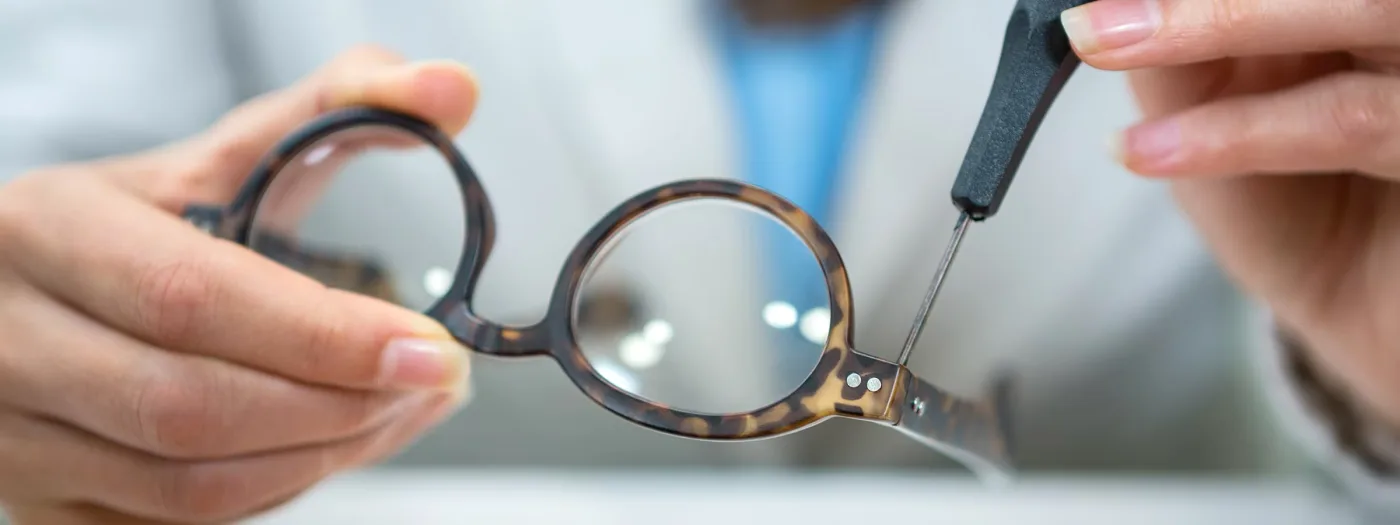
Kids break glasses.
- They sit on them.
- They toss them in backpacks.
- They take them off with one hand.
- They wear them during rough play.
- They leave them on the floor.
- They bend the arms.
- They drop them at recess.
- They forget they are on their face and then wrestle with a sibling.
This does not always mean your child is careless.
It means kids are kids.
Children need glasses that fit real life. The frame has to fit their face, match their prescription, stay in place, survive daily wear, and feel comfortable enough that the child will actually wear it.
If your child keeps breaking glasses, the answer is not always “be more careful.”
Sometimes the answer is a better frame, better fit, better lens material, a backup pair, clearer routines, or sport-specific eyewear.
Why Kids Break Glasses so Often
Children use glasses differently than adults.
Adults usually take glasses off carefully, put them in a case, and notice when the frame feels loose.
Children may not.
Kids are active. They run, climb, roll, jump, play, fall asleep in the car, wear headphones, use tablets, shove things into backpacks, and move quickly from one activity to another.
Glasses break when they are not built for that kind of life.
Common reasons kids glasses break include:
- The frame is too big
- The frame is too loose
- The glasses slide down all day
- The child takes them off constantly
- The child pulls them off with one hand
- The frame material is too stiff
- The hinges are weak
- The glasses are worn during sports
- The lenses are too heavy
- The child does not have a case routine
- The frame does not match the child’s activity level
- There is no backup pair
A broken pair of glasses is frustrating, but it is also useful information.
It tells us something about fit, durability, routine, or how the glasses are being used.
Start with the Fit
Fit is the most important part of kids glasses.
A frame that does not fit well is more likely to break because it moves around, gets pulled off, or sits in the wrong position.
A good frame should:
- Sit comfortably on the nose
- Stay level on the face
- Keep the eyes centered in the lenses
- Not slide down constantly
- Not pinch behind the ears
- Not press into the cheeks
- Not feel too heavy
- Not be too wide
- Not be too narrow
- Stay in place during normal movement
If your child keeps pushing glasses up all day, the frame is probably not fitting well.
If the frame slides, your child may take it off more often. Every time glasses are taken off, dropped, bent, or shoved somewhere unsafe, the risk of breakage goes up.
Do Not Buy Frames with Too Much Room to Grow
Parents often want to buy kids clothes with room to grow.
That works for jackets.
It does not work as well for glasses.
If the frame is too big, the glasses may slide down, feel heavy, or sit in the wrong place. The lenses may also be thicker or heavier than needed, especially with stronger prescriptions.
A frame that is too large can make your child look over the top of the lenses instead of through them.
That means the glasses are not doing their job.
Kids glasses should fit now.
They should not be several sizes too big with the hope your child will grow into them.
The Bridge Is a Big Deal
The bridge is the part of the frame that rests on the nose.
For children, this is often where glasses fail.
Many young children have smaller or flatter nose bridges. If the bridge does not fit well, the glasses slide down constantly.
When glasses slide, children push them up, take them off, bend them, or stop wearing them.
A better bridge fit can make the entire frame work better.
- Some children do well with adjustable nose pads.
- Others do better with a molded bridge that matches their face shape.
There is no one perfect bridge for every child.
The right choice depends on your child’s face.
Flexible Frames Can Help Younger Children
Some younger children need flexible frames.
Flexible frames can bend more easily without snapping. They may be helpful for toddlers, preschoolers, and children who are rough with glasses.
Flexible frames can be especially useful when a child:
- Pulls glasses off often
- Falls or plays hard
- Has sensory issues
- Is still learning how to care for glasses
- Needs full-time wear
- Has already broken several pairs
- Needs a strap to keep glasses in place
Flexible does not mean indestructible.
But it can make glasses more forgiving.
Spring Hinges May Help Older Children
Spring hinges allow the arms of the glasses to flex outward slightly.
This can help when kids pull glasses off with one hand, stretch the frame, or put glasses on too quickly.
Spring hinges are not necessary for every child, but they can be helpful for active kids or children who are hard on frames.
They may reduce the chance that the hinge becomes loose or breaks from everyday use.
Cable Temples and Straps Can Help Glasses Stay On
Some children need extra help keeping glasses on their face.
Cable temples curve around the ears and can help prevent slipping.
A strap can also help for younger children or children who are very active.
This can be useful for:
- Babies
- Toddlers
- Preschoolers
- Children with flat nose bridges
- Children who look down often
- Children who take glasses off repeatedly
- Children who need full-time wear
- Children with amblyopia or eye alignment needs
The goal is not to trap glasses on a child’s face.
The goal is to help the glasses stay where they need to be so the child can see properly.
Lens Material Matters
Children should usually have impact-resistant lenses.
Kids are active, and their lenses need to be safer than standard plastic lenses.
Polycarbonate and Trivex are commonly used for children because they are lightweight and impact resistant.
This matters for everyday life.
A child may drop glasses, get hit accidentally, fall, or wear glasses during play. Impact-resistant lenses help reduce risk.
This is especially important if your child has reduced vision in one eye, amblyopia, a strong prescription, or higher-risk activities.
Ask what lens material is being used.
Do not assume every low-cost lens is the best lens for a child.
Scratch Resistance Matters Too
Kids scratch lenses.
- They clean them with shirts.
- They leave them lens side down.
- They throw them in backpacks.
- They put them in pockets.
- They wipe them with paper towels.
Scratch-resistant coating can help, although no lens is completely scratch proof.
Scratched lenses can make vision blurry or uncomfortable. A child may start taking glasses off because they do not see well through them.
If your child says the glasses are blurry, check the lenses in good light.
The prescription may be fine, but the lenses may be scratched or dirty.
Regular Glasses Are Not Sport Goggles
This is one of the biggest reasons kids break glasses.
Regular glasses are not designed for sports impact.
Even if the lenses are impact resistant, the frame itself may not be protective enough for basketball, baseball, soccer, racquet sports, lacrosse, hockey, martial arts, or rough playground activity.
Regular glasses can bend, break, fall off, or cause injury during impact.
If your child needs vision correction during sports, ask about prescription sport goggles or protective eyewear.
Sports eyewear should be designed for impact protection.
Do not assume everyday glasses are enough.
Why Sports Are so Hard on Glasses
Sports involve speed, impact, sweat, falls, balls, elbows, sticks, and quick head movement.
Regular glasses are not made for that.
During sports, glasses may:
- Slide down
- Fall off
- Bend at the hinges
- Break at the bridge
- Get hit by a ball
- Get pushed into the face
- Scratch
- Fog
- Distract the child
- Become unsafe
If your child breaks glasses repeatedly during sports, the answer is not another regular frame.
The answer may be sport protective eyewear.
Backpacks Destroy Glasses
Backpacks are one of the most common places glasses get broken.
A child takes glasses off, puts them loose in a backpack, and then books, lunch boxes, water bottles, and folders crush them.
The solution is simple but not always easy:
Glasses should be on the face or in the case.
- Not loose in the backpack.
- Not on the desk.
- Not in a pocket.
- Not on the floor.
- Not in the car seat.
Teach the phrase:
“On your face or in the case.”
Then repeat it often.
Teach Two-Hand Removal
Many children bend glasses by taking them off with one hand.
When a child pulls from one side, the frame twists. Over time, the glasses become loose, crooked, or broken.
Teach your child to use two hands to take glasses off.
This keeps both sides balanced and reduces strain on the hinges.
You may need to remind them many times.
That is normal.
Glasses care is learned.
Why Glasses Get Loose
Frames loosen over time.
This can happen from:
- Taking them off with one hand
- Sleeping in them
- Rough play
- Pulling on the arms
- Wearing headphones
- Taking them on and off repeatedly
- Growth changes
- Heat exposure
- Normal daily use
Loose glasses slide.
Sliding glasses get pushed up.
Glasses that are pushed up all day are more likely to bend or break.
Regular adjustments help glasses last longer.
Have Glasses Adjusted Before They Break
Do not wait until the frame is almost broken.
Bring glasses in for adjustment if:
- They slide down
- They sit crooked
- One side is loose
- The nose pads are bent
- The temples feel stretched
- The screws are loose
- The frame pinches
- The child complains
- The child looks over the lenses
- The glasses fall off during normal play
Small adjustments can prevent bigger problems.
Heat Can Damage Frames and Lenses
South Florida families should be careful with heat.
Do not leave glasses in a hot car.
Heat can warp frames, damage lens coatings, or change how the glasses fit.
This is especially important for plastic frames and coated lenses.
Teach your child not to leave glasses on the dashboard, in the car seat, near a hot window, or outside in direct sun when they are not wearing them.
Pets Can Destroy Glasses
Dogs love glasses.
If your child leaves glasses on the floor, bed, couch, or nightstand, a dog may chew them.
This is another reason to make a consistent case routine.
At home, glasses should have a safe place.
For younger children, parents may need to manage that routine until the child is older.
Siblings and Rough Play Matter
Younger siblings may grab glasses.
Older siblings may wrestle.
Cousins may play too roughly.
Glasses often break during play that has nothing to do with vision.
If your child needs glasses full-time, talk about what to do before rough play.
For some children, sport goggles or a more durable frame may be needed.
For others, the rule may be that glasses go in the case during certain rough activities, as long as the child can still function safely.
Ask the eye doctor what is appropriate for your child’s prescription and reason for wearing glasses.
If Your Child Needs Glasses Full-Time, Durability Matters More
Some children only need glasses for certain tasks.
Others need them full-time.
If your child needs glasses all day, durability becomes more important.
Full-time glasses must survive:
- School
- Recess
- Reading
- Screens
- Homework
- Car rides
- Play dates
- Sports
- Outdoor time
- Daily cleaning
- Constant handling
For full-time wear, do not choose a delicate frame just because it looks cute.
Choose something your child can actually live in.
If Glasses Are for Amblyopia, Do Not Risk Poor Fit
If your child has amblyopia, also called lazy eye, glasses may be part of treatment.
In that case, the glasses need to be worn consistently and fit properly.
A frame that breaks often or slides down all day can interfere with the treatment plan.
For amblyopia, the goal is not just clear vision for a few minutes.
The goal is to give the weaker eye a clear image consistently.
That makes fit, comfort, and durability very important.
If Glasses Help an Eye Turn, Fit Matters
Some children wear glasses to help an eye turn.
If the glasses are helping the eyes stay aligned, they need to sit in the right position.
If the frame slides down, your child may look over the lenses and lose the benefit.
If the frame breaks and your child goes without glasses, the eye turn may become more noticeable.
For children with eye turns, backup glasses are often worth considering.
When a Backup Pair Is Worth It
A backup pair is helpful for many children.
It is especially important if your child:
- Needs glasses full-time
- Has a strong prescription
- Has amblyopia
- Has an eye turn
- Needs glasses for school
- Breaks glasses often
- Loses glasses often
- Plays sports
- Has myopia that needs consistent correction
- Uses glasses for safety
The backup pair does not need to be fancy.
It just needs to be current and wearable.
When the main pair breaks, the backup pair prevents stress and keeps your child seeing clearly.
Ask About the Warranty
Before buying glasses, ask about the warranty.
Good questions include:
- What happens if the frame breaks?
- What happens if the lenses scratch?
- How long is the warranty?
- Is there a replacement fee?
- Can the same frame be reordered?
- What if the prescription changes soon?
- Are adjustments included?
- What is not covered?
- How long does a repair take?
- Do we need a backup pair?
Kids glasses are used hard.
A warranty can make a big difference.
The Cheapest Frame Is Not Always the Cheapest Choice
A low-cost frame may seem like a good idea.
Sometimes it is.
But if the frame breaks quickly, does not fit, cannot be adjusted, or your child refuses to wear it, it may cost more in the long run.
The best value is usually a frame that:
- Fits well
- Holds adjustment
- Uses safe lens material
- Matches the prescription
- Has a good warranty
- Is comfortable
- Your child will wear
- Can survive daily life
Cost matters.
But function matters too.
Let Your Child Choose from Good Options
Children are more likely to wear glasses they like.
But children should not choose from every frame on the wall.
A good approach is to let the optical team and parent narrow the choices first.
Pick frames that fit, are durable, and work with the prescription.
Then let your child choose from those.
This gives your child ownership without sacrificing fit.
Watch What Your Child Does with Glasses
The way your child handles glasses can tell you what needs to change.
Ask yourself:
- Do they take glasses off during recess?
- Do they put them loose in the backpack?
- Do they fall asleep in them?
- Do they chew on the temple tips?
- Do they pull them off with one hand?
- Do they leave them on the floor?
- Do they take them off for sports?
- Do they avoid the case?
- Do they push them up all day?
- Do they refuse them because they hurt?
The solution depends on the pattern.
If Glasses Break at the Same Spot Every Time
This is useful information.
- If the frame always breaks at the hinge, the child may be pulling them off with one hand or the frame may be too tight.
- If the bridge breaks, the frame may be too stiff, too small, or getting stepped on.
- If lenses pop out, the frame may not hold the prescription well or may be bent.
- If temple tips break, the child may be chewing them.
- If nose pads bend constantly, the glasses may be getting pulled, dropped, or stored poorly.
Bring the broken glasses in.
The break pattern can help choose a better frame.
If Your Child Keeps Losing Glasses
Losing glasses is different from breaking them.
For children who lose glasses, the solution is routine.
Try:
- A labeled case
- A glasses spot at home
- A case in the backpack
- A second case at school
- A strap for younger children
- A reminder chart
- Teacher support
- A backup pair
- A rule that glasses are on the face or in the case
- A bright-colored case that is easy to find
If glasses are important for school or treatment, do not rely on memory alone.
Build the system around your child.
If Your Child Keeps Sitting on Glasses
This usually means the glasses are being left in unsafe places.
Teach your child not to put glasses on:
- Chairs
- Beds
- Couches
- Floors
- Car seats
- Desks without a case
- Bathroom counters
- Lunch tables
- Backpacks without a case
- Sports bags without a case
Again, the rule is simple:
On your face or in the case.
If Your Child Keeps Sleeping in Glasses
Some children fall asleep reading, watching TV, or riding in the car.
If this happens often, glasses may bend or break.
Try to build a bedtime glasses routine.
For example:
- Brush teeth
- Put glasses in case
- Put case on nightstand
- Read with a backup pair if needed
- Lights out
For car rides, keep a case in the car if your child often falls asleep.
If Your Child Chews Glasses
Chewing on glasses is common in some children.
It may be habit, sensory seeking, anxiety, boredom, or simply something they do without thinking.
If your child chews the temple tips, ask about replacement parts, more durable materials, or sensory alternatives.
Do not ignore chewing if the frame is breaking or becoming unsafe.
Also make sure the frame material is appropriate for your child.
If Your Child Wears Headphones
Headphones can bend frames or make glasses uncomfortable.
This is common with school headphones, gaming headsets, and noise-reducing headphones.
If your child complains of pain behind the ears, check whether headphones are pressing the temples into the side of the head.
A thinner temple design, better adjustment, or different headphones may help.
If Your Child Wears Helmets
Helmets and glasses can be tricky.
Bike helmets, sports helmets, and costume helmets can push glasses out of position.
If your child wears a helmet often, bring it when choosing glasses or sport eyewear if possible.
The glasses need to fit with the equipment your child actually uses.
What About Contact Lenses?
For older children and teens, contact lenses may be an option.
Contacts can help with sports, appearance, and convenience.
But contacts are medical devices and require responsibility.
A child must be able to handle lenses safely, wash hands, avoid water exposure, follow replacement schedules, and tell an adult if the eyes are red, painful, light sensitive, or blurry.
Contacts do not eliminate the need for glasses.
Every contact lens wearer still needs backup glasses.
What About Prescription Sport Goggles?
For active kids, sport goggles may be the best solution.
They can be made with prescription lenses and designed for impact protection.
Sport goggles may be helpful for:
- Basketball
- Baseball
- Soccer
- Lacrosse
- Hockey
- Racquet sports
- Martial arts
- Football
- Volleyball
- Rough playground activity
If your child breaks glasses during sports, do not keep replacing regular frames without asking about sport protection.
What Parents Can Do at Home
You can help glasses last longer by building simple habits.
Teach your child:
- Use two hands to take glasses off
- Put glasses in the case
- Do not put lenses face down
- Do not leave glasses on the floor
- Do not put glasses loose in a backpack
- Clean lenses with the right cloth
- Do not wear regular glasses for rough sports
- Tell an adult if glasses feel loose
- Keep glasses away from pets
- Keep glasses out of hot cars
Do not expect perfection right away.
Kids need reminders.
What to Ask When Buying Your Child’s Next Pair
Ask the optical team:
- Does this frame fit my child now?
- Is it durable enough for my child’s age?
- Are the lenses impact resistant?
- Will the lenses be too thick or heavy in this frame?
- Does my child need a strap?
- Does my child need cable temples?
- Does my child need sport goggles?
- Is there a warranty?
- What happens if these break?
- Should we get a backup pair?
- How often should these be adjusted?
- What should we do if my child refuses them?
These questions help prevent repeat problems.
Glasses for Real Kids at Pediatric & Family Vision
At Pediatric & Family Vision, we know kids glasses need to work in real life.
They need to fit your child’s face, match the prescription, stay comfortable, and survive school, play, screens, sports, backpacks, car rides, and everything else children do.
If your child keeps breaking glasses, we do not just blame the child.
We look at the frame fit, lens material, prescription, activity level, wearing schedule, and whether your child needs a backup pair or sport-specific eyewear.
- Some children need flexible frames.
- Some need a better bridge fit.
- Some need adjustments more often.
- Some need prescription sport goggles.
- Some need a clearer routine at school and home.
The right glasses should make life easier, not create a new battle every week.
If your child’s glasses keep breaking, slipping, bending, or disappearing, bring them in. The pattern usually tells us what needs to change.