Failed Vision Screening Follow-Up Exams in Boca Raton.
A referral note came home from school. Here is what it means, what it doesn't, and how a comprehensive eye exam gets you real answers.
What a Failed Screening Means
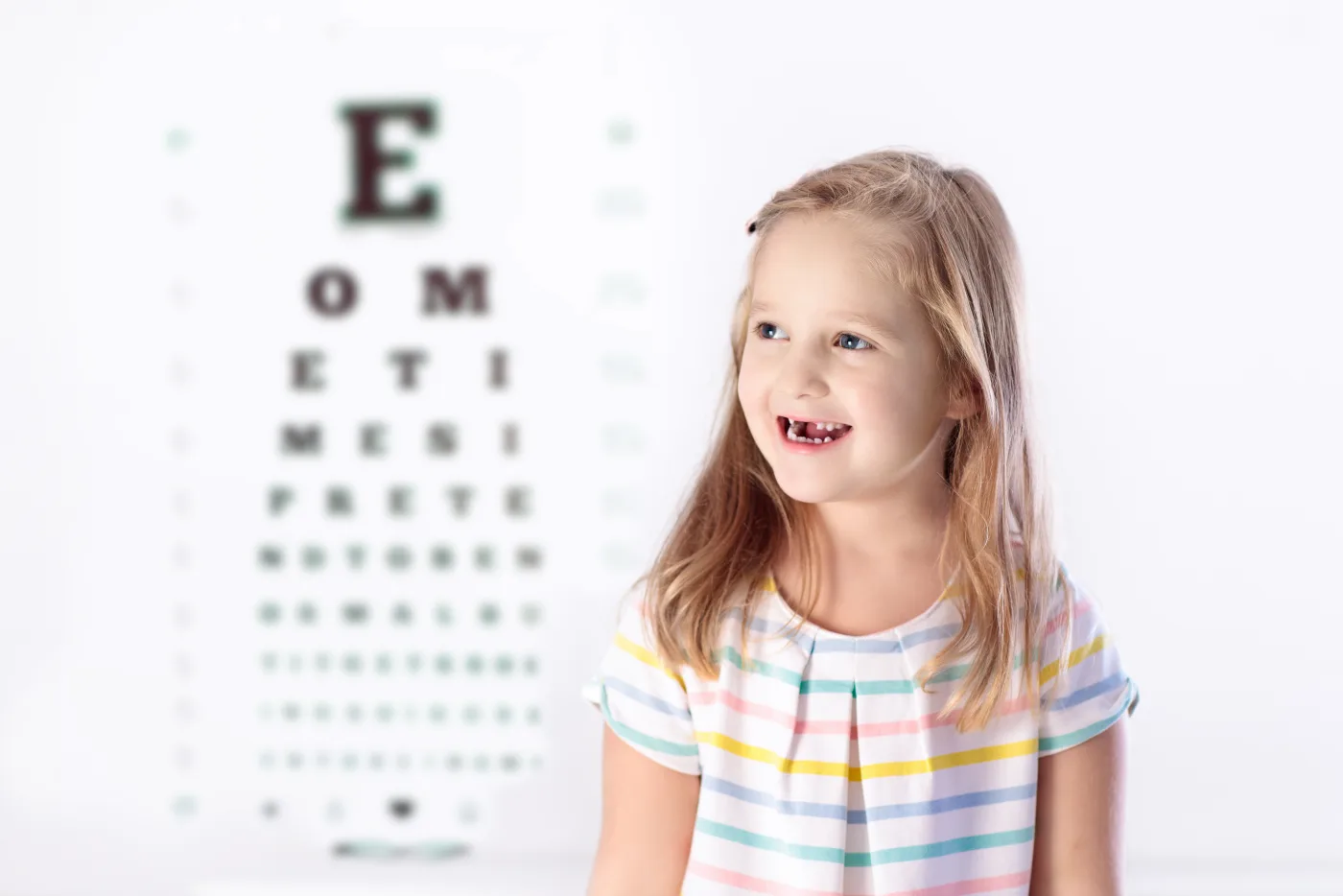
When a parent hands me a referral note from school, the first thing I tell them is that a screening is a sorting tool, not a diagnosis. Its job is to find children who need a closer look. Yours was one of them, and the next step is a comprehensive pediatric eye exam.
The American Academy of Ophthalmology advises a comprehensive exam whenever a child fails a vision screening, and early treatment when a problem turns up [9]. Most of what screenings find, such as a need for glasses, is very treatable.
How School Vision Screening Works in Florida
Vision screening is one of the basic school health services required by Florida's School Health Services Act [3]. Under the Florida Department of Health rule, it must be offered at a minimum to students in kindergarten and grades 1, 3 and 6, and to students entering a Florida school for the first time in kindergarten through grade 5 [1].
The state's school health manual spells out the pass line [2]:
- Under age 6: each eye must read most of the 20/40 line. Farsightedness is not tested, since mild farsightedness is normal at this age.
- Age 6 and older: each eye must read most of the 20/30 line, and a plus-lens test checks for farsightedness.
- Any age: a difference of two lines or more between the eyes is a referral, unless the weaker eye still reads 20/30 or better.
- Rescreening: a child who fails is screened again, and failing the second time means referral to an optometrist, ophthalmologist or physician.
Parents can opt out of school health screenings in writing [3], and some families do. If your child was not screened, or is in a grade that isn't screened, that is not the same as passing.
What a Screening Can and Can't Detect
School screenings are good at one thing: catching blurry distance vision. Florida's procedure tests each eye on a distance chart, and for children 6 and older adds a quick farsightedness check [2]. It does not test how the eyes team and focus up close, measure a glasses prescription, or look at the health of the eye.
The American Optometric Association puts it plainly: a vision screening is not a comprehensive exam, and a child with 20/20 eyesight can still have trouble with focusing, eye tracking or eye coordination [6]. That is why a child with 20/20 vision can still need an exam.
Screening tests also miss children who do have a problem. In the large Vision In Preschoolers Study, even the best screening tests, given by trained eye care professionals, found only about two out of three children with any of the targeted conditions, though they did better on the most serious ones [4]. The reverse happens too. The U.S. Preventive Services Task Force found that in groups where few children had vision problems, false-positive rates were usually above 75 percent [5]. Both are good reasons to let a full exam settle the question.
What the Failed Result Might Mean
A screening tells us something was off, not what. These are the most common answers I find. Refractive errors (nearsightedness, farsightedness and astigmatism) are corrected with glasses [8]. Amblyopia affects up to 3 in 100 children, is often hard for parents to notice, and responds best to treatment started early [7].
Blurry Distance Vision
Nearsightedness makes the board and far-away letters look blurry. It is the problem school screenings are best at finding.
Farsightedness or Astigmatism
These can blur near work, far work, or both, and can tire the eyes during reading.
Amblyopia (Lazy Eye)
One eye sees much less clearly than the other, even with glasses. A big difference between the two eyes on the screening is a common clue.
Eye Alignment
An eye that turns in, out, up or down can keep the eyes from working as a team and can lead to amblyopia.
A Tough Testing Day
Shyness, distraction, or not understanding the instructions can make a child fail a test their eyes could pass.
Read more about amblyopia, the rise in childhood nearsightedness, and signs your child needs glasses. When a lazy eye or eye turn is found, we may recommend a binocular vision evaluation. Our page on lazy eye treatment explains the options. If your child sees clearly but reading still feels like a fight, our sister practice explains learning-related vision problems and offers a symptom checklist you can fill out at home.
From Referral Note to Answers
How Fast to Book
Book soon rather than waiting for the next screening. Problems like amblyopia respond best when treatment starts early [7], and Florida's school procedure asks teachers to give a child who failed preferential seating only until the results of a professional exam come back [2]. If you notice an eye that suddenly turns, eye pain, or a sudden change in vision, don't wait for a routine visit. See our urgent eye care page.
Our office opens November 16, 2026. You can reserve a spot now, book online, or call (561) 462-1245. Our hours are weekdays, 8:30 AM – 5:30 PM.
What to Bring
- The school screening note, or a photo of it
- Any glasses your child already has, and the last prescription if you have it
- Insurance card (vision and/or medical) and a photo ID
- A list of medications and any eye conditions in the family
- A parent or legal guardian, who must come with any minor
More detail is in our what to bring guide and on our new patients page.
What Happens at the Comprehensive Exam
History and the School Note
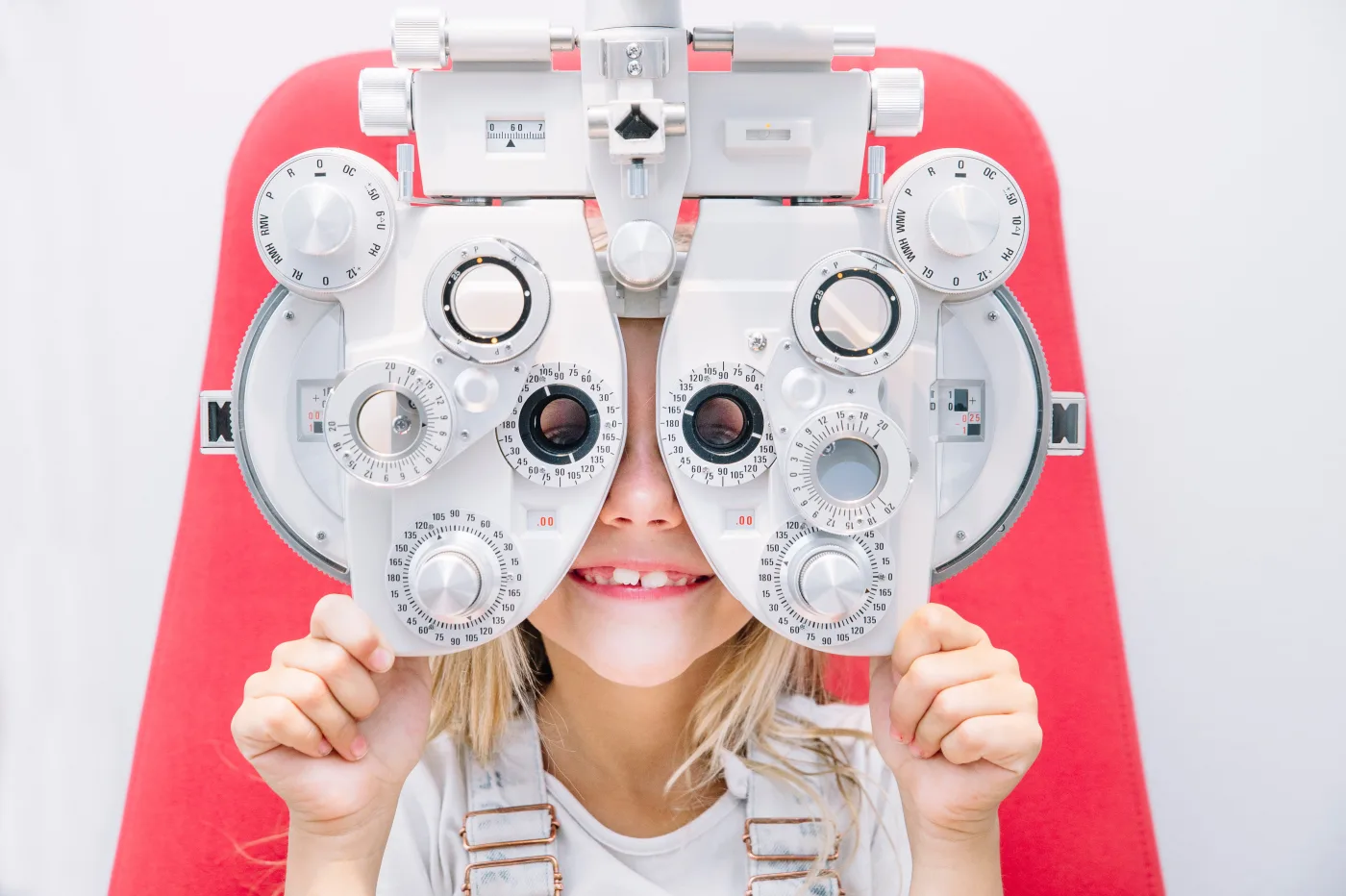
We start with what the screening found, what you and the teacher have noticed, and family eye history.
Vision at Distance and Near
Each eye is tested on its own with letters, numbers or pictures, matched to your child's age.
Eye Teaming, Alignment and Focusing
I check how the eyes aim, move and focus together, the skills reading depends on.
Prescription Testing
I measure whether glasses would help, even for children who can't read a chart yet. Drops are often used in children to relax focusing for an accurate result.
Eye Health
A look at the front and back of the eye. Dilating drops give a fuller view inside.
Answers and a Plan
Before you leave, I explain what we found and what comes next, in plain language.
A comprehensive exam is how refractive errors and other eye problems are actually diagnosed [8]. If this is your child's first visit, here is what to expect at a first eye exam. If glasses are prescribed, our kids' frames and kids' glasses pages cover fit and durability.
How Insurance Usually Covers the Exam
Vision insurance generally covers a routine comprehensive eye exam, plus an allowance toward glasses. Medical insurance covers eye-health concerns. We are in-network with VSP, EyeMed, UnitedHealthcare Vision, Aetna Vision, Cigna Vision and Humana Vision, and we verify your child's specific benefits before the visit so you know your cost ahead of time.
Without insurance? Call us and we'll arrange a self-pay visit through our sister practice, Vision & Learning Center. For children under 4 with a lazy eye or eye turn, ask about our specialty binocular evaluation. Full details are on our insurance page.
Failed Vision Screening Questions
My child failed the school vision screening. Does that mean they need glasses?
Not necessarily. A failed screening means your child should have a full eye exam, not that a diagnosis has been made. Some children turn out to need glasses, some have a different problem such as an eye turn or a lazy eye, and some are fine and simply had a hard time with the test that day. The exam tells you which.
How soon should I book an exam after a failed screening?
Soon. Don't wait for next year's screening. The American Academy of Ophthalmology advises starting treatment for problems like amblyopia as early as possible[9], and Florida's school health procedures ask teachers to give a child preferential seating only until the results of a professional evaluation come back[2].
My child passed last year. How can they fail this year?
Vision changes as children grow, and nearsightedness in particular often shows up during the school years. The American Optometric Association recommends an eye exam every year for school-age children for this reason[6]. See why a prescription can change.
Will insurance cover the exam?
Vision insurance generally covers a routine comprehensive eye exam, and we verify your specific benefits before the visit. Without insurance? Call us and we'll arrange a self-pay visit through our sister practice, Vision & Learning Center. Details are on our insurance page.
Should I bring the screening note from school?
Yes. The note tells me which part of the screening your child did not pass and which eye was affected, which helps me focus. Bring any glasses your child already has, your insurance card, and a list of medications too.
Want the longer version? Read why school screenings miss what we catch. Teachers and school nurses can find referral information on our page for schools.
Where This Information Comes From
- Florida Administrative Code Rule 64F-6.003, Screening (via Cornell LII): grades that must be offered vision screening
- Florida Department of Health: School Health Administrative Resource Manual (rev. 2021), Appendix D-2: pass and referral criteria, rescreening, preferential seating
- Florida Statutes s. 381.0056, School Health Services Act: vision screening as a required service; written opt-out
- Vision In Preschoolers Study Group, Ophthalmology, 2004 (PubMed 15051194): how well screening tests find children with eye problems
- U.S. Preventive Services Task Force: Vision in Children Ages 6 Months to 5 Years, Screening (2017): false positives and what screening targets
- American Optometric Association: School-Aged Vision: a screening is not a comprehensive exam; yearly exams
- National Eye Institute: Amblyopia (Lazy Eye)
- National Eye Institute: Refractive Errors
- American Academy of Ophthalmology: Eye Screening for Children: get a full exam after a failed screening; treat early
Serving Boca Raton and Nearby Cities
We see patients for eye exams after a failed school vision screening at our office at 1000 NW 9th Ct, Ste 203A, Boca Raton, FL 33486. Families also come to us from Delray Beach, Highland Beach, Boynton Beach, Deerfield Beach, Parkland, Coral Springs, and Pompano Beach. Directions from your city →
Turn the Referral Note Into Answers
Book a comprehensive exam online in under a minute. We see children on weekdays, 8:30 AM – 5:30 PM.