Toddler Eye Exams in Boca Raton.
Gentle, play-based eye exams for ages 1 to 5. Your child doesn't need to know letters or sit perfectly still. We meet them where they are.
The Years When Vision Is Still Being Wired
Toddlers almost never tell you they can't see well. They don't know that the world is supposed to look sharper, and a child with one blurry eye simply uses the other one. That is exactly why the preschool years are when I most want to see a child.
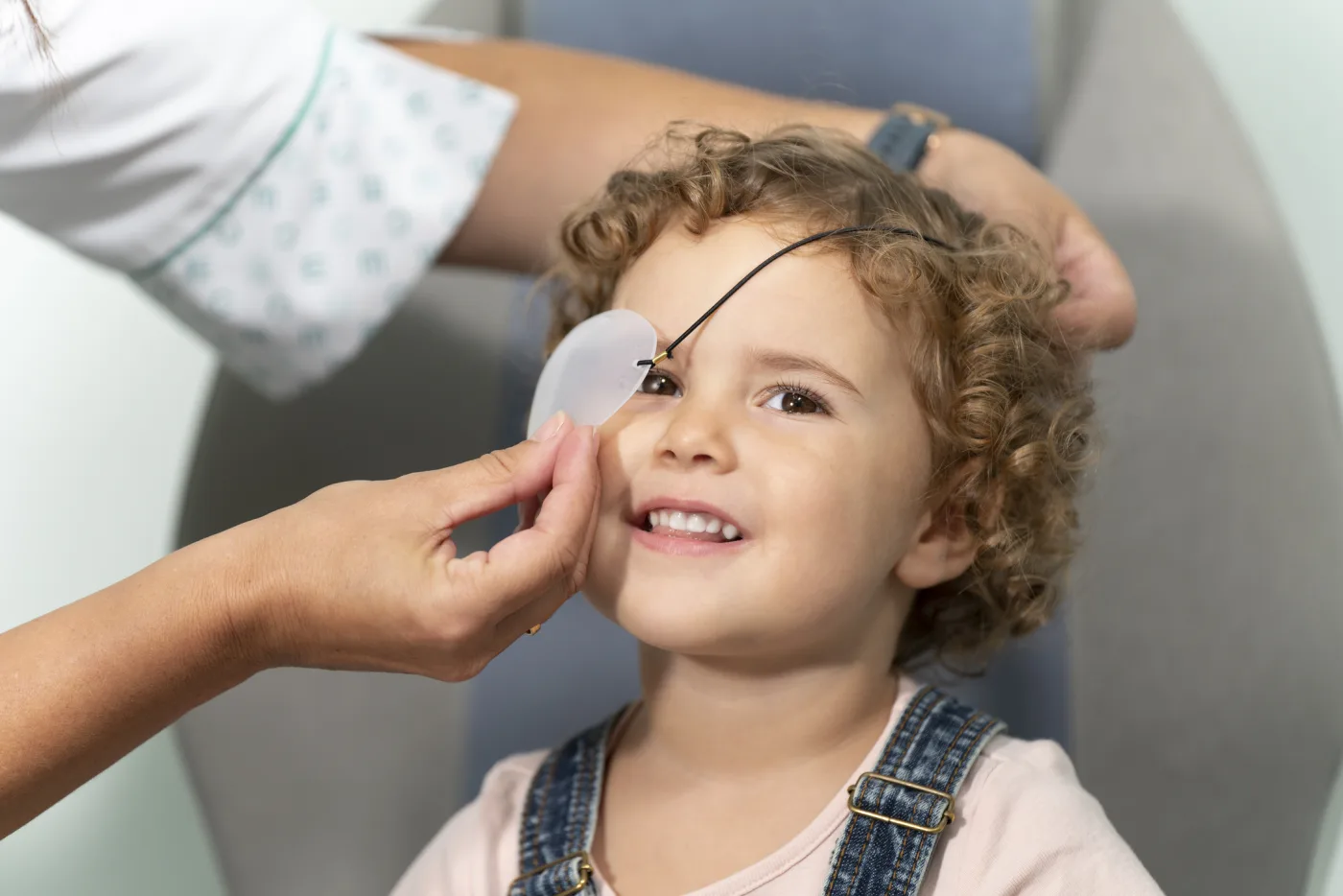
Between birth and school age, the brain is learning to use both eyes together. If one eye is out of focus or turned, the brain can start to ignore it. That is amblyopia, often called lazy eye, and it affects up to 3 in 100 children[5]. It usually has no symptoms a parent can see, and early treatment works well and usually prevents long-term vision problems[5]. Learn more on our lazy eye (amblyopia) page or in my article on amblyopia.
AAPOS, the pediatric ophthalmology society, puts it plainly: amblyopia should be treated as early as possible because treatment works better in younger children[6]. Treatment can still help older kids. A study by the Pediatric Eye Disease Investigator Group (PEDIG) of 507 children ages 7 to 17 found that 53 percent of 7 to 12 year olds improved with glasses plus patching, compared with 25 percent with glasses alone, though most were left with some reduced vision[7]. Catching it at 3 is simply easier on everyone than catching it at 9.
Recommended Eye Exam Ages
The American Optometric Association's evidence-based guideline recommends this schedule for children with no symptoms and no special risk factors[1]. Kids with risk factors, like prematurity or a family history of lazy eye, eye turns or high prescriptions, may need exams more often.
Babies can start with an infant exam (see InfantSEE and your baby's first eye exam). If your child is already 2, 3 or 4 and has never had an eye exam, you haven't missed the window. Book one now.
How We Examine Kids Who Can't Read Yet
Parents often ask how an eye exam can work on a child who can't read a chart or answer "which is better, one or two?" The answer is that most of the important measurements don't need your child to say anything. The AOA guideline describes tests built for this age, and these are the ones I use[1].
Pictures Instead of Letters
Preschoolers name or match simple pictures and symbols, so we can measure how clearly each eye sees without knowing the alphabet.
Retinoscopy
I shine a small light into the eyes and hold up lenses to measure nearsightedness, farsightedness and astigmatism. Your child just watches a toy or video.
Focusing-Relaxing Drops
Cycloplegic drops relax the focusing muscles so the true prescription shows, and they widen the pupil for a clear look inside the eye.
Cover Test
Covering one eye at a time while your child looks at a target shows whether either eye drifts in, out, up or down.
Eye Movements and 3D Vision
Following a small toy shows how the eyes move together, and a simple picture test checks depth perception.
Eye Health
A careful look at the front and back of the eye, the pupils and the eyelids to make sure everything is developing normally.
For preschoolers, picture or symbol charts (such as LEA symbols) and letter-matching tests (such as HOTV) can measure the vision of most children ages 3 through 5[1]. The same guideline calls cycloplegic retinoscopy, a prescription measurement taken after focusing-relaxing drops, the preferred method for a preschooler's first evaluation[1]. Young eyes can focus so hard that they hide farsightedness, and the drops let the real number show.
The drops may sting for a second. Afterward, expect light sensitivity and blurry up-close vision; for an exam, the effect typically lasts anywhere from 4 to 24 hours, and children may stay dilated longer than adults[4]. For eye alignment, the cover test is the standard, and when a toddler won't cooperate with it, a light reflection test on the front of the eyes can be used instead[1]. For a step-by-step walkthrough, read what to expect at your child's first eye exam.
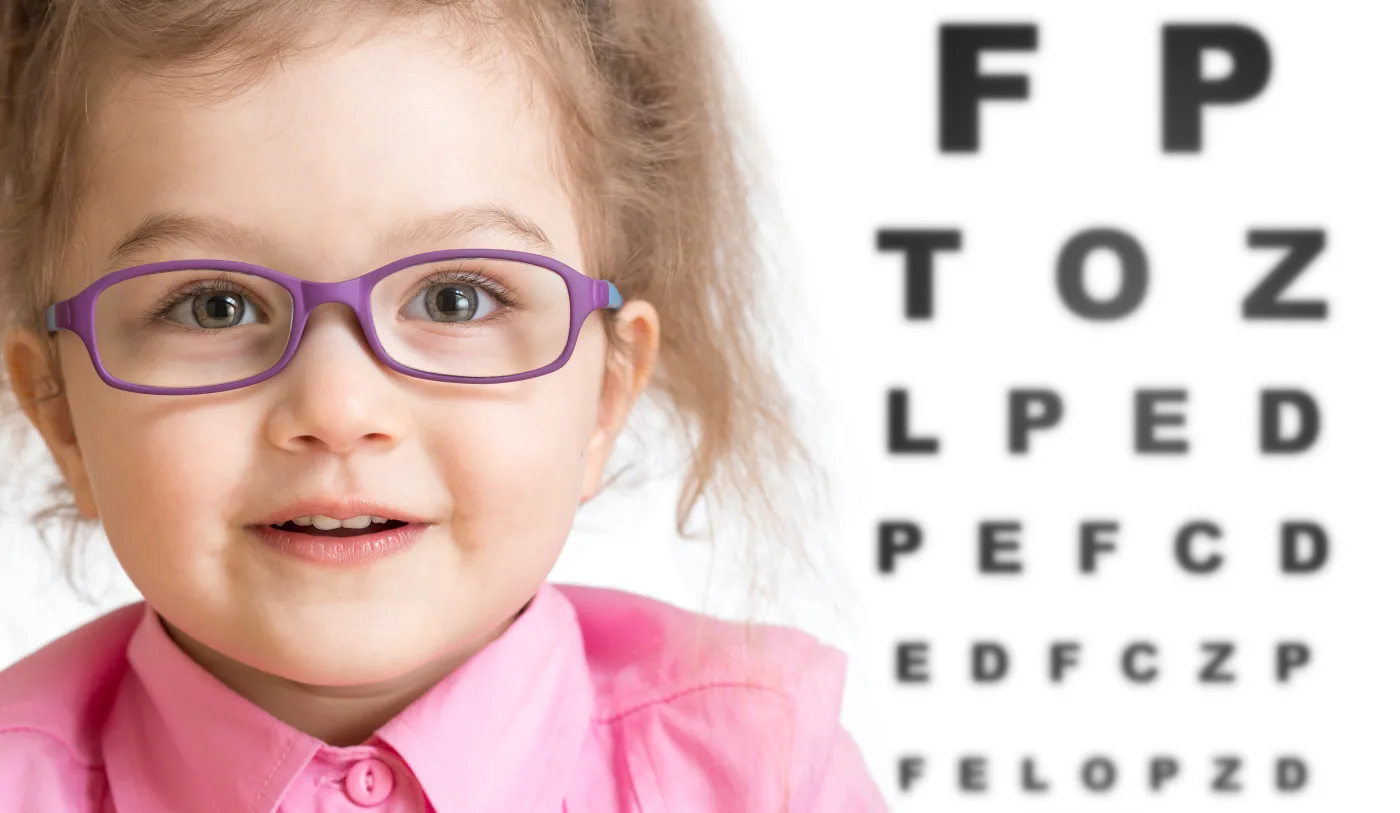
If glasses are needed, see our page on kids' glasses and my tips for when a child refuses to wear glasses.
Signs to Watch in Toddlers
The AOA lists these as signs a preschooler may have a vision problem[2]. Any one of them is a reason to book an exam now rather than waiting for a birthday.
A white pupil in photos is different. In a normal flash photo the pupils glow red. If one pupil looks white instead, that is called leukocoria. Its causes include cataract, retinal detachment, infection and eye tumors such as retinoblastoma, and AAPOS advises that a child with leukocoria see an eye doctor right away[3]. Checking for a normal red reflex is part of children's eye screening starting in the newborn period for the same reason[8]. Save the original photo, without red-eye editing, and call us or your pediatrician that day. See our urgent eye care page for other problems that shouldn't wait.
Squinting has many causes, and not all of them are about glasses. Here is why kids squint and other signs your child may need glasses.
Why a Passed Screening Isn't the Whole Story
Pediatricians and preschools do vision screenings, and they are valuable. But a screening is designed to flag kids for a closer look, not to rule problems out. In the Vision in Preschoolers study, the sensitivity of 11 screening methods for children ages 3 to 5 ranged from 16 to 64 percent, even when trained eye doctors ran them[1]. In other words, some children with real problems pass.
A comprehensive exam measures the prescription directly, checks alignment and eye teaming, and looks at the health of the eye. If your child was referred after a screening, start with our page on a failed vision screening. You can also read why school screenings miss what we catch.
How to Prepare Your Toddler for an Eye Exam
Book a Time When Your Child Is at Their Best
For most toddlers that means after a nap and after a snack. We are open weekdays, so pick the slot that fits your child's rhythm.
Keep the Explanation Simple
"The doctor is going to look at your eyes and show you some pictures and lights. I'll be right there." Short and calm works better than a long speech.
Bring a Few Things
Any current glasses, screening results from the pediatrician or preschool, your insurance card, a list of what you have noticed, and a favorite small toy or snack.
Pack Sunglasses for the Ride Home
If we use drops, bright light may bother your child for a while afterward. A hat or kid sunglasses help.
The AOA guideline notes that it is usually best for a parent to come into the exam room with the child[1], and I agree. Toddlers sometimes sit on a parent's lap, and that is completely fine. If your child has a meltdown, we take a break and try again; a few minutes of cooperation is often all I need for each test. See our what to bring checklist and the new patient page for forms and insurance details.
How Insurance Covers a Toddler Eye Exam
We bill your vision or medical insurance. For children under 4 with a lazy eye, eye turn, or other binocular concern, I offer a specialty evaluation through our binocular vision service. We verify benefits before the visit so you know your cost ahead of time. Without insurance? Call us and we'll arrange a self-pay visit through our sister practice, Vision & Learning Center.
When your child starts school, the schedule moves to a yearly exam. Our back-to-school eye exams page covers what changes once reading begins, and our main pediatric eye exams page covers kids of every age.
Toddler Eye Exam Questions
What age should my toddler have an eye exam?
The American Optometric Association recommends a first exam at 6 to 12 months, at least one exam between ages 3 and 5, another before first grade, and then one every year. Children with risk factors, like prematurity or a family history of lazy eye or eye turns, may need to be seen more often. If you missed the baby exam, now is a great time to start. Here is more on how often kids need eye exams.
Can you check my child's eyes if they don't know letters yet?
Yes. Preschoolers can name or match simple pictures and shapes instead of letters, and I can measure the glasses prescription with a light and handheld lenses without your child answering any questions at all. Eye alignment is checked by watching how the eyes move while your child looks at a small toy.
Will my toddler need eye drops?
Often, yes, especially at a first exam. Focusing-relaxing (cycloplegic) drops let me measure the true prescription in a young child and see the inside of the eye clearly. They may sting for a moment. Afterward your child may be light sensitive with blurry up-close vision for several hours or longer, so bring sunglasses.
My child passed the vision screening at the pediatrician. Do they still need an exam?
A screening is a good first step, but it is not a full exam. In a large study of preschool screening methods, even the best test caught only about 64 percent of children with real vision problems. A comprehensive exam measures the prescription, checks eye alignment and looks at eye health. If your child did not pass, see what to do after a failed vision screening.
Does insurance cover a toddler eye exam?
Vision insurance generally covers a comprehensive eye exam. For children under 4 with a lazy eye, eye turn, or other binocular concern, I offer a specialty evaluation, which medical insurance often covers. We verify your insurance benefits before the visit. Without insurance? Call us and we'll arrange a self-pay visit through our sister practice, Vision & Learning Center.
I saw a white glow in my child's pupil in a photo. What should I do?
Call an eye doctor right away. A white pupil in a flash photo (leukocoria) can be a sign of a cataract, a retinal problem, or rarely a tumor called retinoblastoma. Most of the time there is a simple explanation, but this one should never wait for a routine visit. Keep the original, unedited photo to show the doctor.
Where This Information Comes From
- American Optometric Association: Evidence-Based Clinical Practice Guideline, Comprehensive Pediatric Eye and Vision Examination (2017): exam schedule (Table 7), picture and matching acuity tests, cycloplegic retinoscopy, cover testing, screening accuracy
- American Optometric Association: Preschool Vision, 2 to 5 Years of Age: warning signs parents can watch for
- AAPOS: Leukocoria (White Pupil)
- AAPOS: Dilating Eye Drops
- National Eye Institute: Amblyopia (Lazy Eye)
- AAPOS: Amblyopia
- National Eye Institute: Older Children Can Benefit From Treatment for Childhood's Most Common Eye Disorder (PEDIG study)
- American Academy of Ophthalmology: Eye Screening for Children
Serving Boca Raton and Nearby Cities
We see patients for toddler and preschool eye exams at our office at 1000 NW 9th Ct, Ste 203A, Boca Raton, FL 33486. Families also come to us from Delray Beach, Highland Beach, Boynton Beach, Deerfield Beach, Parkland, Coral Springs, and Pompano Beach. Directions from your city →
Book Your Toddler's Eye Exam
We open November 16, 2026 and see children Monday – Friday from 8:30 AM – 5:30 PM. Booking online takes less than a minute.