Back-to-School Eye Exams in Boca Raton.
A school year asks a lot of a child's eyes. A yearly exam checks everything the classroom needs, from the board to the book in their lap.
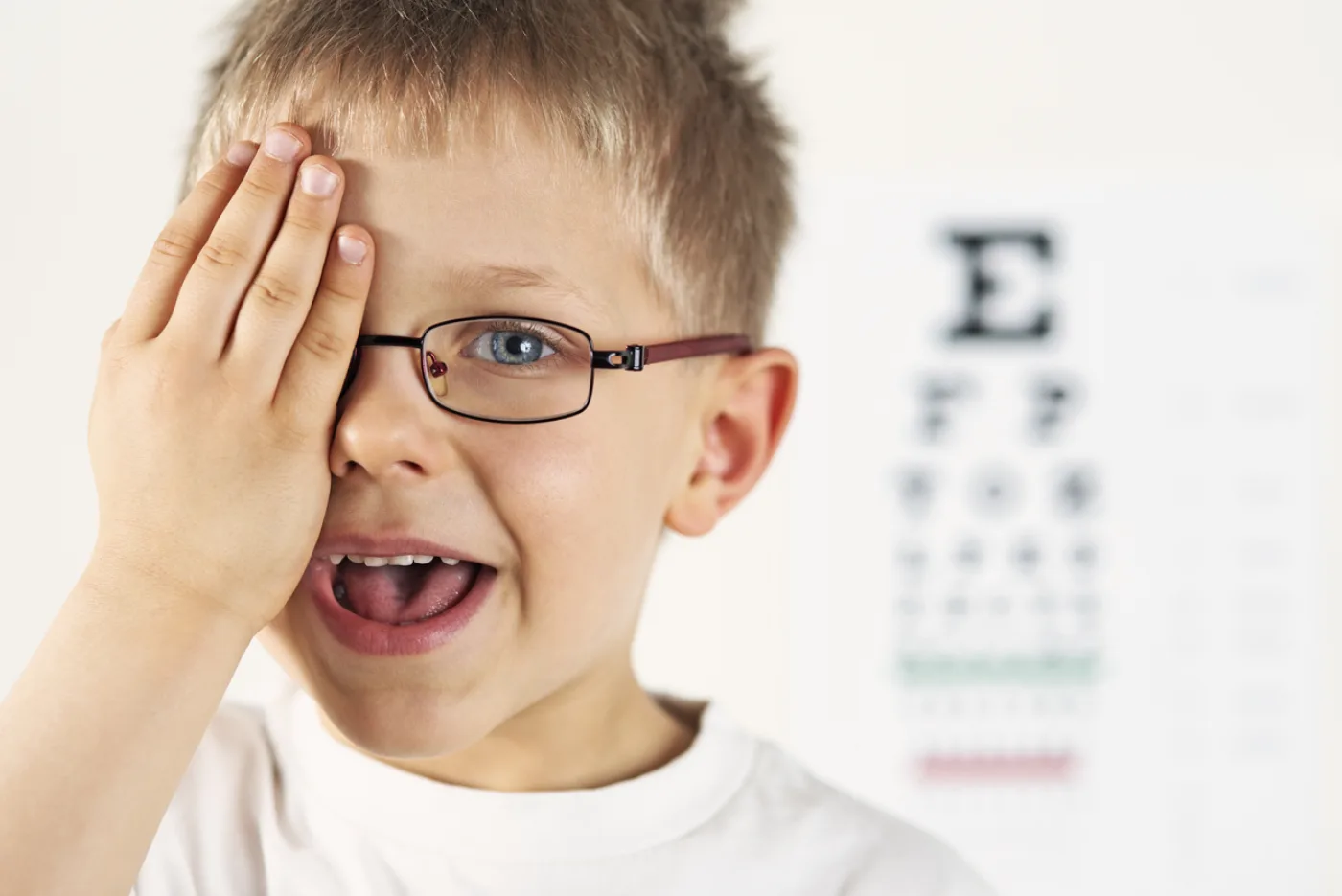
Why an Eye Exam Belongs on the Back-to-School List
Kids assume everyone sees the way they do. A child who can't see the board clearly, or whose eyes get tired after ten minutes of reading, rarely says so. They just squint, lose interest, or get labeled as not trying.
The American Optometric Association recommends a comprehensive eye exam before first grade and every year after that, from ages 6 through 18[1]. Its guideline notes that eye and vision disorders can affect a child's development, school performance, social interactions and self-esteem, and that learning-related vision problems have been reported as significant contributors to reading difficulties[1].
You may have heard that "80 percent of learning is visual." I looked for the original research behind that number and couldn't find a primary source for it, so I don't use it. The evidence above makes the case well enough on its own: when a child's eyes aren't working well, schoolwork is harder than it should be.
The AOA also points out that parents and teachers often assume a child who passed a school screening has no vision problem[2]. That assumption is the gap a back-to-school exam is meant to close. Read more about why school screenings miss what we catch, or if a screening sent a note home, see what to do after a failed vision screening.
What a School-Age Eye Exam Checks
A school screening chart answers one question: how sharp is distance vision? Reading and classwork depend on a whole set of visual skills. The AOA lists eye focusing, eye teaming, eye tracking, visual acuity, eye-hand coordination and visual perception among the skills a child needs to succeed in school[2].
That last figure comes from the AOA guideline: when visual acuity alone was used as a screening tool, it missed 75.5 percent of the children found to have binocular (eye teaming) and eye movement problems on a complete exam[1].
Eye Focusing
Keeping words clear while looking from the board to a notebook and back. The AOA lists this as a core skill for school.
Eye Teaming
Using both eyes together as they move across a printed page. When teaming is weak, words can blur, double or swim.
Eye Tracking
Keeping the eyes on target when moving from one word or object to the next. Weak tracking often shows up as losing your place.
Near Vision
Clear, comfortable vision at reading distance, which a distance eye chart never tests.
Eye Health
A look at the front and back of the eyes, because some problems cause no symptoms early on.
Prescription
Whether your child needs glasses for the board, for reading, or both, and whether a prescription has changed since last year.
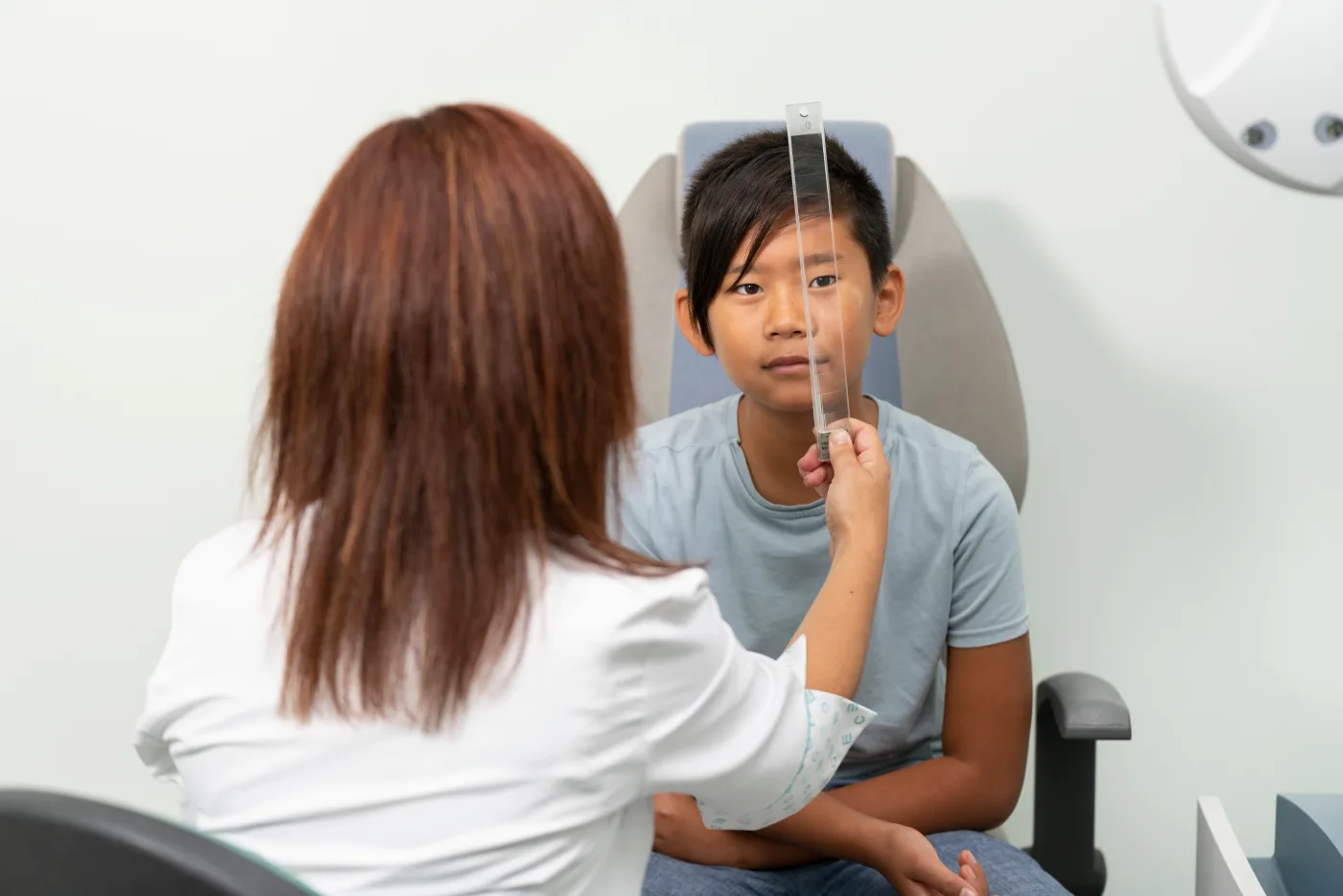
If the exam turns up a teaming or focusing problem, the next step is a deeper look through our binocular vision evaluation. Conditions like convergence insufficiency can look like a reading or attention problem. These are signs the AOA lists that are worth mentioning at the visit[2]:
- Losing place while reading, or avoiding reading
- Frequent headaches, eye rubbing or blinking
- Covering one eye or tilting the head
- Holding books very close
- Seeing double, or an eye that turns in or out
- Trouble remembering what was just read
For more, see how vision can affect reading. Our sister practice, Vision & Learning Center, has a closer look at vision and reading and a vision symptom checklist for parents.
Screen Time, Homework and Nearsightedness
Parents ask me about screens more than almost anything else. Here is what the evidence supports. The American Academy of Ophthalmology says research suggests at least part of the worldwide increase in nearsightedness has to do with near work, and that includes traditional books and time spent indoors, not only devices[3]. The AAO also says there is no scientific evidence that light from screens damages the eyes, and screen-related eye strain does no permanent damage[3].
Time outside matters. Children who spend more time outdoors are less likely to be nearsighted[4], and the AOA guideline encourages parents to plan outdoor activities for this reason[1]. Nearsightedness usually starts between ages 6 and 14 and tends to get worse into the early twenties[4], which overlaps the school years almost exactly.
That is one more reason for a yearly exam. If your child's prescription is climbing, we can talk about myopia management options. For day-to-day habits, read what the science says about screen time and kids' eyes and why myopia in kids is rising.
Sports Eyewear for School Athletes
If your child plays a school or club sport, the start of the season is a good time to think about eye protection. Regular glasses, sunglasses and contact lenses don't protect kids from eye injuries[5], and regular glasses can make an injury worse if they shatter[6]. The AAO reports nearly 30,000 sports-related eye injuries treated in U.S. emergency rooms each year[6].
The National Eye Institute recommends goggles with polycarbonate lenses for sports like basketball and racquetball, and says protective eyewear can prevent 9 out of 10 sports-related eye injuries[5]. Protective eyewear can be made in your child's prescription[5].
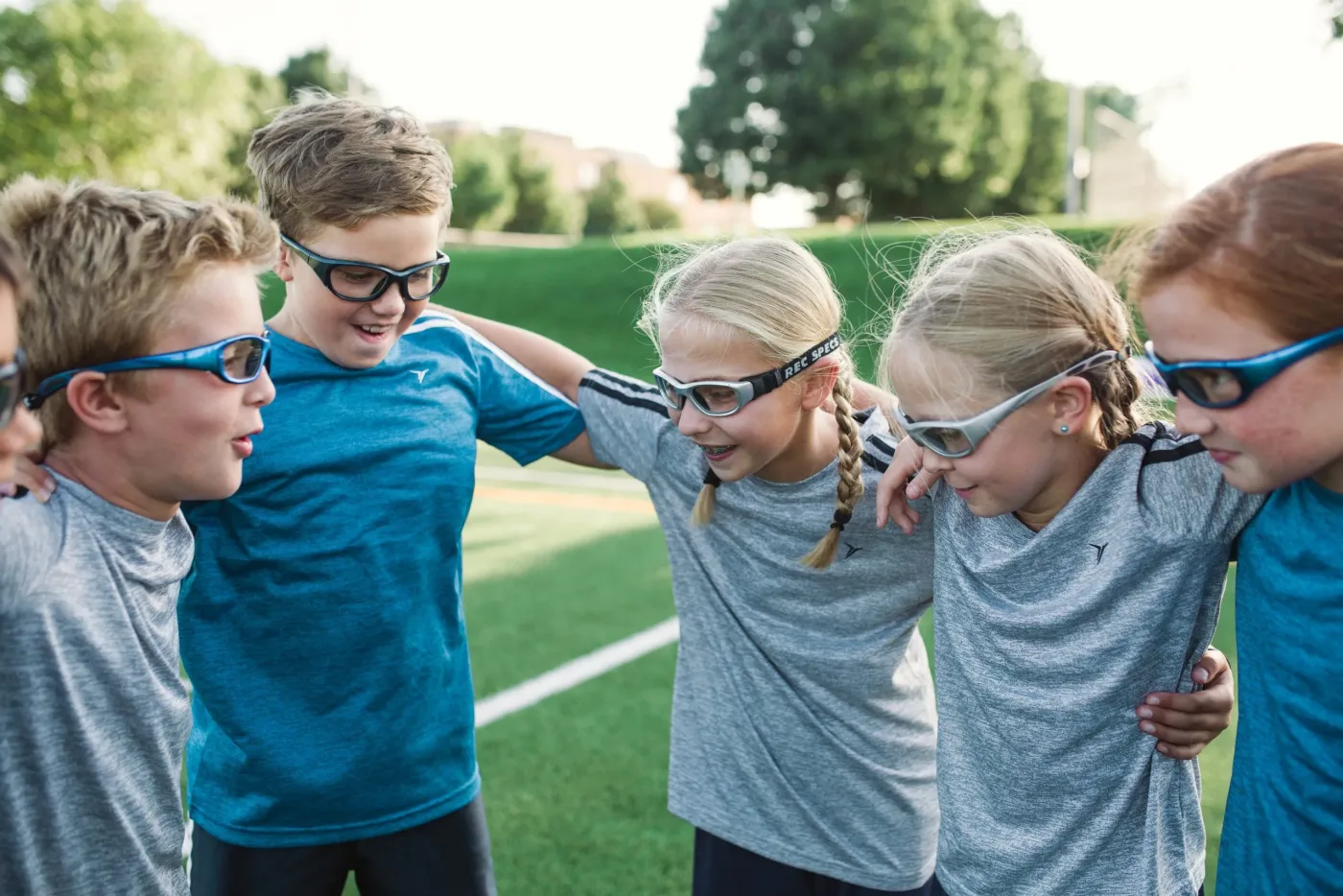
We carry sports and safety eyewear, including prescription options. Some athletes prefer contact lenses for sports, worn under protective goggles when the sport calls for it. If your child is getting a first pair of everyday glasses this year, see our kids' glasses page.
When to Book a Back-to-School Eye Exam
A few weeks before the first day is ideal. If your child needs glasses, most standard lenses are ready in 7 to 10 business days, and specialty lenses or complex prescriptions can take a little longer. Booking early leaves time to pick frames, adjust to a new prescription, and order a backup pair.
We see patients Monday – Friday, 8:30 AM – 5:30 PM, so a summer-break visit means no missed class. Once school starts, after-school appointments run until the end of our weekday hours. Younger siblings can come too: see our toddler and preschool eye exams.
Back-to-School Eye Care Checklist for Parents
For the visit itself, our what to bring checklist covers insurance cards, medication lists and records. New to the practice? Start with the new patient page.
How Insurance Covers a School Eye Exam
We bill your vision or medical insurance. Your cost depends on your plan, and we verify benefits before every visit. Without insurance? Call us and we'll arrange a self-pay visit through our sister practice, Vision & Learning Center. For everything we check at each age, see our main pediatric eye exams page.
Back-to-School Eye Exam Questions
How often should my child have an eye exam during the school years?
Every year. The American Optometric Association recommends an exam before first grade and annually after that, or more often if your child has risk factors or symptoms. Vision can change from one school year to the next, especially in kids who are nearsighted. More on how often kids need eye exams.
My child passed the school vision screening. Do they still need an exam?
Yes. Most school screenings check how clearly your child sees far away. They are not designed to measure focusing, eye teaming, eye tracking or eye health. A child can read the bottom line of the chart and still struggle with a page of text up close. See why a child with 20/20 vision can still need an exam.
When should I book a back-to-school eye exam?
Book a few weeks before school starts. If your child needs glasses, most standard lenses are ready in 7 to 10 business days, and specialty lenses can take longer. Because we see patients on weekdays, a summer-break visit also means your child doesn't miss class.
Does screen time cause nearsightedness?
Research links near work in general, including books, tablets and phones, with part of the worldwide rise in nearsightedness, and time outdoors appears to help protect young children's eyes. Screens are not known to cause permanent damage. If your child is becoming more nearsighted each year, ask about myopia management.
Does insurance cover a school eye exam?
Vision insurance generally covers a yearly comprehensive eye exam, which takes about 40 minutes. We verify your insurance benefits before the visit so you know your cost ahead of time. Without insurance? Call us and we'll arrange a self-pay visit through our sister practice, Vision & Learning Center.
Where This Information Comes From
- American Optometric Association: Evidence-Based Clinical Practice Guideline, Comprehensive Pediatric Eye and Vision Examination (2017): exam schedule (Table 7), limits of acuity-only screening, school performance, near work and outdoor time
- American Optometric Association: School-Aged Vision, 6 to 18 Years of Age: visual skills needed for school, warning signs, protective eyewear
- American Academy of Ophthalmology: Screen Use for Kids
- National Eye Institute: Nearsightedness (Myopia)
- National Eye Institute: Sports and Eye Safety, Tips for Parents and Teachers
- American Academy of Ophthalmology: Sports Eye Safety
Serving Boca Raton and Nearby Cities
We see patients for back-to-school eye exams at our office at 1000 NW 9th Ct, Ste 203A, Boca Raton, FL 33486. Families also come to us from Delray Beach, Highland Beach, Boynton Beach, Deerfield Beach, Parkland, Coral Springs, and Pompano Beach. Directions from your city →
Book Your Child's School Eye Exam
We open November 16, 2026. Booking online takes less than a minute.