Kids Glasses and Children's Eyewear in Boca Raton.
Glasses only help if your child wears them. We fit frames that stay put, use lenses built for real kid life, and help your child actually like what they see in the mirror.
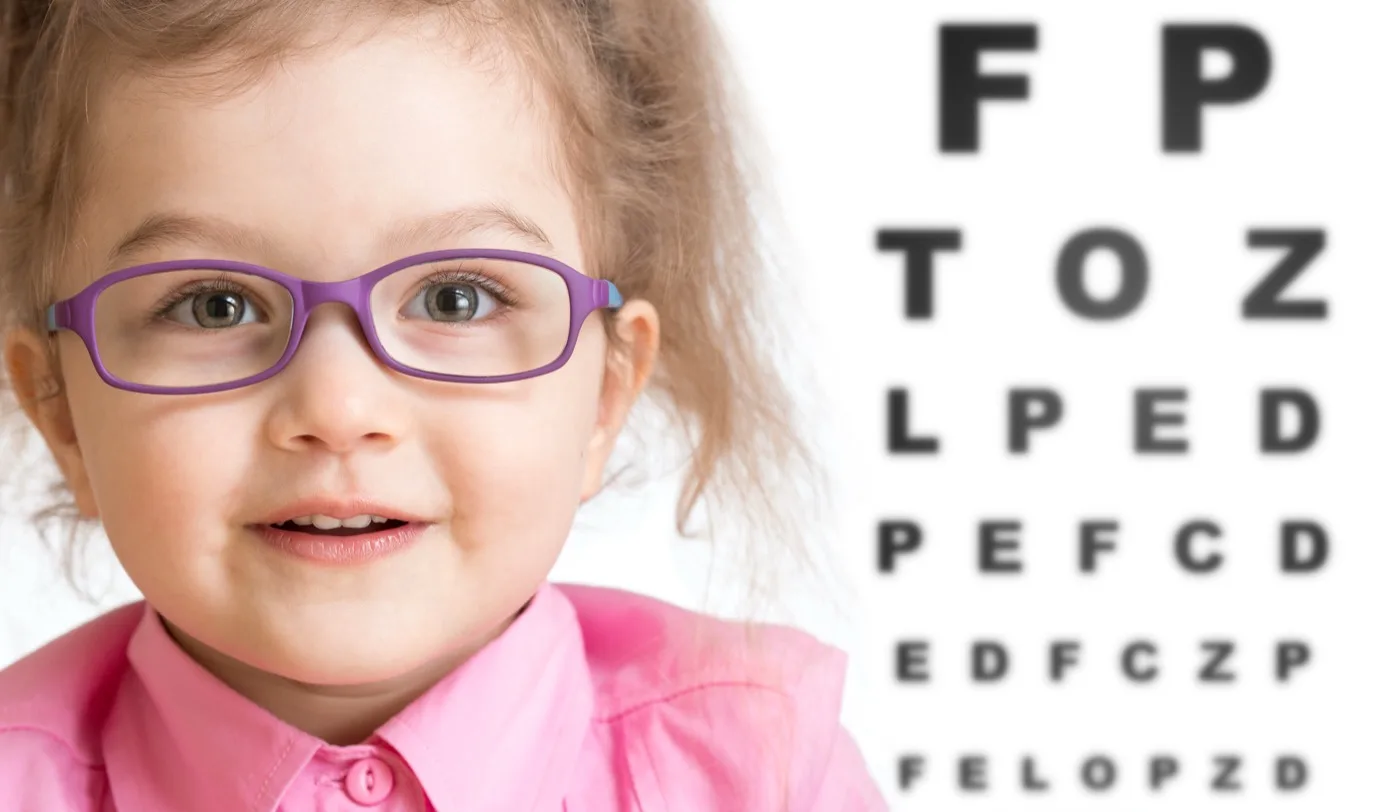
Kids Need Glasses Made for Real Life
Adults notice when glasses slide, pinch, or sit crooked. Kids usually don't say anything. They just take the glasses off, push them up all day, or look over the top of the lenses. A frame that doesn't fit ends up in a backpack, which is one of the big reasons kids break glasses.
In my practice, fit comes first and style comes second. Ideally your child gets both. Glasses must fit well to be comfortable and give clear vision, with each eye centered in the lens and the frame clear of the cheeks and eyelashes.[2] For a deeper look at frame choices, read how to choose kids glasses frames that last.
Fitting Kids' Frames, From Toddlers to Teens
Flexible Frames and Hinges
Many kids' frames have flexible arms so they don't snap off as easily, and spring hinges help with glasses that get pulled off with one hand.
Cable Temples and Straps
Common on infant and toddler glasses. They wrap behind the ear so glasses stay put during play, as long as they are not too tight or too short.
Temple Tips (Ear Grips)
Soft tips that hold glasses in place like a cable temple, but can be swapped out as your child grows.
A Bridge That Fits
Young children often have small, flat nose bridges. The right bridge keeps glasses from sliding so your child looks through the lenses, not over them.
Cable temples are common on infant and toddler glasses, but kids grow out of them quickly, so we watch that the cable is not too tight and the temple is not too short.[2] A strap or silicone ear grips can also keep glasses in place.[1] If a frame gets bent, bring it in rather than bending it back at home.[2] Adjustments are always free.
One thing I don't recommend: buying a frame several sizes too big so your child can "grow into it." Kids' glasses should fit now. Wondering about ordering online? Here is my honest take on kids glasses online vs. an eye doctor, and why cheap kids glasses can cost more in the end.
Impact-Resistant Lenses for Kids
Under federal rules, eyeglasses and sunglasses must be fitted with impact-resistant lenses, unless a doctor finds they won't meet a patient's visual needs. The test: a 5/8-inch steel ball, about 0.56 ounce, dropped onto the lens from 50 inches.[3][4]
For children, I want more than the minimum. AAPOS calls polycarbonate lenses shatterproof and says they should be the lenses prescribed for children unless the eye doctor advises otherwise.[1][2] The American Optometric Association lists polycarbonate and Trivex as the lenses with the most impact resistance.[5] The American Academy of Ophthalmology recommends polycarbonate lenses at least 2 millimeters thick for daily wear and 3 millimeters thick for sports.[6]
UV Protection and Sports Goggles
Sunglasses. Kids and teens usually spend more time in the sun than adults, and the American Optometric Association recommends sunglasses that block 100% of both UV-A and UV-B.[5] In South Florida that matters year-round. We carry prescription and non-prescription sunglasses, including polarized lenses.
Sports eyewear. Regular glasses are not sports protection. They do not offer proper eye protection and can make an injury worse if they shatter.[7] For basketball, racquet sports, soccer, and field hockey, the American Academy of Ophthalmology recommends protective sports glasses with polycarbonate lenses, and eye protectors tested to ASTM standards.[7] We carry sports and safety eyewear, including prescription options.
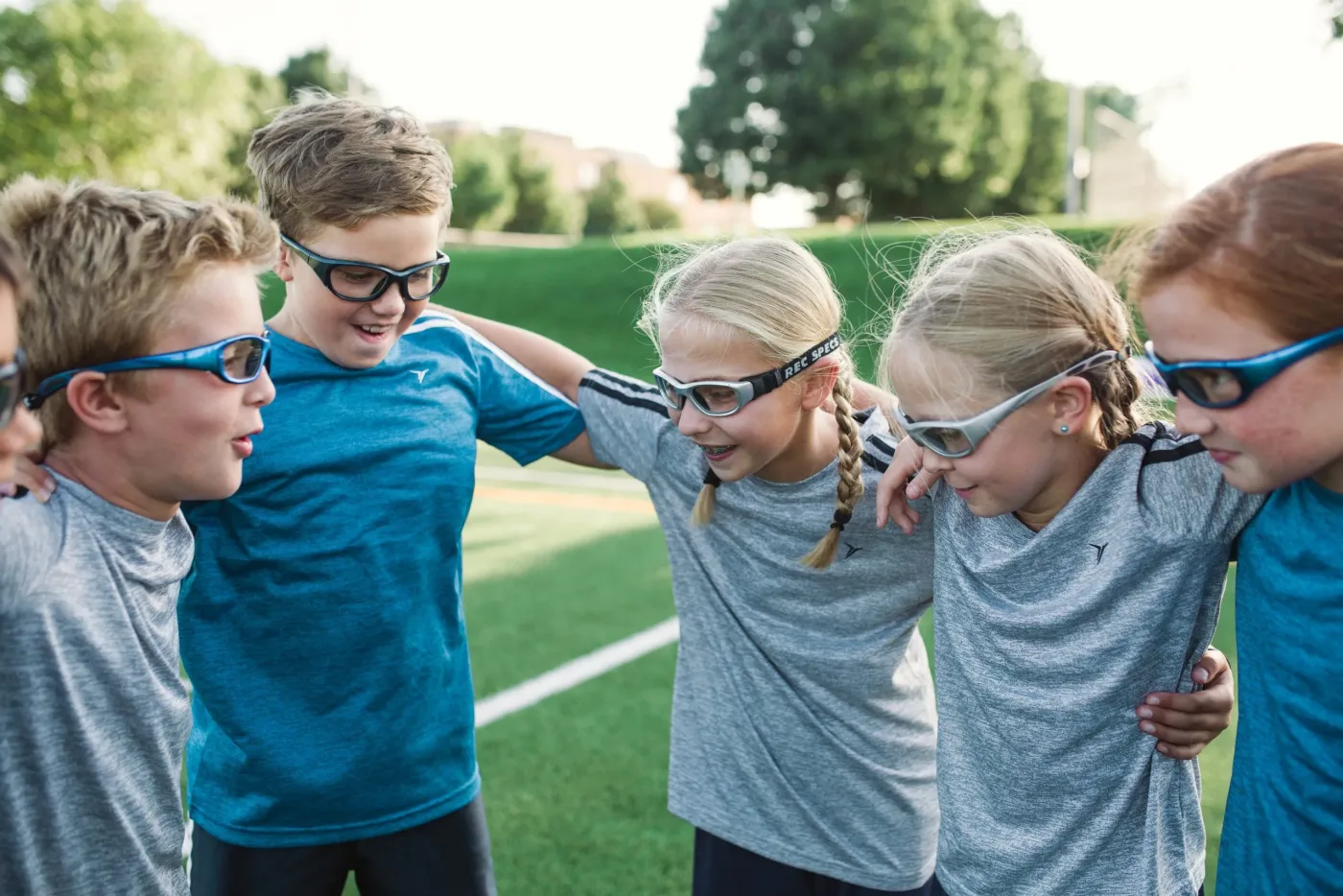
Getting Kids to Wear Their Glasses
Most children adjust to new glasses within about two weeks.[1] The single biggest help is a parent who stays positive and matter-of-fact about it.[1] A few things that work in my practice:
- Let your child choose. We narrow the choices to frames that fit well, then your child picks the color and style.
- Make it routine. Glasses go on in the morning like shoes. Here is when kids should wear glasses all day.
- Check the fit first. Refusal is often a sign the glasses slide, pinch, or need an adjustment. If your child still resists after a few weeks, we recheck the fit and the prescription.[1] Read what to do when a child refuses glasses.
For some children, glasses are part of treating a medical condition, such as a lazy eye (amblyopia), where wearing them consistently is how the weaker eye gets better.
A Backup Pair and How to Pay
Backup pair. We recommend a backup pair for active kids. It matters most for children who wear glasses full time, have a strong prescription, have amblyopia or an eye turn, or tend to lose or break glasses. Read more about whether your child needs a backup pair.
Warranty. Our kid-tough frames come with warranties. Ask our optical team what the warranty on your child's frame covers before you decide.
Insurance and cost. Most vision plans include a frame allowance plus lens benefits. We are in-network with VSP, EyeMed, UnitedHealthcare Vision, Aetna Vision, Cigna Vision and Humana Vision, verify your benefits before the visit, and itemize your savings before you order. Without insurance? Call us and we'll walk you through your options. We accept HSA and FSA cards and CareCredit. See insurance and the full glasses and frames page.
Glasses start with an accurate prescription, so the first step is a pediatric eye exam. Not sure your child needs glasses? Here are the signs your child needs glasses. If your child brought home a note from school, see failed vision screening, and for the start of the year, back-to-school eye exams.
Questions about frames, lenses, or an order? Email our optical team at optical@pedsfamilyvision.com.
Kids Glasses Questions
What is the best lens material for kids' glasses?
Polycarbonate is the standard choice for children. AAPOS calls it shatterproof and says it should be the lens prescribed for children unless the eye doctor advises otherwise. The American Optometric Association lists polycarbonate and Trivex as the lenses with the most impact resistance. I'll help you pick the right one for your child's prescription.
Are my child's regular glasses safe for sports?
No. The American Academy of Ophthalmology warns that regular eyeglasses do not offer proper eye protection for sports and can make an injury worse if they shatter. For sports like basketball, soccer, and racquet sports, kids need protective sports glasses with polycarbonate lenses tested to ASTM standards. See contacts for sports for another option for older kids.
How long does it take a child to get used to new glasses?
Most children adjust within about two weeks, according to AAPOS. A positive, matter-of-fact attitude from parents helps a lot. If your child is still fighting the glasses after a few weeks, bring them back so we can check the fit and the prescription. Here is more on what to do when a child refuses glasses.
Should I buy a frame a size up so my child can grow into it?
No. A frame that is too big slides down, sits off-center, and can make lenses thicker and heavier. AAPOS says the eyes should be centered in the lenses. Kids' glasses should fit now. We will adjust them as your child grows, and adjustments are always free.
Does insurance cover kids' glasses?
Most vision plans include a frame allowance plus lens benefits. We are in-network with VSP, EyeMed, UnitedHealthcare Vision, Aetna Vision, Cigna Vision and Humana Vision, and we verify your benefits before the visit. Without insurance? Call us and we'll walk you through your options. HSA and FSA cards are accepted. See insurance for details.
Where This Information Comes From
- AAPOS: Glasses for Children: polycarbonate lenses, straps, adjusting to glasses
- AAPOS: Glasses Fitting for Children: centering, cable temples, temple tips, lens material
- Code of Federal Regulations, 21 CFR 801.410: Use of impact-resistant lenses in eyeglasses and sunglasses
- U.S. Food and Drug Administration: Impact-Resistant Lenses: Questions and Answers
- American Optometric Association: UV Protection: UV-A and UV-B blocking, polycarbonate and Trivex
- American Academy of Ophthalmology: Eye Injuries in Children
- American Academy of Ophthalmology: Sports Eye Injuries
Serving Boca Raton and Nearby Cities
We see patients for kids glasses and children's eyewear at our office at 1000 NW 9th Ct, Ste 203A, Boca Raton, FL 33486. Families also come to us from Delray Beach, Highland Beach, Boynton Beach, Deerfield Beach, Parkland, Coral Springs, and Pompano Beach. Directions from your city →
Ready for Your Child's First (or Next) Pair?
Start with an eye exam, then take your time in our optical. We open November 16, 2026.